Old haunts
This week
- “They say criminals always return to the scene of the crime.” Why has the governing body of international football given the president of the United States a peace prize?
- Why is Washington claiming a new legal authority to strike Venezuela—and sanctioning the International Criminal Court for issuing arrest warrants over Gaza? Yuan Yi Zhu on how democratic countries are responding to expansive rulings by international courts.
- Does Putin’s vision of Russia as a great power make a peace deal with Ukraine impossible? Anatol Lieven on nationalist ambitions, historical narratives, and Moscow’s fraught relationship with the West.
- Why is it so tough to define what Israel will accept in phase two of the Gaza ceasefire? Natan Sachs on resilience, doubt, and the challenge of preventing the next October 7.
- How is an isolated North Korea suddenly producing advanced military tech? Rachel Minyoung Lee on an emboldened Kim Jong Un.
- How does joining a petition become a crime? Glacier Kwong on civic life in Hong Kong today.
- Why are Colombian armed gangs and militias launching so many drone attacks? Robert Hamilton on the new art of war.
- & How has Europe become the destination for so much dirty money—and what are European states doing about it? Tena Prelec on why it is so hard to root out grand corruption.
Weather report
- The atmosphere seeks balance over Australia.
+ Cultural intelligence
- Why is European innovation-led growth so low? Andrea Lorenzo Capussela’s new book, The Republic of Innovation: A New Political Economy of Freedom.
- What’s Wisdom Teeth Records?
- & The week in new music
Developments
What’s happening? November 29–December 5.
The consolation prize
On Friday, Gianni Infantino, the president of FIFA—the International Federation of Association Football—awarded U.S. President Donald Trump a new honor at the Kennedy Center in Washington, D.C. It’s a gold trophy representing hands holding up the world, engraved with the president’s name, accompanied by a medal and certificate—the inaugural FIFA Peace Prize, recognizing the recipient for having “taken exceptional and extraordinary actions for peace.”
The ceremony had the textures of a state-managed spectacle. The Village People performed “YMCA”—a Trump rally staple. The venue was the Kennedy Center, once a bipartisan cultural institution, now chaired by Trump himself after he purged its board in February. According to The New York Times, Infantino created the prize weeks after Trump lost the Nobel in October, moving so fast he blindsided his own FIFA Council. Some vice presidents learned of it from a press release.
The FIFA president has spent more face-to-face time with Trump this year than any world leader. He attended Trump’s inauguration in January. He joined Trump on state visits to Saudi Arabia and Qatar in May, arriving three hours late to FIFA’s own annual meeting—prompting UEFA officials to walk out in protest. In July, FIFA opened an office in Trump Tower, making the president its landlord. Now Trump chairs a White House task force overseeing World Cup preparations, run by Andrew Giuliani, the son of his former lawyer.
What is Infantino doing?
- FIFA’s legal exposure in the United States. The U.S. Department of Justice spent a decade prosecuting FIFA corruption, unsealing indictments in 2015 that eventually charged more than 50 officials and executives across 20 countries for racketeering, wire fraud, and money laundering. In July 2025, the Second Circuit Court of Appeals reinstated bribery convictions that a lower court had thrown out—a ruling that affirmed DOJ’s authority to prosecute foreign commercial bribery when it touches U.S. financial infrastructure. The investigation centered on CONCACAF, FIFA’s North American confederation, and the prosecutions remain formally open. FIFA has obvious interests in a cooperative Justice Department.
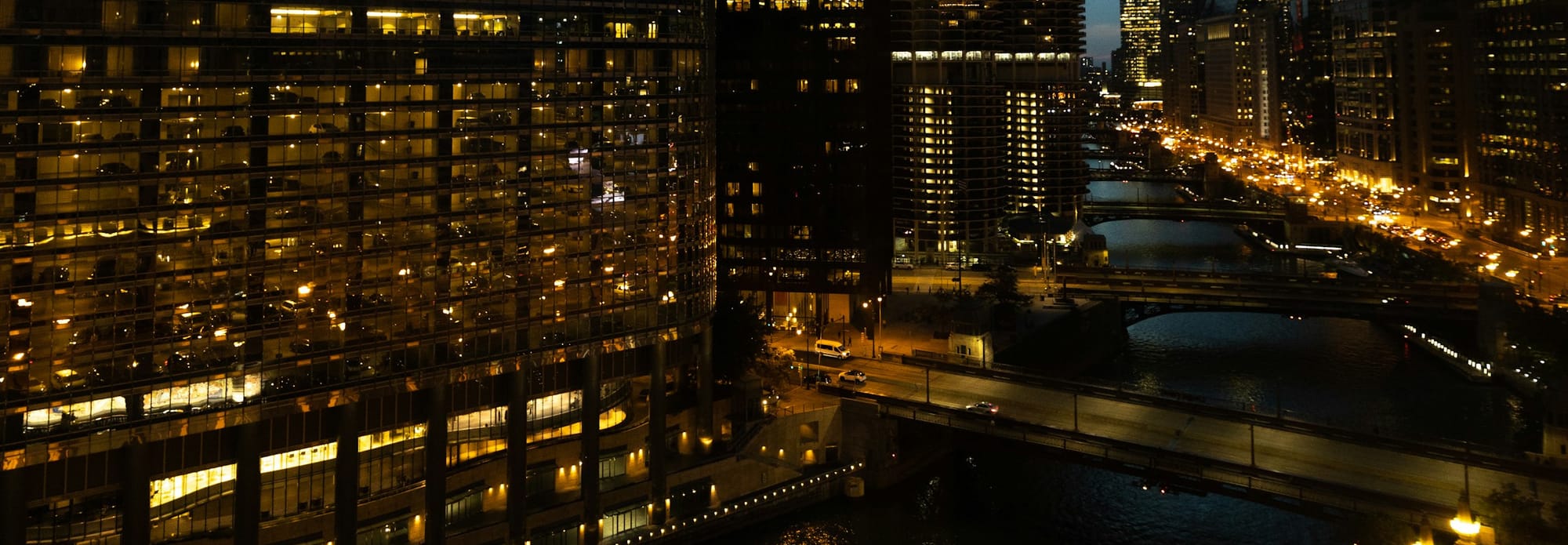
- The Trump Tower symmetry. CONCACAF once ran its operations out of Trump Tower. Its general secretary, Chuck Blazer, kept a US$18,000-a-month apartment on the 49th floor—plus an adjoining $6,000-a-month unit for his cats. In 2011, the U.S. Federal Bureau of Investigation confronted Blazer outside the building; he became their informant, wearing a wire to meetings with FIFA officials. His recordings helped trigger the 2015 indictments. Now FIFA has opened an office in the same building, announced at a ceremony with Eric Trump in July. As Inside World Football put it, “They say criminals always return to the scene of the crime.”
- The hosting stakes. The 2026 World Cup will be the largest in history—48 teams, 104 matches, 16 cities across three countries. The United States hosts 11 of those cities and both finals. Trump’s “Big Beautiful Bill”—the omnibus spending legislation the U.S. Congress passed this summer—allocated $625 million in federal security funding. His administration controls visa processing for fans from 211 member nations, 19 of which currently face U.S. travel bans—including Iran, which has already qualified. FIFA needs smooth logistics. The White House task force, chaired by Trump and run by Andrew Giuliani, controls them.
- The Kennedy Center capture. The venue itself tells a story. In February, Trump fired half the Kennedy Center’s board, installed loyalists including his chief of staff Susie Wiles and second lady Usha Vance, and named himself chairman—the first president ever to do so. He replaced its president with Ric Grenell, a longtime ally. A leaked contract showed FIFA received the Concert Hall essentially free, in exchange for a $2.4 million donation and unspecified “sponsorship opportunities.” An institution captured by Trump hosted an event for an institution performing loyalty to Trump.
- Internal resistance overridden. Infantino didn’t consult his own governing body. The FIFA Council—eight vice presidents and 28 members—learned of the Peace Prize from a press release. In May, when Infantino arrived three hours late to FIFA’s annual congress after traveling with Trump to Qatar, UEFA officials walked out. The European confederation issued a statement calling the delay “deeply regrettable” and accusing Infantino of putting “private political interests” above the game. The criticism hasn’t slowed him down.
- The ‘Make America Great Again’ video. On the eve of Trump’s inauguration in January, Infantino posted a video message: “Together we will make not only America great again, but also the entire world.” The advocacy group FairSquare called it a “flagrant violation” of FIFA’s code of ethics, which mandates political neutrality. FIFA’s statutes explicitly prohibit officials from making political statements. Infantino has continued making them—praising Trump’s policies, calling him “definitely” deserving of the Nobel, describing him as “a really close friend.”
- Infantino’s pattern with strongmen. This isn’t new behavior—or even particularly specific to Trump. Infantino has cultivated ties with rulers before—not least with authoritarian rulers: He accepted an award from Russia’s President Vladimir Putin, maintained close relations with Qatar’s emir and Saudi Arabia’s crown prince, and defended the decision to hold the 2022 World Cup in a country with severe restrictions on labor rights and free expression. What’s different with Trump, apart from the still-democratic form of government he presides over, is the intensity of the relationship—and Infantino’s apparent willingness to subordinate FIFA’s institutional independence to a single leader’s interests in ways that go beyond standard diplomatic courtesy.
The sequence here is interesting. Infantino didn’t simply maintain a working relationship with a host-country president—he embedded himself in Trump’s orbit, appearing at events with no connection to football, praising Trump’s policies, opening offices in Trump’s building, and inventing an award for the American president immediately after the Nobel committee declined to grant him one.
The Signal’s contributor Stephen Hanson has a vocabulary for this. He describes Trump’s style of governance as patrimonial—ruling as a father figure who treats the state as a family business, rewarding loyalty and punishing independence. In patrimonial systems, institutions that want favorable treatment learn to perform fealty. They attend the leader’s events. They echo his slogans. They provide symbolic validation. The whole notion of a “conflict of interest,” Hanson notes, depends on a legal order that patrimonialism rejects.
FIFA’s comportment over the past year fits the pattern. An international institution, nominally committed to political neutrality, has made itself a supplicant—not to the government of the United States as an institution, but to Trump personally. Whether that yields regulatory favor, prosecutorial discretion, or simply smooth World Cup logistics—it’s not clear yet. What is clear is that FIFA has decided the relationship is worth the reputational cost. And that Infantino, at least, appears to believe the cost is low.
Meanwhile
- The second strike. Admiral Frank Bradley, who commanded the September 2 U.S.-military boat strike in the Caribbean, told Congress this week he received no explicit order to kill survivors. His stated rationale for the second strike: Two men were climbing back onto the wreckage, which still held cocaine. Senator Tom Cotton, a Republican, called the footage “entirely lawful.” Representative Jim Himes, a Democrat, called it “one of the most troubling things I’ve seen in my time in public service.” … See “The order.”
- The crime of connection. The death toll from the Wang Fuk Court fire in Hong Kong has reached 159. Arrests under the sedition law have continued—including a solicitor due to speak at a press conference about the fire, cancelled after organizers received “notification from relevant departments.” Miles Kwan, the student who started the petition calling for an independent inquiry, was released on bail. His petition remains deleted. … See “Ten thousand signatures.”
- The flights resume. Deportation flights from the U.S. to Venezuela started up again this week—Caracas reversed its cancellation at Washington’s request, even as Trump escalates military threats—saying land strikes could come soon, and “not just Venezuela.” Pope Leo XIV, returning from Lebanon, called for dialogue in lieu of force. The U.S. military announced its 22nd boat strike. Four more are dead. … See “The channel stays open.”
- Signing day. Presidents Félix Tshisekedi of Congo and Paul Kagame of Rwanda signed their U.S.-brokered peace deal this week at the newly renamed Donald J. Trump Institute of Peace in Washington. Trump announced mineral deals: “We’re going to take out some of the rare earth.” Denis Mukwege, the Congolese Nobel laureate, posted on X as fighting continued in South Kivu: “This morning, in my native village, people were burying the dead.” … See “The ceremony and the ground.”
- Thirty-eight years later. NASA and the U.S. National Oceanic and Atmospheric Administration announced the Antarctic ozone hole is smaller this year than it has been since 1992. And as a whole, the ozone layer is now on track to recover by the late 2060s. Scientists involved in the research credit the Montreal Protocol, the 1987 treaty that united 197 countries to phase out the chemicals destroying the layer. According to Paul Newman, the chief scientist for Earth sciences at NASA’s Goddard Space Flight Center, “This year’s hole would have been more than one million square miles larger if there was still as much chlorine in the stratosphere as there was 25 years ago.”
Features
Dive deeper
Whose justice?
Why is Washington claiming a new legal authority to strike Venezuela—and sanctioning the International Criminal Court for issuing arrest warrants over Gaza? Yuan Yi Zhu on how democratic countries are responding to expansive rulings by international courts.