The second strike

Recently: Why is it so tough to define what Israel will accept in phase two of the Gaza ceasefire? Natan Sachs on resilience, doubt, and the challenge of preventing the next October 7.
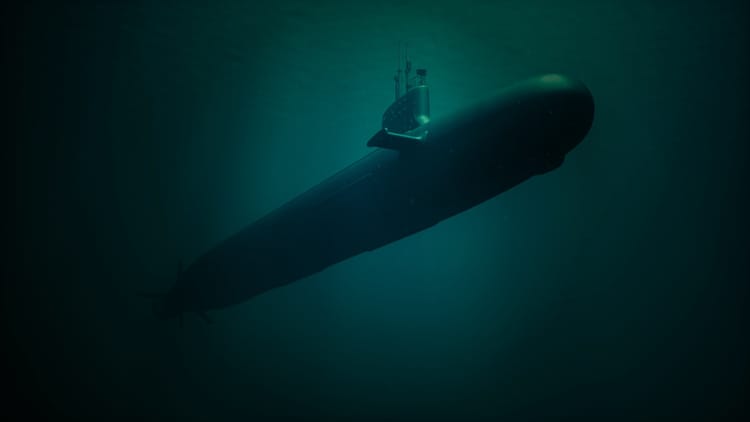
Today: Why did U.S. forces execute a second strike to kill two survivors clinging to wreckage after a boat attack in the Caribbean? The Pentagon’s own Law of War Manual calls shooting shipwrecked survivors a textbook illegal order—one service members must refuse.
+ For members: How is an isolated North Korea suddenly producing advanced military tech? Rachel Minyoung Lee on an emboldened Kim Jong Un.
& New music from Austra ...
The order
On September 2, an American missile struck a boat off the coast of Trinidad. Eleven people were aboard—suspected drug traffickers, according to intelligence analysts watching the live drone feed. When the smoke cleared, two survivors clung to the wreckage.
U.S. Defense Secretary Pete Hegseth had given a verbal directive before the strike, according to two people with direct knowledge of the operation: “Kill everybody.” Admiral Frank “Mitch” Bradley, commanding from Fort Bragg, ordered a second strike to comply. It killed the two survivors in the water.
Why?
The stated rationale—that survivors could call other traffickers to retrieve them—appears to evade the question of why prisoners wouldn’t serve the mission better. Dead men provide no intelligence. The U.S. has since captured and repatriated survivors from other strikes; protocols apparently changed since September 2.
Several possibilities: No witnesses. No legal process. Maximum brutality as deterrence. Each implies something different about what this campaign actually is. The Pentagon’s own Law of War Manual uses shooting shipwrecked survivors as the textbook example of a “clearly illegal order” that service members must refuse.
The institutional response suggests people with access to the classified picture are balking. The commander of U.S. Southern Command offered to resign. Pentagon lawyers raised alarms. The U.K. stopped sharing intelligence. Former Defense Secretary Leon Panetta said on Sunday he doesn’t think there’s “any question” the second strike was a war crime.
President Donald Trump says he believes Hegseth “100%.”

Meanwhile
- A peace team, reshuffled. Ukraine’s President Volodymyr Zelenskyy met France’s President Emmanuel Macron in Paris on Monday for what Zelenskyy called “several hours” of talks on security guarantees and postwar borders. The visit followed Sunday’s U.S.-Ukraine negotiations in Florida—which the American Secretary of State Marco Rubio described as “productive”—but also, by just days, the resignation of Zelenskyy’s powerful chief of staff. Andriy Yermak, amid a corruption probe. U.S. envoy Steve Witkoff now heads to Moscow. … See “Grand theft democracy.”
- ‘Closed in its entirety.’ Trump declared on Saturday that the airspace “above and surrounding Venezuela” should be considered shut to all aircraft—airlines, pilots, drug traffickers alike. Venezuela’s Foreign Ministry called it a “colonialist threat” that violates international law. The USS Gerald R. Ford carrier group and some 10,000–15,000 troops remain massed in the region; Trump said on Thursday that land strikes could come “very soon.”
- The policy cascade. U.S. Citizenship and Immigration Services has halted all immigration processing for Afghan nationals after an Afghan man shot two National Guard members near the White House on Wednesday, killing 20-year-old Sarah Beckstrom. The suspect, Rahmanullah Lakanwal, had worked with a CIA-backed Afghan unit before resettling in 2021. The same agency, USCIS, granted his asylum in April—under Trump, who’s now vowing to “permanently pause migration from all Third World Countries.”
- Petition, then arrest. Hong Kong’s deadliest fire in more than seven decades has killed at least 151 people at the Wang Fuk Court housing complex, with some remains possibly unrecoverable. But alongside the corruption probe into substandard building materials, Chinese national-security police have arrested at least three people—one for allegedly distributing materials supporting an online petition that called for an independent inquiry. The petition, which had gathered over 10,000 signatures, has been removed.
- The first appellate check. A U.S. federal appeals court ruled on Monday that the Trump administration unlawfully maneuvered to keep Alina Habba, the president’s former personal attorney, as New Jersey’s top prosecutor. The unanimous panel—two Bush appointees and one Biden—found the Justice Department’s moves to bypass Senate confirmation violated federal law. Similar challenges are pending against interim prosecutors in California, Arizona, New Mexico, and New York.

Your reading list for a changing world
Browse The Signal’s bookshop—organized into collections that track key themes in our investigations of current affairs: what’s driving the information wars, why societies are fracturing, how power keeps reinventing itself. Contributors’ titles alongside books we've featured in our coverage.
When you buy here, The Signal earns a commission from Bookshop.org, which supports independent booksellers.
For members
The supplier
How is an isolated North Korea suddenly producing advanced military tech? Rachel Minyoung Lee on an emboldened Kim Jong Un.

North Korea’s Supreme Leader Kim Jong Un announced on Friday that his air force will receive “new strategic military assets”—Pyongyang’s usual code for nuclear-related capabilities. Photos showed him inspecting unmanned aircraft and mobile missile launchers. Ukrainian intelligence says the North has begun mass-producing FPV drones like the ones devastating the front lines in Kursk.
How is an isolated, sanctioned state suddenly producing sophisticated weaponry at scale?
Here in The Signal, Rachel Minyoung Lee looks at how a deepening partnership with Russia has transformed North Korea’s defense industries—and emboldened Kim to codify nuclear status into the constitution, take denuclearization off the table, and play a longer game than most analysts ever expected …
Your loyal guide to a changing world.
Membership with The Signal means exclusive access to premium benefits:
- Regular profiles on the questions behind the headlines
- In-depth feature interviews with our network of specialist contributors from across America and around the world
- The despatch, our weekly current-affairs and cultural-intelligence briefing
- Early access to new products, including print extras
It also means vital support for an independent new enterprise in current-affairs journalism.
New music
‘Siren Song’
Some swelling synthpop from Canadian singer Katie Stelmanis—a.k.a. Austra—with a track building beautifully in sparkling keyboards and thunderous drums.