While the president spoke
Recently: What happened to the pro-democracy movement in Hong Kong? Glacier Kwong on Beijing’s political and security takeover of the enclave.
Today: In a wide-ranging, 18-minute televised speech on Wednesday night, the American president happened not to mention Taiwan—or the $11 billion arms package the U.S. State Department was announcing at the same time.
+ For members: How has China become so rich? Avner Greif, Joel Mokyr, and Guido Tabellini’s new book, Two Paths to Prosperity: Culture and Institutions in Europe and China, 1000-2000.
& New music from Bill Callahan ...
Armed in silence
On Wednesday night, as U.S. President Donald Trump addressed his fellow Americans from the White House—touting tariff revenues, announcing $1,776 “warrior dividends” for troops, and affixing partisan plaques to presidential portraits—the State Department quietly announced something else: the largest arms sale to Taiwan in American history.
The US$11.15 billion package includes 82 HIMARS rocket systems, 420 ATACMS missiles, 60 self-propelled howitzers, and more than US$1 billion in drones. These are the same systems Washington sent Ukraine to repel Russia—now they’re bound for Taipei. Beijing called it a violation of diplomatic agreements and warned Taiwan is becoming “a powder keg.”
Remarkably, the president didn’t mention it. In an 18-minute speech touching on inflation, immigration, and his predecessors’ many ostensible failures, neither China nor Taiwan got a word. The announcement simply dropped—conspicuously timed to the speech, but entirely detached from it.
Why announce it this way? One reading: strategic compartmentalization, keeping the policy separate from the president’s domestic messaging. Another: the speech as cover, a way to announce a major provocation without having to defend it. A third: deliberate ambiguity toward Beijing—arming Taiwan aggressively while offering the Chinese Communist Party’s Chairman Xi Jinping no direct challenge to respond to.
In all events, the question is whether the silence was strategic or incidental—or perhaps more importantly, which way Beijing interprets it. Either way, Taiwan is now getting the same weapons the U.S. sent Ukraine—the largest arms package in the island’s history, without a word from the man who approved it. … See “Being Taiwan.”

Meanwhile
- Money today, or blood tomorrow. EU leaders gathered in Brussels on Thursday for what European Commission President Ursula von der Leyen called a summit no one would leave without resolving: how to fund Ukraine for 2026 and 2027. The proposal—using €210 billion in frozen Russian assets as collateral for a loan to Kyiv—has Belgium’s support as its central obstacle. Brussels holds the bulk of the assets at the financial clearinghouse Euroclear and fears Russian litigation could leave it holding the bill. Poland’s Prime Minister Donald Tusk framed the stakes bluntly: “Money today, or blood tomorrow.” Negotiations continued into the evening. … See “Dead money.”
- Three days in April. A new United Nations Human Rights Office report details what happened when the paramilitary Rapid Support Forces stormed Zamzam camp in Sudan’s North Darfur in April: At least 1,013 civilians killed over three days, 319 of them summarily executed—in homes, schools, mosques, and the main market. The findings, based on interviews with 155 survivors who fled to Chad, add to evidence released this week by Yale researchers showing RSF forces systematically destroying evidence of mass killings in nearby al-Fasher. UN High Commissioner Volker Türk warned the same patterns are now repeating there. … See “The vanishing of al-Fasher.”
- Fourteen blocks apart. Pope Leo XIV appointed Bishop Ronald Hicks of Joliet, Illinois, as the new Archbishop of New York on Thursday—replacing Cardinal Timothy Dolan, who submitted his required resignation upon turning 75 in February. Hicks, 58, grew up 14 blocks from the Chicago-born pope; both served in Latin America; both are associated with the reformist wing of the American church. In the meantime, the archdiocese faces a US$300 million settlement for abuse claims; and just weeks ago, American bishops issued a rare rebuke of the Trump administration’s immigration policies.
- ‘I was paid for my opinions.’ The U.S. Federal Bureau of Investigation’s Deputy Director Dan Bongino announced on Wednesday that he’ll leave the bureau in January—ending an eight-month tenure marked by clashes with Attorney General Pam Bondi over the Jeffrey Epstein files and a public reckoning with conspiracy theories he’d promoted as a podcaster. Bongino had claimed the pipe bombs planted outside Democratic and Republican party headquarters the night before the U.S. Capitol attack on January 6, 2021, were an “inside job”; after the FBI arrested a suspect this month, he told Fox News: “I was paid in the past for my opinions. That’s not what I’m paid for now.” Trump says Bongino “did a great job” and “wants to go back to his show.”
- The speech itself. What Trump did talk about on Wednesday: that tariffs had funded the new “warrior dividends”; that inflation was “stopped”; that his predecessors, per new bronze plaques he’d installed beneath their portraits—which the White House press secretary called “eloquently written descriptions” that Trump “largely wrote himself”—ranged from “divisive” (Obama) to “the worst President in American History” (Biden, whose “portrait” remains a picture of an autopen). Trump spoke for 18 minutes at an unusually rapid clip; his approval rating on the economy, per a Quinnipiac poll released the same day, is at 40 percent.

Your reading list for a changing world
Browse The Signal’s bookshop—organized into collections that track key themes in our investigations of current affairs: what’s driving the information wars, why societies are fracturing, how power keeps reinventing itself. Contributors’ titles alongside books we've featured in our coverage.
For members
Capitalism with Chinese characteristics
How has China become so rich? Avner Greif, Joel Mokyr, and Guido Tabellini, Two Paths to Prosperity: Culture and Institutions in Europe and China, 1000-2000.
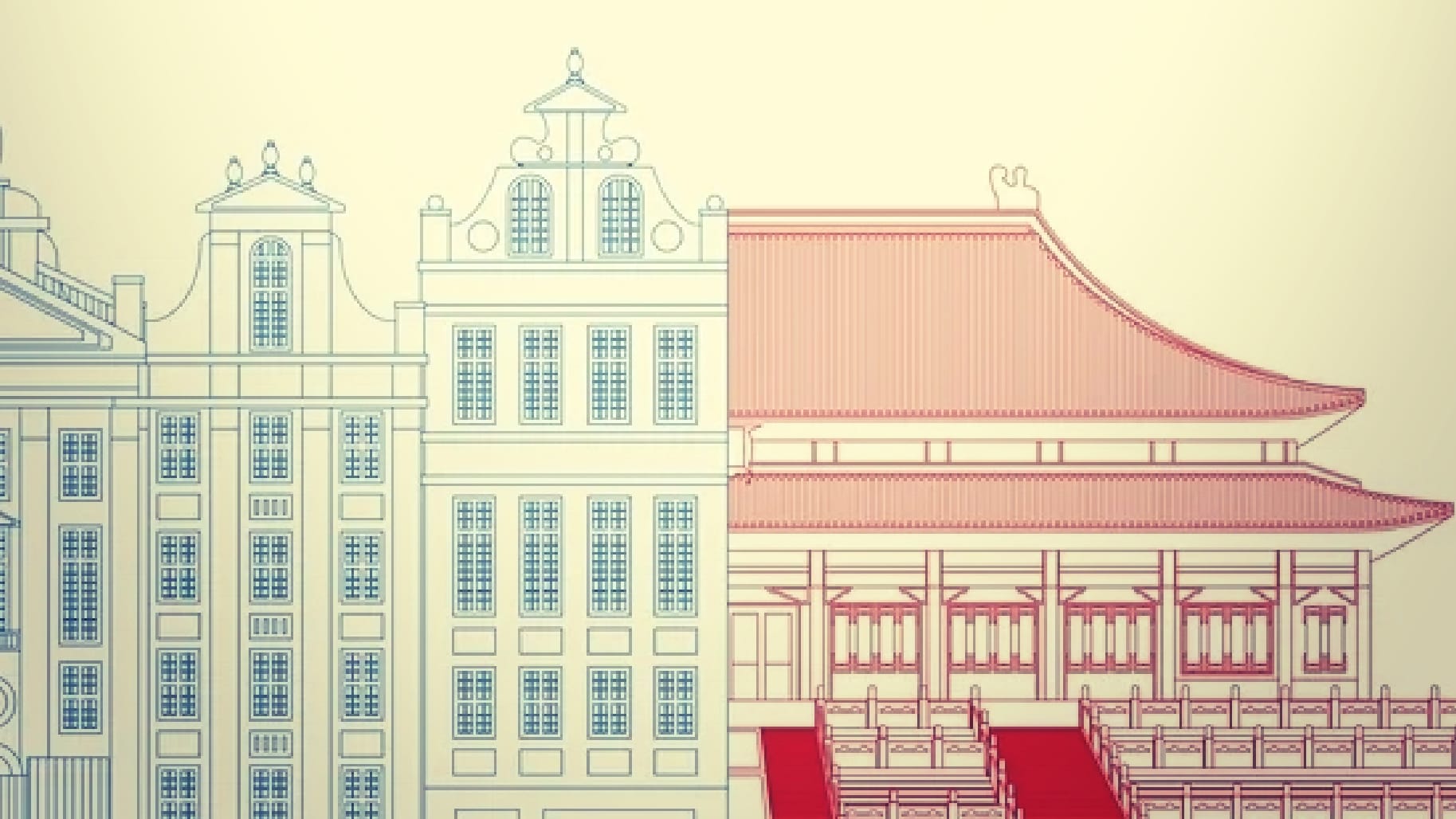
The People’s Republic of China has gotten prosperous very quickly. “In 1978, two years after Mao’s death, China was one of the poorest countries in the world; it accounted for almost 23 percent of world population, but for only 3 percent of world gross domestic product (GDP),” Avner Greif, Joel Mokyr—one of this year’s recipients of the Nobel Prize in economics—and Guido Tabellini write in their new book, Two Paths to Prosperity. “At the end of 2020, China was the largest economy in the world at purchasing power parity (PPP) adjusted exchange rates, with a share of world GDP of 18.3 percent, roughly proportionate to its share of the world population.”
That represents an average growth of 10 percent a year. “No other comparably large country has managed such an amazing feat in modern times, or in such a short period.”
How’d this happen?
Your loyal guide to a changing world.
Membership with The Signal means exclusive access to premium benefits:
- Regular profiles on the questions behind the headlines
- In-depth feature interviews with our network of specialist contributors from across America and around the world
- The despatch, our weekly current-affairs and cultural-intelligence briefing
- Early access to new products, including print extras
It also means vital support for an independent new enterprise in current-affairs journalism.
New music
‘Lonely City’
Here’s Bill Callahan—who’s lived in Austin, Texas, since 2004—with a new track that sounds like a love note to New York City, if, for him, a typically understated one. “Lonely City / You seem a little / Blue without me.” New York, he seems to be saying, has a gravitational pull on musicians, whether they live there or not.