Silent partners
Recently: What does owning America’s most valuable media properties actually get you? Michael Socolow on the challenges and limits of billionaire influence.
Today: What does $24 billion buy when it’s been structured specifically not to buy control? Saudi, Qatari, and Emirati sovereign-wealth funds are backing a hostile bid for CNN’s parent company—and they’ve explicitly renounced board seats and voting rights. So why is Jared Kushner financing the deal? And how will his father-in-law be “involved”?
+ For members: How do Gulf autocracies buy influence in America—legally? Ben Freeman on what America’s “authoritarian friends” are doing in Washington, D.C.
& New music from Melody’s Echo Chamber ...
Dictators in Hollywood’s bidding war
Paramount’s hostile takeover bid for Warner Bros. Discovery landed on Monday with US$108 billion in cash and a cast of financiers worth examining closely. Buried in filings with the U.S. Securities and Exchange Commission: $24 billion from Saudi Arabia’s Public Investment Fund, the Qatar Investment Authority, and Abu Dhabi’s L’imad Holding Company, plus a commitment from Jared Kushner’s Affinity Partners—itself heavily backed by Saudi and Qatari sovereign wealth.
The filings specify that these investors “have agreed to forgo any governance rights—including board representation—associated with their non-voting equity investments.” The structure preempts review by the Committee on Foreign Investment in the United States (CFiUS), which screens foreign acquisitions for national-security concerns. Tencent, the Chinese technology giant, withdrew from an earlier version of the bid after Warner Bros. Discovery’s board raised questions about “non-U.S. equity financing.” Gulf state money stays. Chinese money goes.
This is Kushner’s second Gulf-backed mega-deal in 2025—Affinity Partners joined the Saudi PIF in September’s $55 billion Electronic Arts buyout. U.S. President Donald Trump said on Sunday that a Netflix-Warner Bros. deal “could be a problem” and that he’d be “involved” in regulatory decisions. The bid includes CNN’s parent company. The Gulf investors renounced board seats and voting rights—the mechanisms CFiUS is built to scrutinize. What they didn’t renounce: the relationships, the access, the leverage that comes from being indispensable to a deal’s financing.
Meanwhile
- The peace deal no one remembers. Fighting between Thailand and Cambodia spread to five border provinces on Tuesday, with at least 13 dead and more than 400,000 displaced on the Thai side. The Thai military’s stated objective: “incapacitate the Cambodian Army.” Former Cambodian leader Hun Sen said his country launched counterattacks after waiting 24 hours to honor the Trump-brokered ceasefire from October. Asked about that peace deal—which Trump presided over in Kuala Lumpur—Thai Prime Minister Anutin Charnvirakul told reporters: “I don’t remember.”
- The dried husk. The U.S. Supreme Court heard arguments on Monday in a case that could let presidents fire the heads of independent regulatory agencies at will—eliminating protections that have defined the structure of federal governance since 1935. Chief Justice John Roberts called the precedent, Humphrey’s Executor, a “dried husk.” The case involves Trump’s firing of Federal Trade Commission member Rebecca Kelly Slaughter, who received an email in March stating her “continued service” was “inconsistent” with administration priorities—no cause given. A ruling for Trump would extend to agencies including the Federal Reserve and the Securities and Exchange Commission.
- New borders. Eyal Zamir, the head of the Israel Defense Forces, told troops in Gaza on Sunday that the “yellow line”—the ceasefire demarcation Israeli forces have refused to withdraw from—is “a new border line.” The October ceasefire deal states Israel “will not occupy or annex Gaza” and commits to “complete withdrawal.” The yellow line gives Israel control of more than half of Gaza’s territory, including most agricultural land and the Rafah crossing with Egypt. The Israeli government has not yet confirmed whether Zamir’s statement represents official policy.
- UN premises in East Jerusalem. Israeli police entered the headquarters of UNRWA—the United Nations agency for Palestinian refugees—in East Jerusalem on Monday, seized equipment, and replaced the UN flag with an Israeli flag. Israel said the action was debt collection for unpaid municipal taxes; the UN says the agency is exempt under international convention. Israel’s parliament banned UNRWA from operating on Israeli soil last year, citing alleged staff involvement in the Hamas-led attack against Israel on October 7, 2023—allegations UNRWA denies. Secretary-General António Guterres said the compound “remains United Nations premises and is inviolable.”
- The small portion. President Trump announced $12 billion in aid for American farmers on Monday, funded by tariff revenue. Most goes to growers of soybeans, corn, wheat, and other row crops hurt by the trade war with China—soybean farmers face their third consecutive year of losses. The American Farm Bureau, an industry group, estimates $34 billion in tariff-related losses. U.S. Senate Minority Leader Chuck Schumer, the chamber’s top Democrat, said Trump “wants credit for trying to fix a mess of his making.”

Your reading list for a changing world
Browse The Signal’s bookshop—organized into collections that track key themes in our investigations of current affairs: what’s driving the information wars, why societies are fracturing, how power keeps reinventing itself. Contributors’ titles alongside books we've featured in our coverage.
For members
Perfectly legal
How do Gulf autocracies buy influence in America—legally? Ben Freeman on what America’s “authoritarian friends” are doing in Washington, D.C.
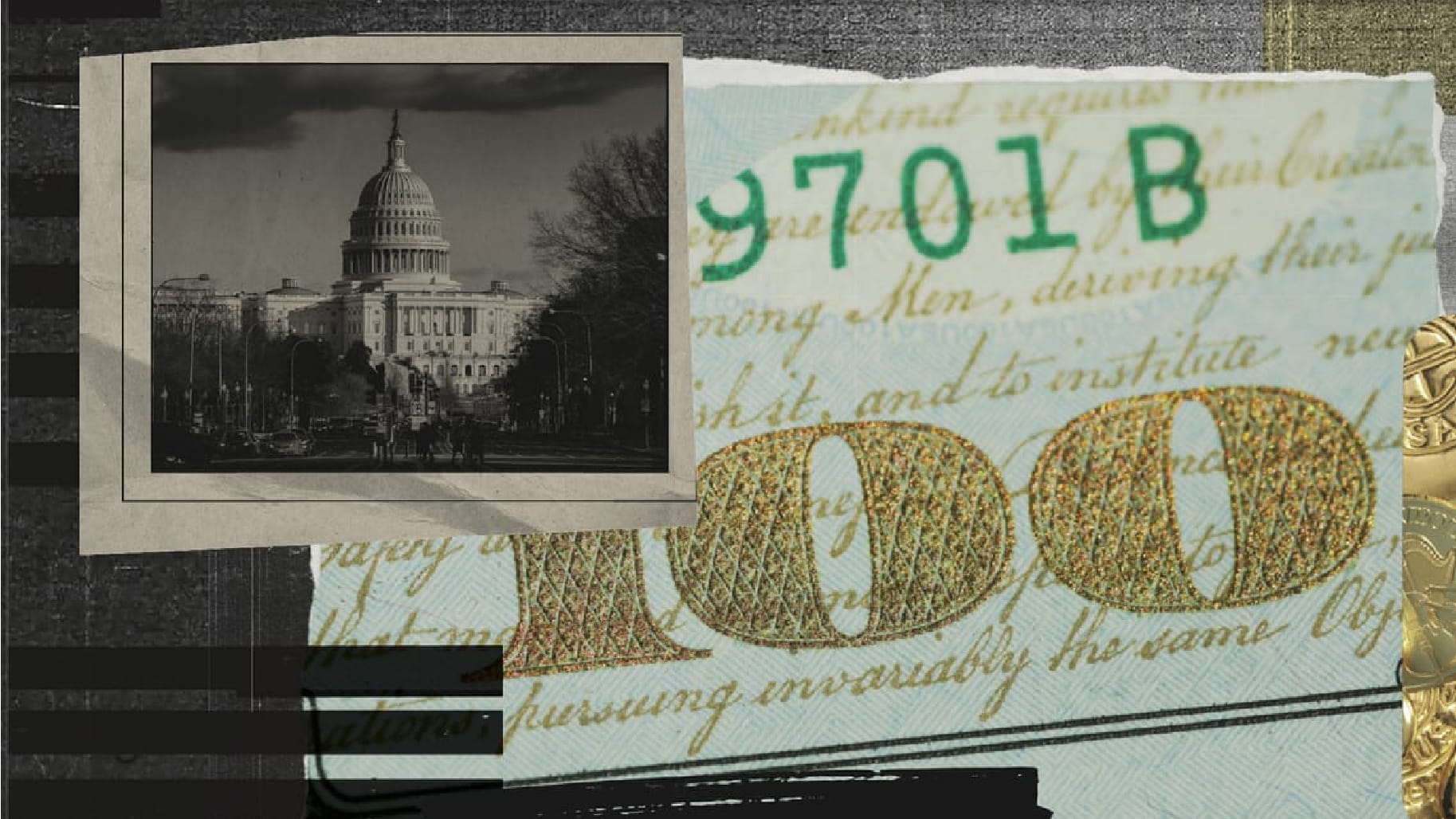
The Gulf sovereign-wealth funds backing Paramount’s bid aren’t new to American influence. In March, Ben Freeman explored how America’s “authoritarian friends” from the Persian Gulf have built an influence machine in Washington—not through the gold-bar bribery that makes headlines, but through lobbying firms, think tanks, universities, and entertainment investments. “There’s really no need for shady schemes,” Ben says. “If you want to buy influence, there are plenty of easier, and lower-risk—because legal—ways to buy it” …
Your loyal guide to a changing world.
Membership with The Signal means exclusive access to premium benefits:
- Regular profiles on the questions behind the headlines
- In-depth feature interviews with our network of specialist contributors from across America and around the world
- The despatch, our weekly current-affairs and cultural-intelligence briefing
- Early access to new products, including print extras
It also means vital support for an independent new enterprise in current-affairs journalism.
New music
‘The House That Doesn’t Exist’
Melody Prochet, the French recording artist who goes by Melody’s Echo Chamber is back with her fourth album, Unclouded. Sven Wunder produced. It’s a winking tale of an imaginary house on the shore, expressing a longing that some fella will join Melody in the house. Alas.