Ninety percent there

Recently: What does the transformation of the German military mean for Europe? Liana Fix on Berlin’s mission to build the Continent’s most powerful army.
Today: The U.S. has offered Ukraine security guarantees it’s never offered before—but Russia’s position is still apparently defined by Putin’s declaration in June: “All of Ukraine is ours.” Now what?
+ For members: What do you do if you’re the European Union, sitting on €200 billion belonging to the Kremlin? Sir William Browder on a potential turning point in the Ukraine war.
& New music from Yumi Zouma ...
The other ten percent
Washington offered Ukraine something it had never offered before—“Article 5-like” security guarantees (Article 5 being the NATO mutual-defense standard, where an attack on one is an attack on all), a European-led multinational force operating inside Ukraine, a path to Senate ratification—and then told Kyiv the offer wouldn’t last. U.S. officials described two days of talks in Berlin as 90 percent resolved. Ukraine’s President Volodymyr Zelenskyy indicated he would drop his country’s NATO membership bid in exchange. German Chancellor Friedrich Merz called the proposed guarantees “considerable.” But the 10 percent that remains unresolved is the 10 percent that matters: territory. And Washington is pressuring the side it can pressure.
Moscow hasn’t moved. Deputy Foreign Minister Sergei Ryabkov said on Tuesday that Russia won’t make territorial concessions. The Kremlin still demands recognition of annexed regions it doesn’t fully control; Vladimir Putin declared in June that “all of Ukraine is ours.” The U.S. proposal envisions a “zone” in eastern Ukraine—Washington calls it a “free economic zone,” Moscow calls it a “demilitarized zone”—and no one has reconciled the difference. The security guarantees are real. The deadline is real. What’s missing is any sign the other side of the table is really negotiating. … See “The longest table.”

Meanwhile
- ‘Operation Midnight Sun.’ The U.S. Federal Bureau of Investigation arrested four members of an anti-government group on Friday as they assembled pipe bombs in the Mojave Desert for a planned New Year’s Eve attack on logistics centers in Los Angeles and Orange counties. Attorney General Pam Bondi described the Turtle Island Liberation Front as "far-left, pro-Palestine, anti-government, and anti-capitalist." The administration framed the arrests as evidence of domestic left-wing terrorism—though the group’s Instagram account had fewer than 900 followers.
- When you attend a memorial in Tehran. The family of the 2023 Nobel Peace Prize laureate, Narges Mohammadi, said on Tuesday that Iranian security forces hospitalized her twice after her arrest last Friday—with severe beatings to the head and neck during a memorial for a human-rights lawyer who died in unclear circumstances. Mohammadi told relatives she doesn’t know which authority holds her. Her captors have accused her of “cooperating with the Israeli government.”
- ‘Cambodia must announce the ceasefire first.’ Bangkok rejected U.S. President Donald Trump’s claim of a renewed truce on Tuesday and demanded Phnom Penh unilaterally halt fighting before any talks. Thailand also cut fuel shipments through Laos over fears supplies were reaching Cambodian forces. The conflict—now in its second week—has displaced more than 600,000 people across both countries.
- Eighty thousand claims. Thirty-five countries signed a convention in The Hague on Tuesday establishing an International Claims Commission for Ukraine—a body to assess reparations for damage, loss, and injury since Russia’s full-scale invasion. The commission builds on a Register of Damage that has already received 80,000 claims. Where the money will come from remains unresolved.
- Thursday’s summit. The European Union’s foreign-policy chief, Kaja Kallas, said on Monday that talks over the €90 billion “reparations loan”—which would use €210 billion in frozen Russian assets as collateral—are “increasingly difficult.” Belgium, which hosts the bulk of the assets, opposes the plan. EU leaders will try to reach an agreement at a summit in Brussels on Thursday. … See “Dead money,” below.

Your reading list for a changing world
Browse The Signal’s bookshop—organized into collections that track key themes in our investigations of current affairs: what’s driving the information wars, why societies are fracturing, how power keeps reinventing itself. Contributors’ titles alongside books we've featured in our coverage.
For members
Dead money
What do you do if you’re the European Union, sitting on €200 billion belonging to the Kremlin? Sir William Browder on a potential turning point in the Ukraine war.
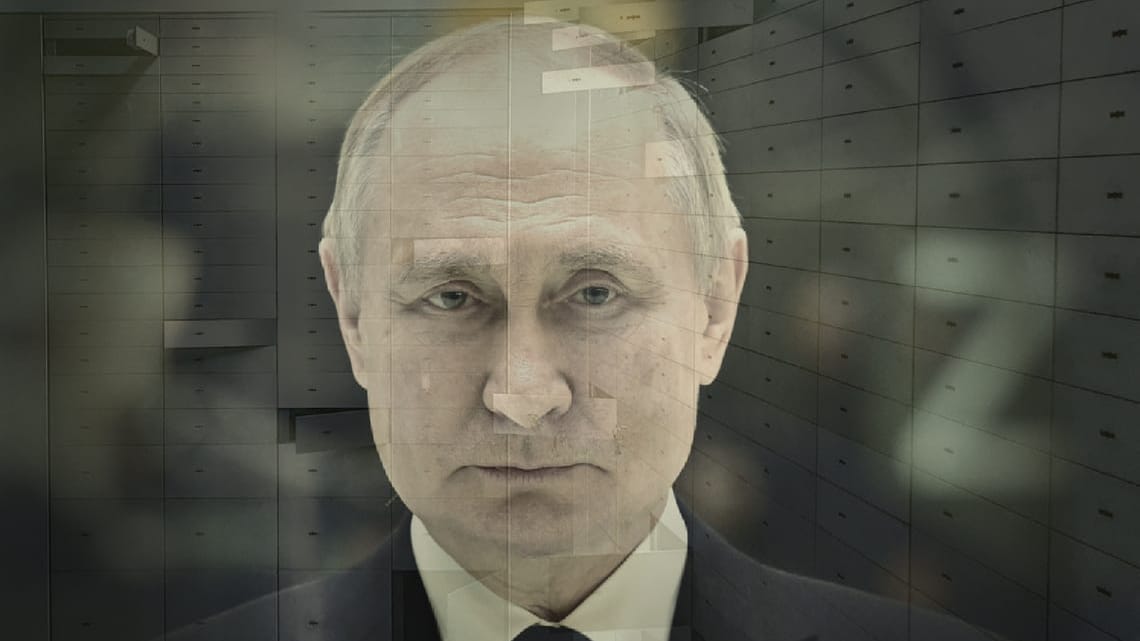
Six months ago, here in The Signal, Sir William Browder warned that Europe’s approach to frozen Russian assets was unsustainable. The European Union had immobilized €200 billion—most of it sitting at Euroclear, a securities depository in Brussels—but frozen isn’t seized, and the arrangement required unanimous renewal every six months. Hungary had been threatening to veto. “If Hungary vetoes the reauthorization,” Browder said, “the $200 billion of frozen Russian assets held in Europe will be returned to Russia. It will be one holy mess.”
Since then, the EU closed one loophole: On December 12, it made the asset freeze permanent, removing Hungary’s veto over renewal. But converting frozen assets into actual support for Ukraine remains stuck. Belgium, which holds the bulk of the funds, fears it could be held liable if Russia prevails in court—and on Monday, Russia’s Central Bank filed suit against Euroclear seeking €229 billion in damages. Meaning those fears just got harder to dismiss.
Browder has been lobbying European governments to seize Russian assets since 2022—and in June, he laid out why the freeze-but-don’t-seize approach was always going to end in a bind. Belgium, he said, is “scared of their own shadow.” Hungary “doesn’t truly have power; they just think they have it when everyone is being polite.” And what about the worry that seizing assets might scare other countries away from European banks? “What are the alternatives, really? You’re not going to suddenly start keeping your money in Iranian rials and Argentine pesos.” Whether Thursday’s summit breaks the deadlock or extends it, Browder’s logic hasn’t changed: Europe will need to help Ukraine win the war and reconstruct after it—and for that, it can either tax its citizens or take the money from those responsible …
Your loyal guide to a changing world.
Membership with The Signal means exclusive access to premium benefits:
- Regular profiles on the questions behind the headlines
- In-depth feature interviews with our network of specialist contributors from across America and around the world
- The despatch, our weekly current-affairs and cultural-intelligence briefing
- Early access to new products, including print extras
It also means vital support for an independent new enterprise in current-affairs journalism.
New music
‘95’
New Zealand’s Yumi Zouma return with a downcast single about living your dreams, getting what you wanted, … and finding it all hollow.