‘Something we become’
Recently: How do Gulf autocracies buy influence in America—legally? Ben Freeman on what America’s “authoritarian friends” are doing in Washington, D.C.
Today: U.S. Coast Guard members fast-roped onto a Venezuelan tanker on Wednesday—Washington’s first physical interdiction near Venezuelan waters since Trump returned to power. The carrier was already there. The warrant already existed. So why now?
+ For members: What does owning America’s most valuable media properties actually get you? Michael Socolow on the challenges and limits of billionaire influence.
& New music from The Bevis Frond ...
Oil and pressure
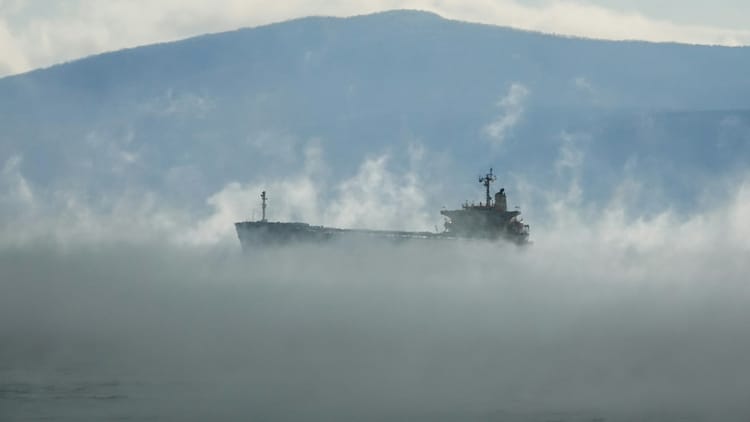
U.S. forces seized a sanctioned oil tanker off Venezuela’s coast on Wednesday, with Coast Guard members fast-roping from helicopters onto the deck of the Skipper, a vessel carrying roughly 1.1 million barrels of Venezuelan crude bound for Cuba. The operation launched from the USS Gerald Ford, which deployed to the Caribbean last month. U.S. President Donald Trump called it “the largest one ever seized.” Attorney General Pam Bondi confirmed the ship had been sanctioned since 2022 for supporting an Iran-Hezbollah oil-smuggling network. Venezuela’s foreign minister denounced it as “international piracy.” When asked what would happen to the oil, Trump said: “We keep it, I guess.”
It’s Washington’s first physical interdiction of a tanker near Venezuelan waters since Trump returned to office—a step beyond sanctions into direct action. But the legal architecture predates this week: The warrant already existed, the carrier was already positioned, the sanctions were already in place. What changed? The timing is striking: Opposition leader María Corina Machado also surfaced in Oslo on Wednesday for her Nobel Peace Prize, her first public appearance in 11 months. But the more telling detail may be operational: The U.S. administration executed using authorities already in place—existing sanctions, an existing warrant, a carrier already on station.

Meanwhile
- Machado in Oslo. Her escape took her through 10 military checkpoints, onto a fishing boat in rough Caribbean seas, and finally to a private jet. She arrived too late for Wednesday’s Nobel ceremony—her daughter accepted the prize—but appeared on a hotel balcony around 2:30 a.m. Thursday to greet supporters. She had been in hiding since January 9. In prepared remarks read by her daughter: “Freedom is not something we wait for, but something we become.”
- M23 takes Uvira days after ’miracle’ deal. Rwanda-backed M23 rebels captured Uvira in eastern Democratic Republic of Congo on Wednesday—five days after Presidents Félix Tshisekedi and Paul Kagame signed a U.S.-brokered peace deal Trump called a “miracle.” The city, serving as South Kivu’s provisional capital since Bukavu fell in February, collapsed in less than 24 hours. At least 200,000 people have fled since December 5. The U.S. and European powers called on Rwanda to halt the offensive.
- UAE-backed separatists claim southern Yemen. The Southern Transitional Council claimed control of all eight of Yemen’s southern governorates on Monday after seizing the presidential palace in Hadramout, along with the country’s largest oil company. The STC is backed by the United Arab Emirates and nominally part of Yemen’s government—its leader is the vice president—but the offensive targeted Saudi-backed forces within the same coalition, who quietly withdrew from bases in Aden during the offensive. Frontlines in Yemen’s broader civil war have barely moved for years. Now the anti-Houthi coalition appears to be fighting itself.
- The under-16 social-media ban Down Under. Australia became the first country to enforce a nationwide social media ban for under-16s on Wednesday, requiring TikTok, Instagram, YouTube, and others to block underage users or face fines up to AU$49.5 million. Meta had already deactivated over 200,000 accounts. The law places the enforcement burden entirely on platforms—no penalties for children or parents. Some kids reportedly fooled age-estimation technology by drawing on facial hair. Malaysia and Denmark have announced plans to follow.
- Three dissents. The U.S. Federal Reserve lowered its benchmark rate by a quarter point to 3.5–3.75 percent on Wednesday, but the decision drew three no votes—the most since 2019. One official wanted a deeper cut; two preferred holding steady. Chair Jerome Powell indicated a likely pause, saying officials are “well positioned to wait and see.” The bind: inflation remains stuck at 2.8 percent, above target—but Powell warned that once data revisions come through, job growth may actually be negative.

Wary of fast fashion?
Shop Congo Clothing Company and
make a difference—in style.
All the reach in the world
What does owning America’s most valuable media properties actually get you? Michael Socolow on the challenges and limits of billionaire influence.
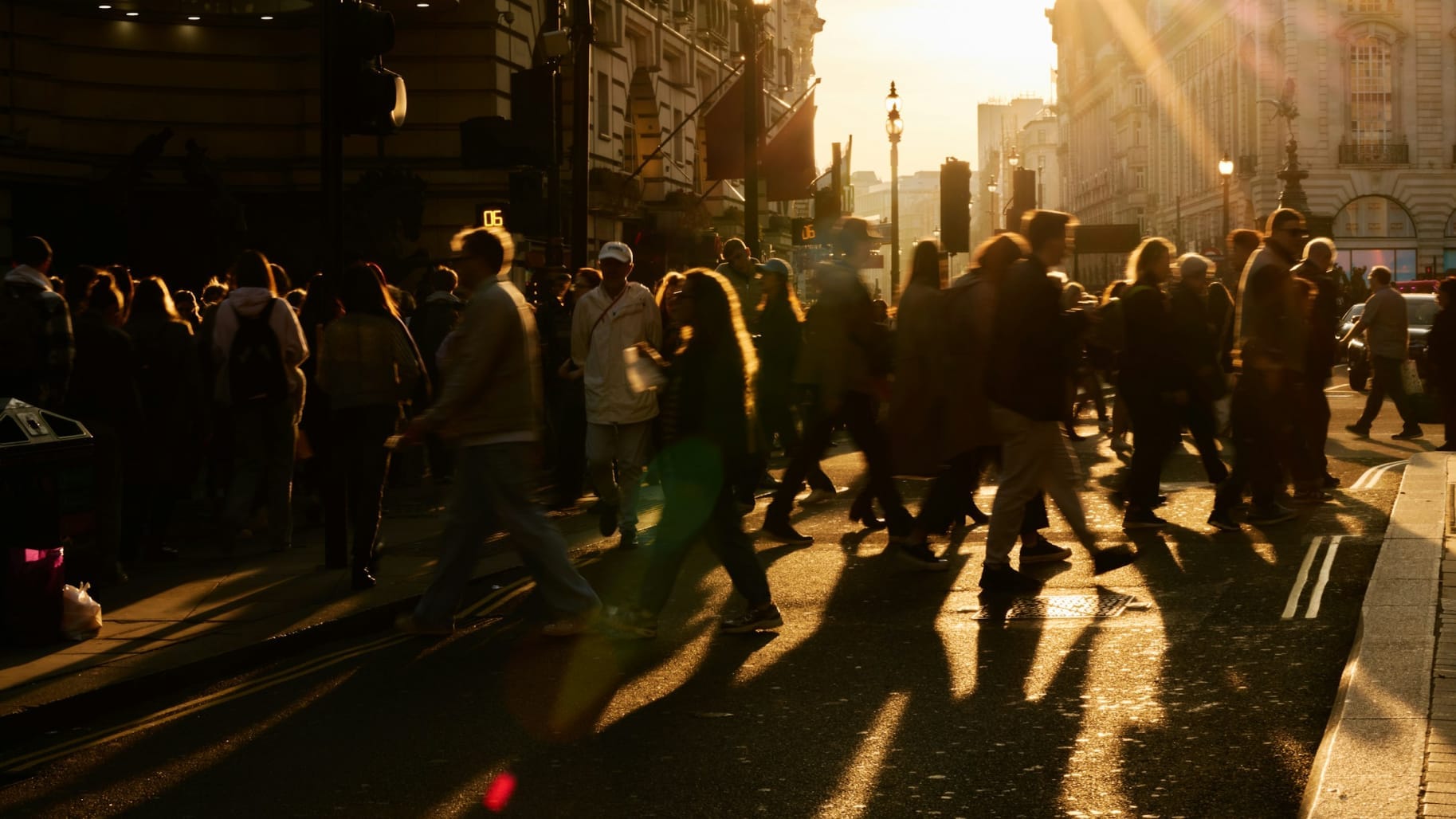
On Wednesday, U.S. President Donald Trump waded directly into the Warner Bros. Discovery fight, declaring “it’s imperative that CNN be sold”—a clear signal favoring Paramount’s US$108 billion hostile bid, which includes CNN, over Netflix’s US$83 billion deal, which doesn’t. “I’ll be involved in that decision,” Trump told reporters. But does reach translate to influence? Here in The Signal, Michael Socolow explores what billionaire consolidation of major media properties means for influence and persuasion in America …
- On the paradox of shrinking audiences and rising value: “As media companies get smaller, the bigger ones become much more valuable relative to the smaller ones. You can see this in live sports: The value of NFL contracts in the United States has soared far beyond what it was 20 years ago, when the audiences were much larger. This doesn’t make any sense, right? Your advertising used to reach tens of millions more people 20 years ago, and yet buying advertising on football games now costs far more. That’s because when everything fragments, there’s nothing else that generates audiences.”
- On the limits of media persuasion: “There’s this big media star in America, Tucker Carlson, who used to have the number-one show on Fox News. Carlson went on TV basically every single night for about six months after the 2020 presidential election. He had three main political points: January 6 wasn’t a riot; the Covid-19 vaccine is medically dangerous; and the United States should stay out of the Russia-Ukraine war. Despite having the number-one show, Carlson couldn’t move American public opinion at all on any of those issues.”
- On the state’s new role: “Congress passed a law barring China from owning TikTok—which meant ByteDance had to sell it. TikTok sued, but it lost in the Supreme Court. So up to that point, everything Donald Trump did with TikTok was legally unprecedented—extending deadlines Congress had set, engineering a sale structured around his allies. Because if Congress passes a law and the Supreme Court rules it constitutional, the president doesn’t normally get to negotiate his own terms. Trump did.”
Your loyal guide to a changing world.
Membership with The Signal means exclusive access to premium benefits:
- Regular profiles on the questions behind the headlines
- In-depth feature interviews with our network of specialist contributors from across America and around the world
- The despatch, our weekly current-affairs and cultural-intelligence briefing
- Early access to new products, including print extras
It also means vital support for an independent new enterprise in current-affairs journalism.
New music
‘Horrorful Heights’
Nick Saloman, who’s fronted The Bevis Frond since 1986, is fed up: “I don’t want to be wrong / But I don’t want to be right,” he sings over a mournful sitar on the first single from the band’s 27th album—a calm dispatch from the wasteland.