‘Wasting the world’s time’
Recently: How does joining a petition become a crime? Glacier Kwong on civic life in Hong Kong today.
Today: Why did Venezuela just help the United States deport migrants—days after Trump declared its airspace closed? The threats are real: a carrier group in the Caribbean, troops massed in the region, strikes on alleged drug boats. Yet on Wednesday, a flight from the U.S. landed anyway.
+ For members: Why are Colombian armed gangs and militias launching so many drone attacks? Robert Hamilton on the new art of war.
& New music from Ghost Dubs ...
The channel stays open
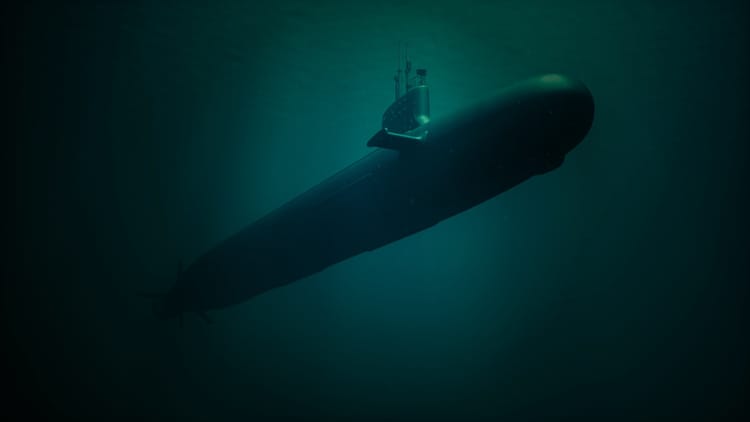
Over the weekend, U.S. President Donald Trump declared Venezuelan airspace “closed in its entirety”—a message, he said, for “all Airlines, Pilots, Drug Dealers, and Human Traffickers.” The USS Gerald R. Ford carrier group remains in the Caribbean. Thousands of troops are massed in the region. Trump has said land strikes could come “very soon.”
Venezuela’s President Nicolás Maduro called the airspace announcement a “colonialist threat” that violates international law. On Saturday, his government canceled the twice-weekly deportation flights carrying migrants back from the U.S. And then on Tuesday, at Washington’s request, it reversed course. The flights resumed. (The first arrived on Wednesday.)
Why?
The arrangement suggests both sides found something worth preserving. For Trump’s administration, continued deportations without the costs of military action. For Maduro’s, an open channel—and possibly a signal that regime change isn’t the immediate goal.
The contradiction is stark. The U.S. has designated Maduro the head of a “foreign terrorist organization” and carried out 21 strikes on alleged drug boats since September, killing at least 83 people. It’s authorized CIA covert operations inside Venezuela. And while American prosecutors once called Honduras under Juan Orlando Hernández a “narco-state,” Trump pardoned him this week.
After months of conflicting policy, what the Americans’ Venezuela campaign actually is—counter-narcotics operation, regime-change pressure, or something else—remains unclear. The deportation deal suggests something ambiguous and potentially complex—that the U.S. administration wants Maduro weakened yet still needs him functional.

Meanwhile
- The inspector general’s verdict. The Pentagon’s watchdog found that Defense Secretary Pete Hegseth endangered U.S. troops and violated department policy when he shared Yemen strike plans on an encrypted consumer messaging service—including in a chat with his wife and brother. Hegseth declined to be interviewed; in a written response, he asserted his authority to declassify information. The Pentagon called the report a “total exoneration.”
- The second strike, revisited. Hegseth told reporters on Tuesday he “didn’t stick around” to see the second strike on the September 2 drug boat—the one that killed two survivors clinging to the wreckage. A U.S. official confirmed four missiles were used in the attack. At a Cabinet meeting, Hegseth said the U.S. has “only just begun” striking boats: “Deterrence has to matter.”
- No breakthrough in Moscow. A planned meeting between Ukraine’s President Volodymyr Zelenskyy and U.S. envoys Steve Witkoff and Jared Kushner is off after their five-hour talks with Russia’s President Vladimir Putin on Tuesday yielded no compromise on territory. Putin’s aide called the discussions “useful” but said no resolution is possible without territorial concessions. Ukraine’s foreign minister accused Putin of “wasting the world’s time.”
- One year after the six-hour coup. South Korea’s President Lee Jae Myung marked the first anniversary of Yoon Suk Yeol’s failed martial law declaration—six hours that ended when parliament voted it down. Lee vowed “strict accountability” for perpetrators and proposed making December 3 a national holiday. Polls show 77 percent of South Koreans believe polarization has worsened since. Yoon, on trial for insurrection, maintains his innocence.
- 159 dead, more arrests. The death toll from Hong Kong’s deadliest fire in nearly eight decades has reached 159, with 31 people still missing. On Wednesday, authorities arrested six more people—accused of making false statements about fire alarms during building work. National-security police have separately detained three people, including a student who distributed materials supporting a petition that called for an independent inquiry—despite Hong Kong’s Chief Executive John Lee announcing an inquiry just two days later. … See “Ten thousand signatures.”

Your reading list for a changing world
Browse The Signal’s bookshop—organized into collections that track key themes in our investigations of current affairs: what’s driving the information wars, why societies are fracturing, how power keeps reinventing itself. Contributors’ titles alongside books we've featured in our coverage.
For members
Weapon of choice
Why are Colombian armed gangs and militias launching so many drone attacks? Robert Hamilton on the new art of war.

Over the past two years, Colombia’s drug gangs and revolutionary guerrillas have attacked the government and military increasingly frequently—and something is changing in the fighting: drones, everywhere.
The gangs and paramilitaries had been using drones over the past decade for smuggling and surveillance, but in 2023, they started using them as weapons. This year, they’ve made more than 80 assaults with drones, up from fewer than 20 last year. October recorded the highest number of drone attacks in any month yet.
They’ve hit soldiers on patrol, army bases, police stations, and naval vessels. They use drones to drop mortars on troops, and FARC— the Revolutionary Armed Forces of Colombia, a leftist militia that’s been fighting the state for more than 60 years—packed a drone with explosives and flew it into a navy patrol boat in July.
Thousands of Colombian fighters have traveled to Ukraine as mercenaries—on both sides of the conflict—largely so they could learn the newest techniques in drone warfare.
After a series of drone attacks this summer, Humberto de la Calle, Colombia’s former vice president, said, “This has never happened before in Colombia.”
Meanwhile, in Rio de Janeiro, gangs used drones to launch grenades at police during a raid in October.
What’s going on here?
As Robert Hamilton explores here in The Signal, “Warfare has now entered a new era.”
Drones are now cheap and mass-produced, and Ukrainian and Russian forces have devised new and increasingly lethal ways to deploy them. In the European conflict, Bob says, drone warfare has made it harder for either side to seize and hold new territory. But drones have also altered the course of the civil war in Sudan. They shaped the brief but intense outbreak of war between India and Pakistan in May. And now, in Colombia, it looks like organized criminals and rebels are using drones to begin a new era of deadly violence ...
Your loyal guide to a changing world.
Membership with The Signal means exclusive access to premium benefits:
- Regular profiles on the questions behind the headlines
- In-depth feature interviews with our network of specialist contributors from across America and around the world
- The despatch, our weekly current-affairs and cultural-intelligence briefing
- Early access to new products, including print extras
It also means vital support for an independent new enterprise in current-affairs journalism.
New music
‘In the Zone’
The Stuttgart-based dub experimentalist Michael Fiedler—a.k.a., Ghost Dubs—has been working and playing gigs with the English producer Kevin Martin, The Bug. This track, a collaboration between the two, features a deeply submerged low-end with dry cymbal taps and an almost sonar-level of gloom over the top.