Limitless
Recently: Why are business leaders across China disappearing into prisons? Jiangnan Zhu on the motives behind Beijing’s anti-corruption campaign.
Today: Iran’s protests began over inflation. Twelve days later: “Death to the dictator.”
+ For members: Can Europe defend its northern border? Paul Taylor on the Nordic bulwark against Russia.
& New music from Robyn ...
Everywhere at once
On Thursday, Iran’s anti-government protests entered their twelfth day, having spread to every province—despite tear gas, mass arrests, internet blackouts, and 800 Iraqi Shia militia fighters deployed to help with suppression.
The demonstrations began on December 28, when Tehran’s Grand Bazaar merchants shuttered their shops over a collapsing rial and 42 percent inflation. Within days, economic grievance turned political. Protesters in Mashhad—Supreme Leader Ali Khamenei’s hometown—tore apart an Iranian flag. Crowds chanted “Death to the dictator.” Students declared, “This criminal system has taken our future hostage for 47 years.” At least 38 people have died; more than 2,200 are in custody. On Thursday, NetBlocks reported a nationwide internet blackout. Why can’t the regime contain this?
Part of the answer appears to be its scale and distribution. Wednesday saw protests in every province across Iran, rural towns and major cities alike—too many fronts for the state’s security apparatus to manage. The militia deployment suggests domestic forces are stretched thin.
But the economic trigger won’t vanish even if the protesters do. Food prices have risen 72 percent year-on-year. Rolling blackouts continue. The government announced cash subsidies on Wednesday—US$7 monthly per household. According to one Tehran resident, this buys food for one breakfast. That’s it.
The regime’s own admissions suggest strain. President Masoud Pezeshkian acknowledged the right to protest but conceded he lacks control over security forces: “The government simply does not have that capacity.” Watch the bazaaris—the merchant class whose financial support helped the 1979 revolution succeed.

Meanwhile
Aleppo, again. Syrian government forces imposed a curfew on Thursday on the city’s Kurdish-majority neighborhoods, then attacked them. Three days in, more than 138,000 people have fled. The violence marks the collapse of a March agreement, under which the Kurdish-led Syrian Democratic Forces would merge into the Syrian army by year’s end. That deadline has passed. The Kurds want decentralized governance; Damascus has refused.
‘Get the fuck out of Minneapolis.’ On Thursday, the U.S. Federal Bureau of Investigation revoked Minnesota investigators’ access to evidence from Wednesday’s fatal shooting of Renee Nicole Good, a 37-year-old U.S. citizen and mother of three, by an Immigration and Customs Enforcement agent—making an independent probe, Minnesota’s Governor Tim Walz says, “extremely difficult, if not impossible.” The Department of Homeland Security calls the killing of Good self-defense; she tried to run over agents with her car. Minneapolis Mayor Jacob Frey describes this rationale as “bullshit.” With state investigators locked out, it may be impossible to challenge federal officials’ account.
The only thing that can stop me. Asked by The New York Times on Wednesday whether anything limits his global powers, U.S. President Donald Trump answered: “My own morality. My own mind. It’s the only thing that can stop me.” He added, “I don’t need international law.” During the interview, Colombia’s President Gustavo Petro called—alarmed by Trump’s threats of military action. Trump also declined to say whether he valued preserving NATO or acquiring Greenland more, suggesting a choice between them might arise.
The call that changed Petro’s speech. Days earlier, Trump had called Colombia’s president “a sick man who likes making cocaine” and said military intervention “sounds good to me.” Petro mobilized thousands to rally in Bogotá’s Plaza Bolívar. Petro reached him just before taking the stage. By the end of the call, Trump had invited him to the White House. “If we don’t speak, there is war,” Petro told the crowd. “I had to change my speech.”
Indefinitely. Secretary of State Marco Rubio has outlined a three-phase plan for Venezuela: stabilize the country, ensure U.S. oil companies gain access, then oversee a political transition. The U.S. seized two tankers on Wednesday—the Russian-flagged Marinera, after an Atlantic pursuit lasting weeks, and the stateless M/T Sophia in the Caribbean. Trump says Washington will control proceeds from 30–50 million barrels of Venezuelan crude. U.S. Energy Secretary Chris Wright: The U.S. will manage sales “indefinitely.” … See “Minus Maduro.”

Your reading list for a changing world
Browse The Signal’s bookshop—organized into collections that track key themes in our investigations of current affairs: what’s driving the information wars, why societies are fracturing, how power keeps reinventing itself. Contributors’ titles alongside books we've featured in our coverage.
For members
‘You’d be paranoid too’
Can Europe defend its northern border? Paul Taylor on the Nordic bulwark against Russia.
When the Trump administration unveiled its plan to end the war in Ukraine in November, European leaders pushed back. France’s President Emmanuel Macron warned Ukraine’s President Volodymyr Zelenskyy that the United States might “betray” his country. “The pressure must be on the aggressor, not on the victim,” Kaja Kallas, the European Union’s foreign-policy chief, said. “Rewarding aggression will only invite more of it.”
Washington wasn’t impressed. The new U.S. National Security Strategy dismissed “European officials who hold unrealistic expectations for the war perched in unstable minority governments.” A senior analyst at the RAND Corporation, a defense think tank, put it more bluntly: “The hand wringing from some across the pond … is a bit hard to stomach. … You cannot hope to shape outcomes if you’re sitting on the sidelines.”
So what are the Europeans actually doing?
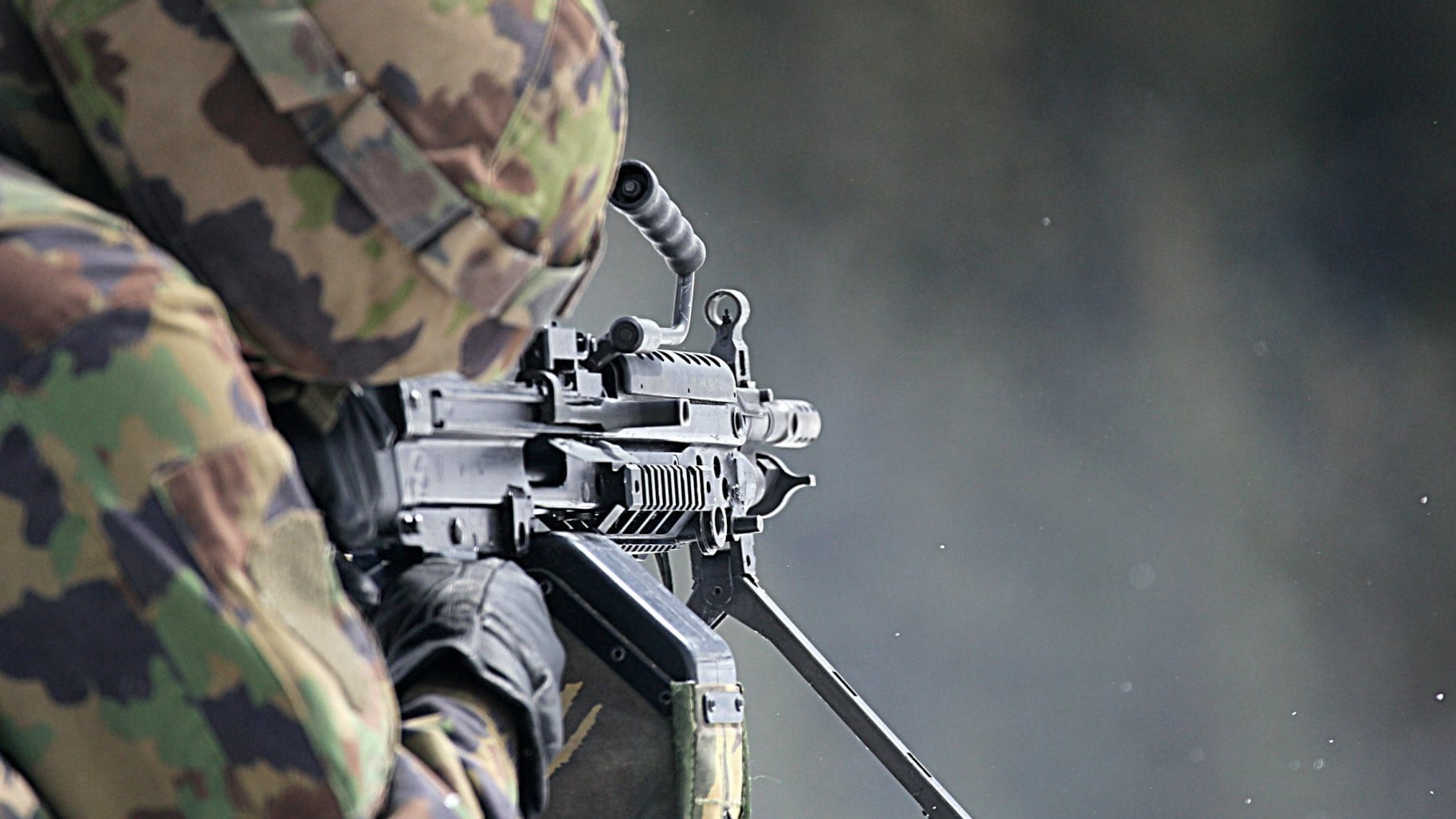
In the northern reaches of the Continent, eight countries have drawn closer together in a formation called the Nordic-Baltic Eight: Denmark, Norway, Finland, Iceland, Sweden, Estonia, Latvia, and Lithuania. Immediately after Washington announced its Ukraine plan, their governments convened to coordinate a response. They’ve ramped up military spending, sent weapons to Ukraine, and integrated their command structures. NATO recently folded all eight into a single theatre of operations under U.S. command—even as Washington signals its readiness to pull troops from the rest of Europe.
Paul Taylor is a senior visiting fellow at the European Policy Centre and a columnist for The Guardian. Taylor says the Nordic-Baltic Eight have more clout than their size would suggest—not through raw military power but through coordination. They caucus before EU and NATO summits. They share a threat perception that Western Europeans often dismiss, as suspected Russian sabotage of undersea cables has intensified in the Baltic Sea (Finnish authorities seized a vessel on New Year’s Eve after it allegedly severed a cable to Estonia). And they’re watching the forces Russia pulled from their borders to fight in Ukraine—wondering what’ll happen next when that war ends …
Your loyal guide to a changing world.
Membership with The Signal means exclusive access to premium benefits:
- Regular profiles on the questions behind the headlines
- In-depth feature interviews with our network of specialist contributors from across America and around the world
- The despatch, our weekly current-affairs and cultural-intelligence briefing
- Early access to new products, including print extras
It also means vital support for an independent new enterprise in current-affairs journalism.
New music
‘Talk to Me’
New from Robyn, anticipating her March album Sexistential, this track is co-written with Max Martin—their first collaboration since 2010’s Body Talk—and lands in the same territory as November’s “Dopamine.” Bubbly, uptempo, a plea for human connection beneath.