The art of the deal
Recently: Can Europe save its auto industry? Sander Tordoir on how Chinese competition, American tariffs, and self-inflicted injury have put Europe’s carmakers on the brink.
Today: 48 hours of crisis coverage. Very dramatic. What did the American president actually get?
+ For members: The post-Cold War economic order is crumbling—what’s taking its place? Nicholas Mulder on the forces behind the “phase shift” in the world economy.
& New music from Lala Lala ...
Framework of a concept of …
On Sunday, U.S. President Donald Trump told Norway’s Prime Minister Jonas Gahr Støre that he no longer feels “an obligation to think purely of peace”—having been denied the Nobel Prize. On Wednesday, Trump took the stage at Davos, demanded “immediate negotiations” on Greenland, and announced that NATO Secretary General Mark Rutte had agreed to “the framework of a future deal.”
The tariff threats against eight NATO allies evaporated. Markets rallied. Headlines declared resolution. But Denmark didn’t attend. Neither did Greenland. Both still say the island isn’t for sale. Reporters asked if the “framework” involved U.S. ownership; Trump said he “didn’t want to say yet.” According to Rutte, sovereignty never came up.
With Gaza and China, Trump’s framework deals have followed a pattern: signing over settling, possession over process, deferring hard questions to later phases. But those agreements had counterparties. Hamas agreed to a ceasefire. Xi agreed to pause rare-earth restrictions. Here, the only party with authority over Greenland—Denmark—has conceded nothing.
What did Trump get? By all accounts and appearances as of Thursday: an off-ramp. The threatened tariffs never went into effect. He’s ruled out military force. The crisis-to-resolution arc played out across 48 hours of coverage. But Denmark hasn’t moved. Neither has Greenland. No text. No agreement. No sign Copenhagen budged. … See “Cliffhanger,” “Breaking noise.”

Meanwhile
- And now, the Board of Peace. Trump signed the charter for his “Board of Peace” on Thursday in Davos—a body he created to oversee Gaza’s reconstruction—but whose 11-page founding document doesn’t mention Gaza. About 25 countries signed along, including Hungary, Pakistan, Saudi Arabia, and the United Arab Emirates. Major Western allies kept their distance: the U.K., France, and Germany—all declined. Trump invited Russia’s President Vladimir Putin, who sent no representative. Trump, who will chair the board—indefinitely, with veto power—said it can now “do pretty much whatever we want.”
- Ukraine talks are ‘down to one issue.’ U.S. special envoy Steve Witkoff said on Thursday that negotiations on Ukraine are in their “final stages.” He and Jared Kushner headed to Moscow to meet Putin—their second Kremlin visit in two months. In the meantime, earlier on Thursday, Trump met Volodymyr Zelenskyy in Davos, telling reporters the war “has to end.” The Kremlin said afterward that peace is “no closer yet no further away.”
- 23 years for insurrection. A Seoul court sentenced former prime minister Han Duck-soo to prison on Wednesday for his role in former president Yoon Suk-yeol’s brief imposition of martial law in December 2024. Prosecutors asked for 15 years; the court went higher, calling it a “top-down insurrection.” Han is the first cabinet member sentenced over the decree. Yoon faces a separate verdict on February 19—prosecutors are seeking the death penalty.
- Taiwan’s opposition blocks defense budget—again. Taiwan’s two leading opposition parties have now blocked President Lai Ching-te’s US$40 billion special defense budget eight times since December. The Kuomintang and Taiwan People’s Party—which favor closer ties with Beijing and together control a majority of the legislature—demand Lai explain the spending in person. The U.S., which just notified Congress of an $11 billion arms package for Taiwan, is publicly urging passage. The Americans want Taiwan to modernize faster—and are clear about why: China.
- Pinochet’s lawyers. Chilean President-elect José Antonio Kast named two former lawyers for the country’s infamous dictator Augusto Pinochet to his cabinet on Tuesday. Fernando Barros, who led Pinochet’s legal defense when Spain sought his extradition for crimes against humanity in 1998, will serve as Defense Minister. Fernando Rabat, who defended Pinochet in an illicit-funds case involving hidden assets at Riggs Bank, will head Justice and Human Rights—the ministry that’s still overseeing dictatorship-era prosecutions. Kast takes office on March 11—35 years after Pinochet left power.

AI will affect 300 million jobs in the next 3 years
Yours might be one of them.
If you’re planning to finally start mastering AI in 2026, there’s no easier way than Superhuman AI. It delivers all the AI news that matters—plus tools, tutorials, and prompts you can use right away at work.Join 1M+ professionals using AI the smart way—and get a free collection of 1,000+ ChatGPT prompts designed to make you 10x more productive and help you work smarter.
For members
An age of coercion
The post-Cold War economic order is crumbling—what’s taking its place? Nicholas Mulder on the forces behind the “phase shift” in the world economy.
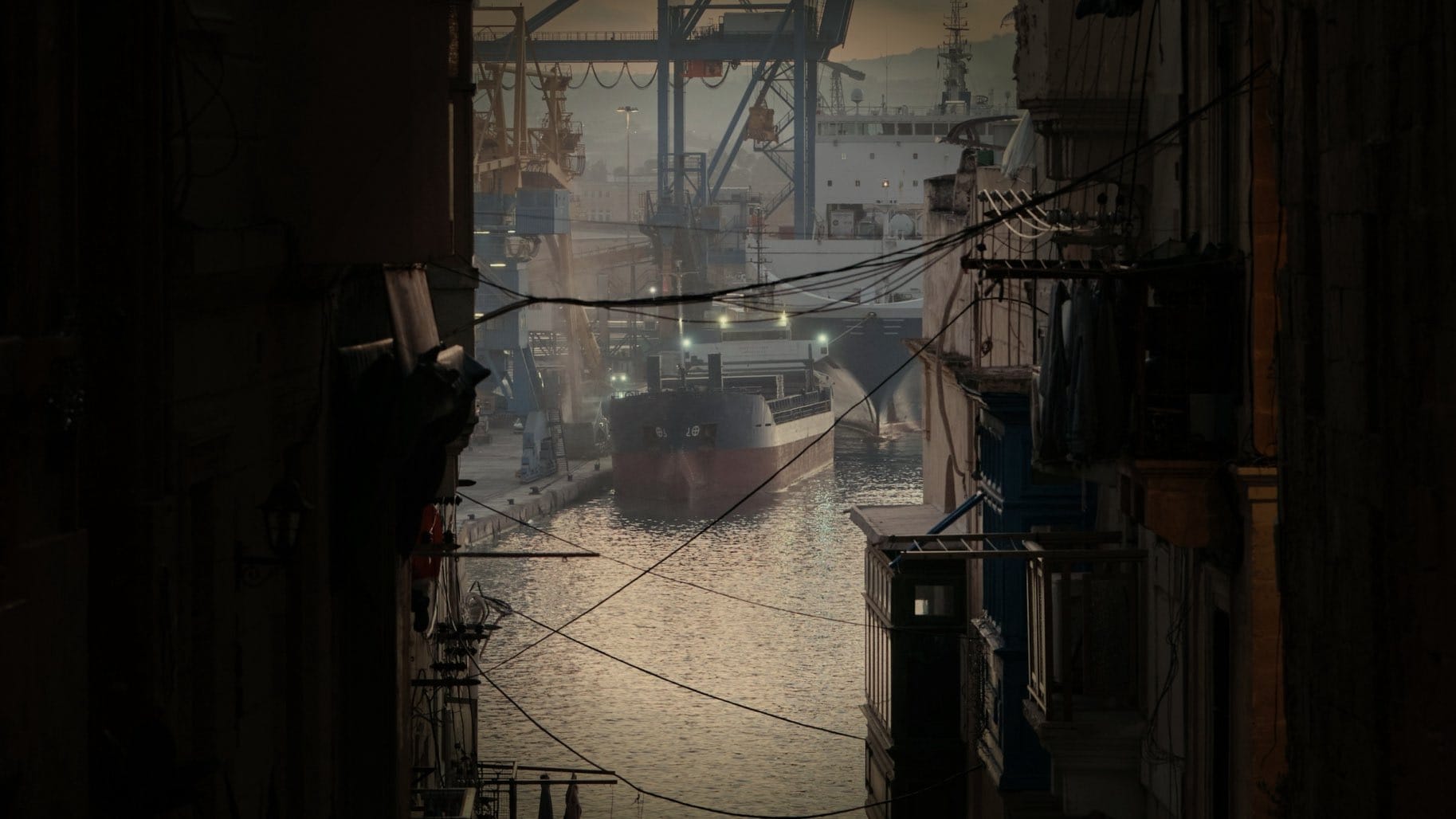
“This is China versus the world,” U.S. Treasury Secretary Scott Bessent said last fall, after Beijing announced sweeping new export controls on rare-earth elements—minerals critical to everything from semiconductors to electric vehicle batteries to missile guidance systems. “They have pointed a bazooka at the supply chains and the industrial base of the entire free world.” Western corporations felt the effects immediately: When the European Union Chamber of Commerce in China surveyed member companies, one in three said they were looking to move their sourcing away from the People’s Republic.
But China is hardly alone in weaponizing economic ties. The United States has sanctions on more than 12,000 people and firms across more than 190 countries. The European Union has leveled its own sanctions against a range of foreign actors—foremost Russia, which has hit back with sanctions of its own (including against The Signal’s contributor Daniel Bessner). As Abraham Newman has put it here in The Signal, this proliferation of sanctions has spawned entire shadow economies: “We’re seeing that when global banks move out of sanctioned countries, other, shadier actors move in—and they know how to enable business for bad actors.”
Then, the tariffs. “Trump has changed the course of trade completely—we’re in a new world,” Martin Wolf says. “We’re going through a break similar to the break that occurred in the very early 1930s.” In recent weeks, Trump has only blurred these lines further—threatening tariffs and withdrawing them within hours. He’s backed legislation to impose tariffs of up to 500 percent on India, China, and Brazil—not for anything they’ve done to the United States, but for buying Russian oil.
Export controls. Sanctions. Tariffs. Economic coercion, it seems, everywhere you look. Why?
Nicholas Mulder is an assistant professor of history at Cornell University and the author of The Economic Weapon: The Rise of Sanctions as a Tool of Modern War. Mulder says three forces are converging. Russia’s priority is to overturn the post–Cold War order it believes has harmed its interests. China’s rise has fractured the American-led peace that made globalization possible. And the West’s decades of offshoring have hollowed out its middle classes, leaving its governments to grasp for anything that might bring factories back to them. All of which has eroded an international consensus that states should want to resolve disputes without reaching for the economic arsenal. Everywhere, Mulder says, national-security hardliners are taking advantage of this shift, edging their countries toward the most militarized modes of state economic intervention since the 1930s …
Your loyal guide to a changing world.
Membership with The Signal means exclusive access to premium benefits:
- Regular profiles on the questions behind the headlines
- In-depth feature interviews with our network of specialist contributors from across America and around the world
- The despatch, our weekly current-affairs and cultural-intelligence briefing
- Early access to new products, including print extras
It also means vital support for an independent new enterprise in current-affairs journalism.
New music
‘Even Mountains Erode’
Lillie West is an indie rock musician and songwriter from Chicago, now based in Los Angeles, who records as Lala Lala. This track rides a trip-hop beat with a catchy chorus. Her new album, Heaven 2, is out February 27 on Sub Pop—her first for the label after several records on Hardly Art.