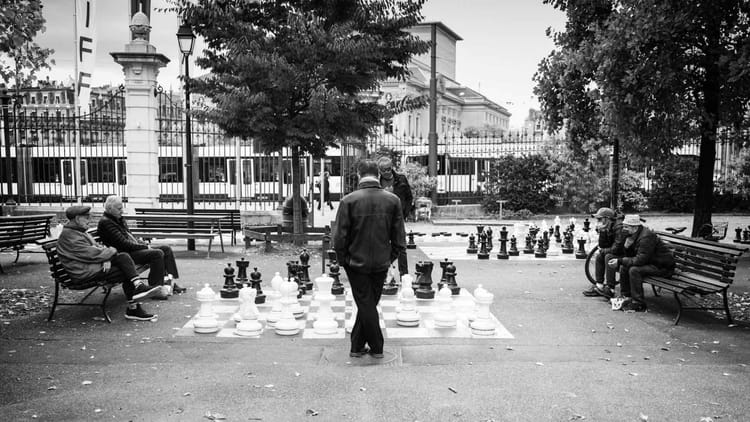
Same streets, same dictators
Recently: Why is a living American president memorializing himself?
Today: Caracas celebrated on Saturday. Now, residents are texting each other routes to avoid paramilitaries armed with machine guns.
+ For members: Why are business leaders across China disappearing into prisons? Jiangnan Zhu on the motives behind Beijing’s anti-corruption campaign.
& New music from Roll Deep x Toddla T ...
Minus Maduro
Saturday morning, some Venezuelans opened champagne bottles they’d been saving. A family in Caracas had kept one for a special occasion. For a few hours, cautious hope.
By Monday, fear. The government published a “state of external commotion” decree suspending the right to protest. Colectivos—pro-government paramilitaries—set up checkpoints across Caracas, stopping cars on the Cota Mil highway. Armed men scrolled through phones looking for anything construable as support for the U.S. raid. Residents texted each other routes to avoid: “Don’t go there—they’re stopping cars with machine guns.” In Mérida, authorities arrested a couple in their sixties for shouting anti-government slogans. Security forces detained fourteen journalists on Monday afternoon, holding most for hours while military counterintelligence searched their devices.
Monday night, gunshots near the presidential palace. The Communications Ministry said police fired on a drone “flying without permission.” The entire country, the ministry added, “is completely calm.”
With Maduro in a Manhattan jail, Venezuela’s Supreme Court swore in his unelected deputy Delcy Rodríguez as acting president. Diosdado Cabello—the regime’s interior minister and chief enforcer—is sending voice messages to military officers, rallying loyalists. And Edmundo González—the opposition leader who won the 2024 election Maduro stole—remains in Spain.
U.S. President Donald Trump says the U.S. is “running” Venezuela. But Cabello still runs the colectivos. Defense Minister Padrino López still commands the military. Armed men still work the checkpoints. González is still in Spain.
A 30-year-old man in Caracas, asked about the days ahead: “Of course I have hope things could get better. But from where I am, all I see is the same people who destroyed my country still in power. They’re still persecuting us. And we’re still afraid.”

Meanwhile
González in limbo. The man the U.S. and most of Europe recognize as Venezuela’s legitimate president has heard nothing from Washington. The Nobel laureate and fellow opposition leader María Corina Machado says González should assume power immediately. France, Argentina, and other democracies agree. Trump dismissed Machado on Saturday, saying she lacks “support” and “respect” in her country. Asked Monday about elections, he said: “We have to fix the country first.” Spain’s Prime Minister Pedro Sánchez says he’ll speak to both Rodríguez and González to enable “a transition that ends in clean, free elections.” So far, though: no timeline, no mechanism.
‘This isn’t like standing up a food truck.’ Trump says U.S. oil companies will “spend billions” rebuilding Venezuela’s infrastructure. Industry sources say no one briefed them before Saturday—and they’re not eager. Venezuela’s oil is heavy crude, expensive to refine. No one’s updated the infrastructure in 50 years. Prices are low. And Caracas has a history of seizing U.S. assets. Rystad Energy estimates doubling current production would cost US$110 billion and take until 2030. “The president's desire is different than the industry’s.”
5,500 kilometers north. The White House said on Tuesday that “utilizing the U.S. military is always an option” to acquire Greenland—hours after seven European NATO leaders issued a joint statement defending its sovereignty. Denmark’s Prime Minister Mette Frederiksen: a U.S. takeover would “mark the end of NATO.” U.S. Senator Chris Murphy of Connecticut, asked whether NATO allies would defend Greenland against the U.S.: “Of course. That’s what Article 5 says. Article 5 did not anticipate that the invading country would be a member of NATO.”
Iran, day 10. The largest protests since 2022 entered their tenth day. At least 36 dead. More than 1,200 arrested. Demonstrations across 285 locations in 92 cities. Security forces fired tear gas inside a Tehran hospital. What began on December 28 as economic protests—the rial down 56 percent in six months—turned political: “Death to the dictator.” Iranian officials describe the government in “survival mode.” Israeli intelligence reportedly says Supreme Leader Ali Khamenei—Iran’s head of state since 1989—has an escape plan ready to Moscow.
Paris ‘compromises.’ On Tuesday, 35 countries agreed to “politically and legally binding” security guarantees for Ukraine as part of any ceasefire with Russia. The U.K. and France pledged a “reassurance force”—with President Emmanuel Macron saying “several thousand” French troops could deploy. The U.S. sent envoys Steve Witkoff and Jared Kushner; Secretary of State Marco Rubio stayed home to manage the situation in Venezuela. Germany’s Chancellor Friedrich Merz, on what a deal will require: “We will certainly have to make compromises. We will not achieve textbook diplomatic solutions.”

Wary of fast fashion?
Shop Congo Clothing Company and
make a difference—in style.
For members
‘It’s a question of Party discipline’
Why are business leaders across China disappearing into prisons? Jiangnan Zhu on the motives behind Beijing’s anti-corruption campaign.
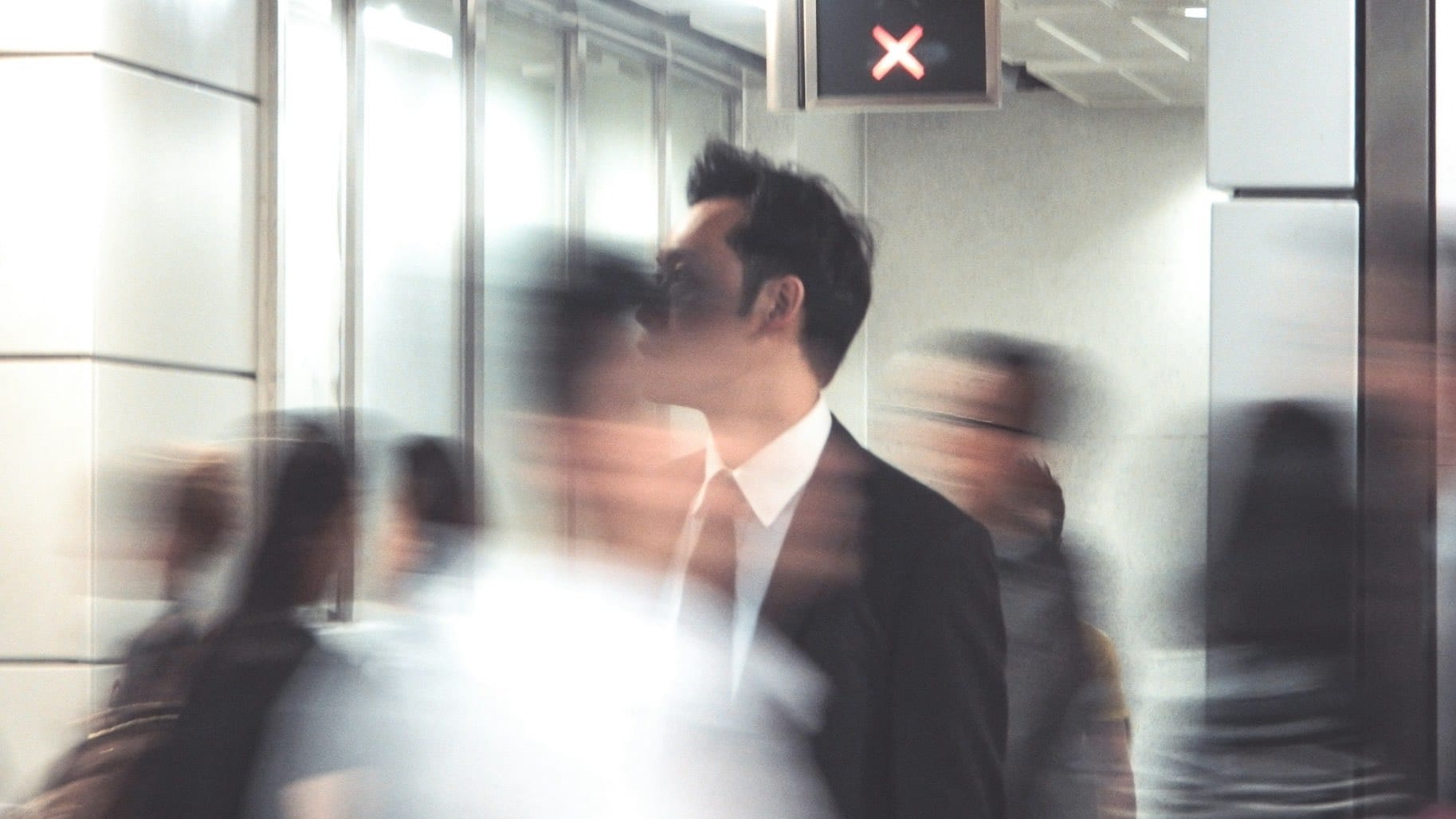
In October, shortly before its Central Committee’s plenum, the Chinese Communist Party expelled nine generals, including He Weidong, the second-highest ranking official in China’s military. The Chinese government released a statement saying the generals “were suspected of serious duty-related crimes involving an extremely large amount of money, of extremely serious nature, and with extremely detrimental consequences.”
These are only the latest in a series of high-profile corruption cases in China. Back in 2023, the Central Military Commission cited corruption as it ousted two defense ministers in quick succession. Civilian functionaries haven’t escaped corruption charges either. In 2024, Chinese authorities arrested Tang Renjian, the former minister of agriculture and rural affairs, on charges of corruption. In the same year, the Chinese government says, its top anti-corruption agency investigated a record 58 high-ranking officials.
Business leaders have also come under investigation. In 2023, a court in Jinan found the former chairman of China Life Insurance, Wang Bin, guilty of taking bribes. In 2024, China Everbright Group’s former chairman Tang Shuangning received a 12-year prison sentence for corruption and bribery.
According to the Financial Times, in 2024, local authorities in China detained senior employees of more than 80 companies listed on the Shanghai and Shenzhen stock exchanges. So many executives have gone missing that the Chinese government now says some of these cases might involve local cadres extorting businesses. As Premier Li Qiang put it, “Instances of abuse of administrative discretion and unfair enforcement persist in certain areas and sectors.”
The campaign shows no signs of slowing. In June 2025, the Party dismissed Admiral Miao Hua, head of the political work department of China’s Central Military Commission—one of the highest-ranking officials purged since the 1960s. A year ago, at the Central Discipline Inspection Commission’s annual plenum, President Xi Jinping said the CCP must persevere in the “tough, protracted fight against corruption,” calling it “the biggest threat to our Party.”
Is it?
Jiangnan Zhu is an associate professor of politics and public administration at the University of Hong Kong and the author of the forthcoming book Bribery as a Third Path to Power? Political Selection in China Beyond Performance and Patronage. In China, Zhu says, corruption has traditionally been thought of as abuse of public power, and law enforcement has traditionally opted not to prosecute private entrepreneurs for bribing public officials—only the public officials for taking the bribes. This recent spike in the number of business leaders under investigation for corruption represents a break with that way of thinking: The Party is now telling officials not to overlook private corruption. On one level, Zhu says, the Chinese government is simply trying to root out corruption—nothing wrong with that. But there are political motivations in play, too. Anti-corruption work is carried out by Party officials hewing close to Beijing’s line—and when there’s a new round of corruption prosecutions, it’s usually because the Party leadership wants it. Xi is using these corruption investigations to impose discipline on officials serving under him, suggesting these cadres’ ultimate crimes aren’t taking bribes …
Your loyal guide to a changing world.
Membership with The Signal means exclusive access to premium benefits:
- Regular profiles on the questions behind the headlines
- In-depth feature interviews with our network of specialist contributors from across America and around the world
- The despatch, our weekly current-affairs and cultural-intelligence briefing
- Early access to new products, including print extras
It also means vital support for an independent new enterprise in current-affairs journalism.
New music
‘Steeze Factory Cypher’
Roll Deep was one of the foundational grime crews—with Wiley (a godfather of the genre), Flowdan, Scratchy, DJ Target, and others. They came up in early-2000s East London and helped define the sound. Somehow, producer Toddla T has reunited them 25 years on for a new track, as joyous as it is chaotic.