A new route around America

Recently: In Hong Kong, three people go on trial for holding candles and remembering the dead. The charge: “inciting subversion of state power.” The act: organizing annual vigils to commemorate the Tiananmen Square massacre—i.e., memory itself.
Today: Why did Brussels and New Delhi suddenly close a deal they’d been circling for nearly 20 years? Both now face American tariffs—and the EU chose unmistakably ironic framing to announce it.
+ For members: Why is the Arctic so important? Mia Bennett’s & Klaus Dodds’s new book, Unfrozen: The Fight for the Future of the Arctic.
& New music from Snail Mail ...
‘The mother of all deals’
On Tuesday, the European Union and India announced their largest trade agreement ever—a deal covering 2 billion people and a quarter of global GDP, nearly two decades in the making. European Commission President Ursula von der Leyen called it “the mother of all deals.” Indian Prime Minister Narendra Modi hailed a “landmark” accord. The deal eliminates or reduces tariffs on more than 96 percent of goods traded between the two economies.
It grants the EU access India has never offered any trading partner: Car tariffs drop from 110 percent to 10 percent, wine duties fall from 150 percent to 25 percent, and machinery tariffs up to 44 percent largely disappear. India, in turn, gets zero tariffs on textiles and marine products—sectors currently strained by U.S. levies.
Why did two notoriously protectionist powers suddenly find common ground?
The timing might suggest a countermeasure against Washington. Both the EU and India face steep U.S. tariffs, and the timing is hard to ignore. Brussels framed the deal as proof that “rules-based cooperation still delivers great outcomes”—and von der Leyen chose distinctly Trump-like language to drive the point home. Yet talks started in 2007, stalled in 2013, and relaunched in 2022 under Biden.
So this isn’t merely a reaction to contemporary American trade policy. The question is whether it nevertheless remains an outlier or marks the start of a broader pattern—major economies locking in arrangements that route around the U.S.

Meanwhile
- ‘The Court’s patience is at an end.’ Minnesota’s chief federal judge on Monday ordered Todd Lyons, acting director of U.S. Immigration and Customs Enforcement, to appear in court on Friday and explain why he should not be held in contempt. Judge Patrick Schiltz, appointed by Republican President George W. Bush, accused ICE of violating “dozens of court orders” related to detained immigrants. The order came two days after Border Patrol agents shot and killed Alex Pretti, a 37-year-old intensive-care nurse, in Minneapolis—the second fatal shooting by federal immigration agents in the city this month.
- TikTok blinks. On Tuesday, TikTok settled a landmark youth-addiction lawsuit just as jury selection began in Los Angeles, avoiding what would have been the first trial testing whether social media platforms bear liability for deliberately addictive design. Snap settled last week. Meta and YouTube remain as defendants in the case, brought by a 19-year-old plaintiff who alleges the apps caused her depression and suicidal thoughts. Mark Zuckerberg is expected to testify over the coming weeks.
- A first lawsuit over U.S. boat strikes. Families of two Trinidadian men killed in a U.S. military strike on an alleged drug boat in October sued the U.S. government on Tuesday—the first wrongful death lawsuit to challenge the Trump administration’s Caribbean campaign. Chad Joseph, 26, and Rishi Samaroo, 41, were returning home from fishing and farm work in Venezuela when a missile struck their vessel, the lawsuit alleges. The administration has conducted 36 such strikes since September, killing at least 125 people.
- Xi’s military purge reaches the top. China’s President Xi Jinping on Saturday turned on his own top general. Zhang Youxia—vice chairman of the Central Military Commission, Xi’s longtime ally, and one of the few active Chinese generals with combat experience—now faces investigation for undermining Xi’s authority. So does CMC member Liu Zhenli. Both had been linked to coup rumors. Of the CMC’s seven members, only two now remain. Neither has seen war—while Xi has set 2027 as the deadline for military readiness against Taiwan.
- ‘Stay away from America.’ On Monday, Sepp Blatter, the former president of FIFA—world football’s governing body—backed a proposed fan boycott of this summer’s World Cup, which the United States is co-hosting with Canada and Mexico. Italy’s government has separately protested Washington’s decision to send ICE agents to the Milan-Cortina Winter Olympics next month. And Senate Democrats are refusing to pass a funding bill that includes money for the Department of Homeland Security—raising the prospect of a partial government shutdown by week’s end.

Cut through the noise with a new language
Learning a new language sharpens focus and opens new ways to understand the world. Babbel’s carefully designed lessons are short, practical, and built for real conversations—so progress feels clear and achievable. In just 10 minutes a day, you can build confidence through quick sessions, podcasts, and interactive speaking practice.
For members
‘Hotlines are hanging up’
Why is the Arctic so important? Mia Bennett’s & Klaus Dodds’s new book, Unfrozen: The Fight for the Future of the Arctic.
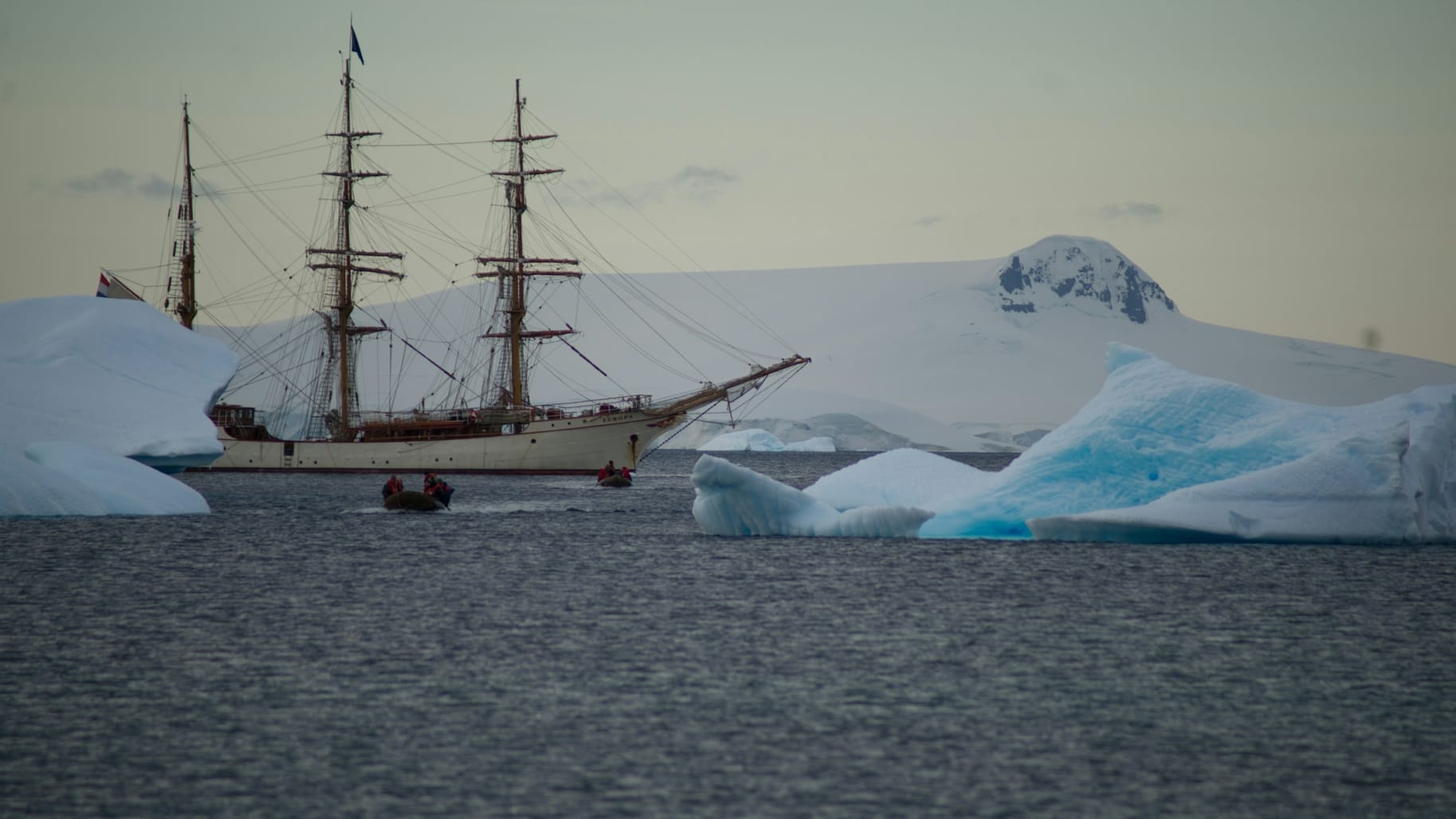
U.S. President Donald Trump has insisted he’s “very serious” about acquiring Greenland. “We need Greenland for national security,” he said, while mocking Danish forces on the island: “They added one more dog sled”—which, he claimed, would be no match for “Russian and Chinese ships.” Trump briefly threatened to sanction European states that sent forces to Greenland, then backed off. But even as his rhetoric tests NATO’s unity, NATO has expanded its interests in the Arctic. “European security is shifting north,” Paul Taylor says here in The Signal. “NATO now protects the North Atlantic and the Baltic as a single area, all the way up to the Barents Sea and the Arctic.”
Your loyal guide to a changing world.
Membership with The Signal means exclusive access to premium benefits:
- Regular profiles on the questions behind the headlines
- In-depth feature interviews with our network of specialist contributors from across America and around the world
- The despatch, our weekly current-affairs and cultural-intelligence briefing
- Early access to new products, including print extras
It also means vital support for an independent new enterprise in current-affairs journalism.
New music
‘Dead End’
Not all relationships end well, and Lindsey Erin Jordan knows it. The Maryland singer-songwriter, who records as Snail Mail, works in the idiom of 1990s guitar-powered indie rock—Lemonheads hookiness with a polite crunch to the tone. The title’s “dead end”—both setting and verdict.