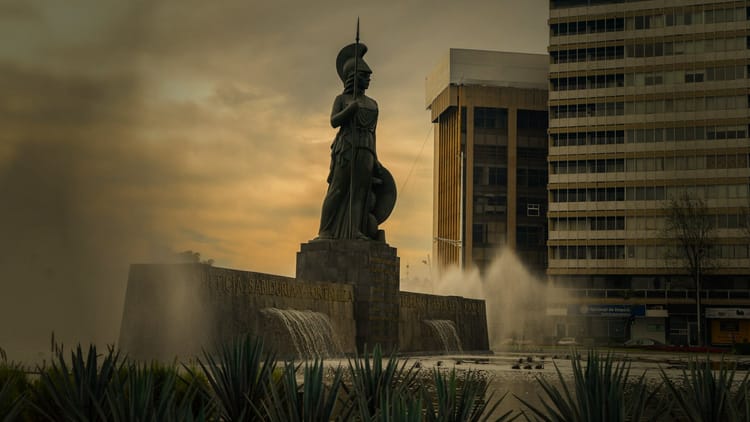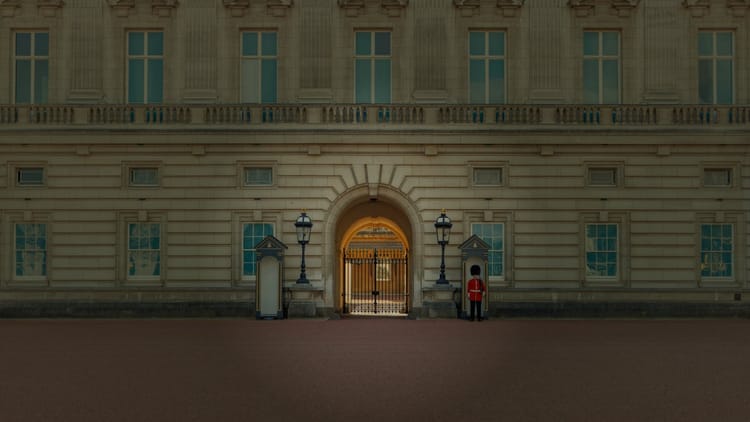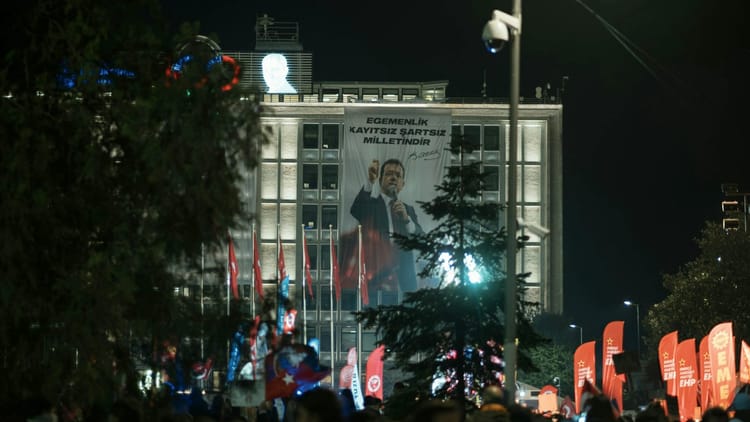
Havana nocturne
Recently: Why are so many countries rethinking their nuclear strategies? Serhii Plokhy on the emerging dangers of a new arms race.
Today: Havana’s airports are dark, its buses have stopped, and its last foreign patron is gone. … Hong Kong jails a father for his daughter’s democracy activism. … &c.
For members: Why is Los Angeles’s entertainment industry in such crisis? Andrew deWaard on the shape-shifting effects of financialization and monopoly. … & If states are always ruled by elites, what does that make democracy? Hugo Drochon’s Elites and Democracy.
+ New music from Danny L. Harle x Caroline Polachek ...
Running on empty
On Wednesday, Cuban border guards intercepted a stolen Florida-registered speedboat about a nautical mile off the northern coast. Ten Cuban exiles in camouflage and ballistic vests opened fire with assault rifles and homemade explosives. Cuban forces killed four and wounded six. The group’s apparent leader, Amijail Sánchez González, had posted a video this month calling himself ready to die to free Cuba. Cuba’s Interior Ministry called the incident terrorism, while U.S. Secretary of State Marco Rubio called it “highly unusual.”
This freelance, amateur raid—one day after the 30th anniversary of Cuba’s 1996 downing of two Miami exile planes—landed in a country that’s visibly falling apart. Since February 10, all nine of Cuba’s international airports have run out of jet fuel. Air Canada, WestJet, and Air Transat suspended flights. Russia evacuated 5,000 tourists. Foreign embassies drew up evacuation protocols. The U.S. administration’s January 29 executive order—threatening tariffs on any country that supplies Cuba with oil—cut off Venezuelan shipments and Mexican fuel deliveries in one stroke. Buses in Havana stopped running. Power outages stretch 10 hours.
Washington’s pressure campaign assumes the regime will break—or hopes it will. But Havana survived the “Special Period” following the collapse of Soviet support in the 1990s—through repression, inertia, and exodus. Roughly a million Cubans have left since 2021—and the people most likely to resist are also the people most likely to leave. That’s kept the regime intact before. But the Soviets were subsidizing it in the first instance, and a friendly neighbor in Venezuela after that. Both are gone. And no one’s stepping in for them.

Meanwhile
- Across the Durand Line. Pakistan’s defense minister declared “open war” against Afghanistan on Thursday after Pakistani jets struck targets in Kabul, Kandahar—the Taliban supreme leader’s base—and Paktia. It’s the first time Pakistan has bombed the Afghan capital. The strikes followed a Taliban assault on February 21 that killed at least 100 Pakistani soldiers. Pakistan claims it’s killed 274 Taliban; the Taliban claim it’s killed 55 Pakistani soldiers. Qatar brokered a ceasefire between the two countries in October. It didn’t survive the winter.
- The long arm in Hong Kong. A West Kowloon court sentenced Kwok Yin-sang, 69, to eight months in prison on Thursday for trying to withdraw funds from an insurance policy he bought for his daughter when she was two. His daughter, Anna Kwok, runs the Washington-based Hong Kong Democracy Council. Chinese authorities placed a HK$1 million bounty on her in 2023. Under Hong Kong’s national security law, handling an “absconder’s” assets is a crime—the first time Hong Kong has jailed a family member for an overseas activist’s advocacy.
- Ask ChatGPT. The U.S. and Iran conclude a third round of nuclear talks in Geneva; Oman’s mediator describes “significant progress.” … The U.S. administration has frozen US$259 million in federal healthcare funding to Minnesota. … The former U.S. secretary of state Hillary Clinton testified for six hours before a congressional investigation into the activities and networks of the late convicted sex offender Jeffrey Epstein, stating she’d never met him. … China has barred 40 Japanese companies from buying Chinese exports—after Prime Minister Sanae Takaichi said Japan could intervene if China attacked Taiwan. … & OpenAI has revealed that a Chinese law-enforcement official tried to use ChatGPT for a transnational-repression operation.
The AI insights every decision maker needs.
You control budgets, manage pipelines, and make decisions, but you still have trouble keeping up with everything going on in AI. If this sounds like you, don’t worry, you’re not alone—and The Deep View is here to help.
The biggest developments, the most pressing issues, and how companies from Google and Meta to the hottest startups are using it to reshape their businesses—it’s all broken down for you each and every morning into easy-to-digest snippets.
Feature
Hollowed-out in Hollywood
Why is Los Angeles’s entertainment industry in such crisis? Andrew deWaard on the shape-shifting effects of financialization and monopoly.
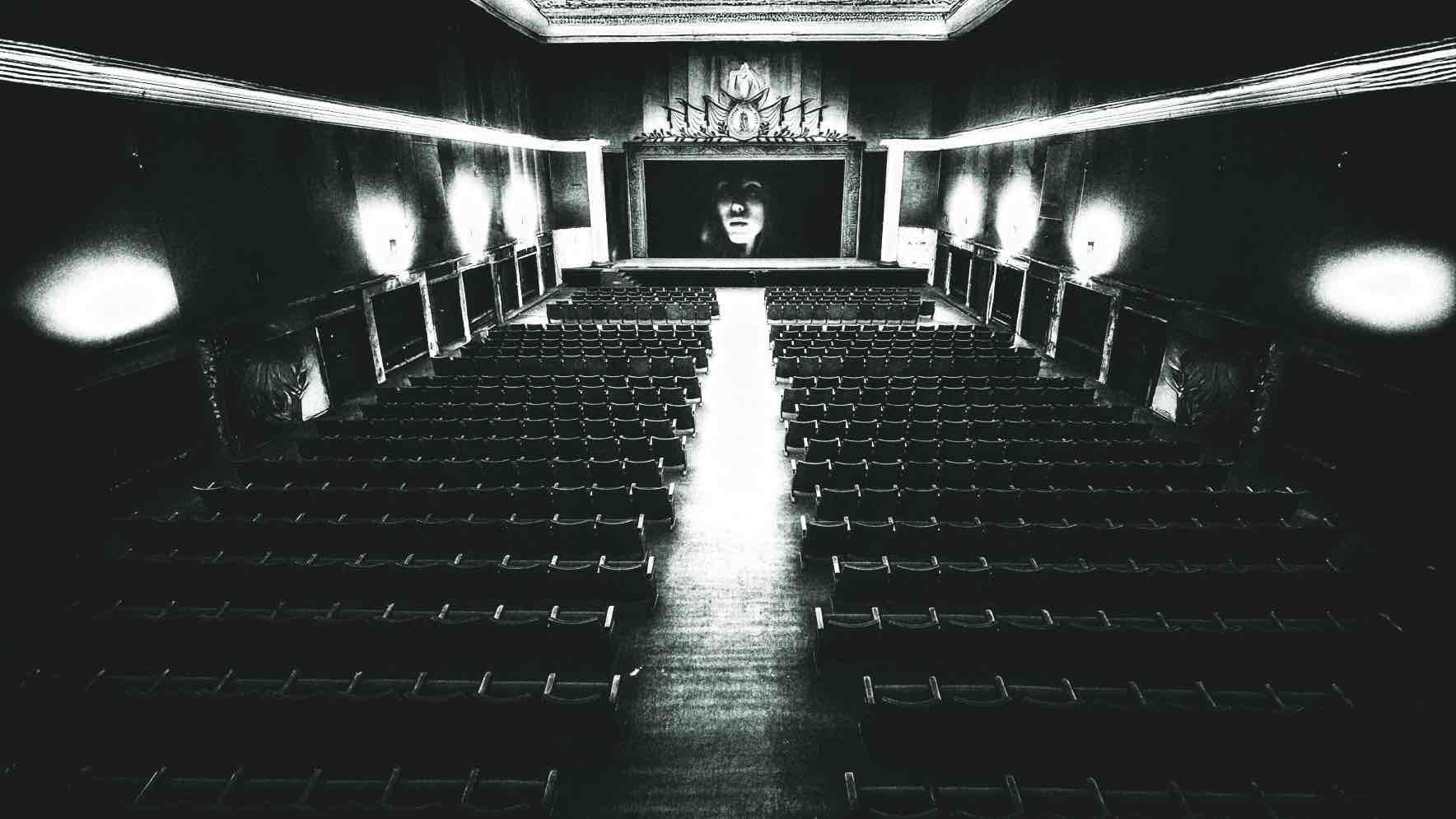
This week, the media conglomerate Paramount Skydance beat the streaming giant Netflix in their fight to buy Warner Bros. Discovery, one of Hollywood’s last remaining major studios. On Thursday, Netflix said it wouldn’t match Paramount’s US$31-a-share offer—a $111 billion bid.
There’s clearly no shortage of money in Hollywood. But just as clearly, the industry is struggling.
According to the U.S. Bureau of Labor Statistics, Los Angeles County’s motion picture industry employed 142,000 people at the end of 2022; by the end of 2024, that figure had dropped to 100,000.
Last year, Paul Audley, the president of Los Angeles’s official film office, Film LA, told NBC Los Angeles that excluding the pandemic, 2024 had been “the worst year on record.” But then 2025 turned out worse. In the first quarter, on-location production in greater Los Angeles fell 22 percent compared with the year before. Production volume ran at about half its 2019 level.
What’s going on?
Andrew deWaard is an assistant professor of media and popular culture at the University of California San Diego and the author of Derivative Media: How Wall Street Devours Culture. DeWaard says Hollywood is buckling from two forces: finance and monopoly. Over time, financial firms have bought up most of the old studios, leaving the industry increasingly consolidated in the hands of a few enormous conglomerates. These private-equity firms and hedge funds have very little idea how to cultivate creative talent—they extract money while churning out unimaginative franchise films. Small studios can’t really compete, and when they do succeed, one of the giants buys them.
And yet, deWaard says, there might be more creative potential in the movie industry than ever. It’s a matter of knowing where to look …
Books
Revolt of the elites
If states are always ruled by them, what does that make democracy? Hugo Drochon’s Elites and Democracy.

At the World Economic Forum in Davos, Switzerland, Nigel Farage, the leader of Reform—the United Kingdom’s insurgent right-wing party—promised, “Britain will not be dictated to by global elites.” Hungary’s prime minister, Viktor Orbán, regularly counterposes the “Brussels elite” with the “European people.” The American president, Donald Trump, frequently calls his political opponents “corrupt elites.” And Michael Gove, who led the Brexit campaign as a sitting British cabinet minister, said it was “time to fire unelected elites.”
But as Hugo Drochon says in Elites and Democracy, “whilst populists all reject ‘the elite’, they are often themselves elites.”
Trump is a corrupt billionaire: Here in The Signal, Nick Cleveland-Stout called the US$400 million jet that the United Arab Emirates gave him a “huge, flying conflict of interest.” Orbán has enriched his backers with European Union money while his father has ensconced himself in the enormous Hatvanpuszta mansion. Gove is now an unelected baron in the House of Lords. Reform is crammed full of former high-ranking Tory politicians, and Farage is a rich former commodities trader who travelled to Davos on a pass given to him by an Iranian-born billionaire.
“Populist politics,” Drochon writes, “is the process of replacing one elite with another.” Democracy, though, means literally “the rule of the people”—or practically the idea that political power is vested in them.
So how does this work?
Your loyal guide to a changing world.
Membership with The Signal means exclusive access to premium benefits:
- Regular profiles on the questions behind the headlines
- In-depth feature interviews with our network of specialist contributors from across America and around the world
- The despatch, our weekly current-affairs and cultural-intelligence briefing
- Early access to new products, including print extras
It also means vital support for an independent new enterprise in current-affairs journalism.
New music
‘On & On’ (ft. Caroline Polachek)
Danny L. Harle, the British producer and alum of the experimental pop collective PC Music, is still playing with rave drums—and on this single from his new album, Cerulean, he brings in Caroline Polachek, ex of Chairlift. Together they spin this up-tempo number, light as a feather.