No limits
Recently: Why is Saudi Arabia investing so heavily in football? Kristian Coates Ulrichsen’s new book, Kingdom of Football: Saudi Arabia and the Remaking of World Soccer.
Today: New START lapsed on Thursday at midnight. By morning, U.S. and Russian generals were talking again. Now what?
+ For members: As America pulls back from global development, is China taking over? Pritish Behuria on what doesn’t change when the lender does.
& New music from Marta Del Grandi ...
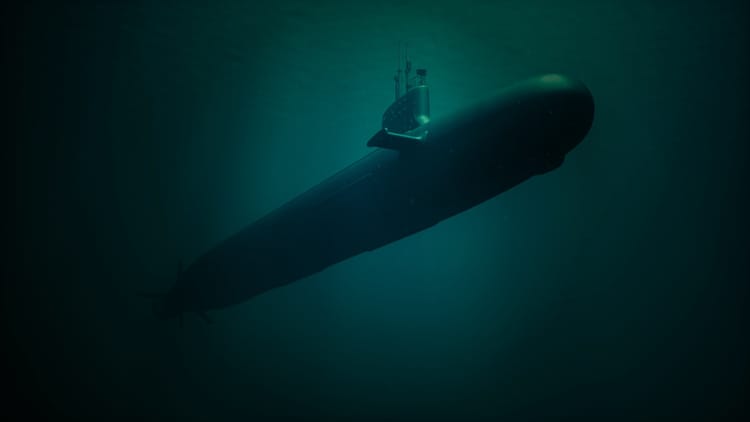
After the treaty
On the same day that the last nuclear arms treaty between the United States and Russia expired, the Pentagon announced it had restored high-level military communications with Moscow—suspended since 2021, months before the invasion of Ukraine.
The timing is striking. The New START treaty, which capped each side at 1,550 deployed strategic warheads and 700 delivery systems, lapsed at midnight on Wednesday. For the first time in more than 50 years, there are no binding constraints on the world’s two largest nuclear stockpiles. Russia’s Foreign Ministry declared the obligations “no longer binding.” Neither government committed to continued compliance.
Yet in Abu Dhabi, where three-way talks on ending the war in Ukraine entered their second day, U.S. General Alexus Grynkewich met his Russian counterparts and agreed to reopen direct communication. The channel, U.S. European Command says, “will provide consistent military-to-military contact as the parties continue to work towards a lasting peace.”
So while the formal architecture has collapsed, the informal communications resume—and it can’t yet be clear what kind of relationship these conversations are going to lead to. A bridge to a successor treaty—with verification, binding limits, the infrastructure of arms control? Or a substitute: tacit understandings, parallel restraint, but no real framework at all. The diplomatic language could imply either track—and neither government may yet know which they’re on.

Meanwhile
- Europe commits. EU ambassadors finalized a €90 billion loan to Ukraine on Wednesday—€60 billion for military aid, €30 billion for budget support, funded through joint EU debt. France pushed to restrict purchases to European suppliers; the final text allows third-country procurement only “in cases of urgent need.” Hungary, the Czech Republic, and Slovakia opted out. Ukraine will repay only after Russia pays war reparations. First disbursement is expected in April. … See “Cold cash.”
- Two readouts. U.S. President Donald Trump and China’s President Xi Jinping spoke on Wednesday for nearly two hours ahead of Trump’s planned April visit to Beijing. Trump touted trade wins: soybeans to 20 million tons this season, 25 million next, plus oil, gas, and “airplane engine deliveries.” Beijing’s readout emphasized Taiwan as “the most important issue” in the relationship and urged Washington to handle arms sales “with utmost caution.” Taiwan’s deputy foreign minister, Chen Ming-chi, says the call “will stabilize the situation”—and called U.S.-Taiwan ties “very solid and strong.”
- ‘A stunning security failure.’ Armed militants killed at least 162 people in the villages of Woro and Nuku in western Nigeria on Tuesday—one of the deadliest attacks outside traditional conflict zones. Survivors say the attackers killed villagers who rejected extremist indoctrination. No group claimed responsibility; officials point to Boko Haram or Islamic State–linked factions. President Bola Tinubu announced “Operation Savannah Shield” and the deployment of an army battalion. U.S. troops are now on the ground; American airstrikes hit IS-affiliated militants in Kwara in December. “A stunning security failure”—Amnesty International’s assessment.
- Stripped to the frame. The Washington Post laid off one-third of its staff on Wednesday—over 300 journalists—eliminating its sports section, books desk, and flagship podcast, while cutting extensively from foreign bureaus and local coverage. The paper’s executive editor, Matt Murray, called it “a strategic reset” for the AI era. Its former executive editor Marty Baron told CNN it was “among the darkest days in the history of one of the world’s greatest news organizations.” So far, the Post’s owner, Jeff Bezos, hasn’t commented.
- The redaction failures. A review by the Associated Press, The New York Times, and other news organizations found that the Justice Department’s release of more than three million Epstein-related files left nude photos, victims’ names and faces, bank account numbers, and Social Security numbers unredacted—despite a law requiring victim protections. The NYT found nearly 40 unredacted nude photos of young women or possibly teenagers on the DoJ website. Victims’ lawyers called for the site to go offline, describing “the single most egregious violation of victim privacy in one day in United States history.” Deputy Attorney General Todd Blanche blamed “technical or human error.” Separately, he indicated the DoJ expects no new criminal charges.

Your reading list for a changing world
Browse The Signal’s bookshop—organized into collections that track key themes in our investigations of current affairs: what’s driving the information wars, why societies are fracturing, how power keeps reinventing itself. Contributors’ titles alongside books we've featured in our coverage.
For members
One more great power
As America pulls back from global development, is China taking over? Pritish Behuria on what doesn’t change when the lender does.
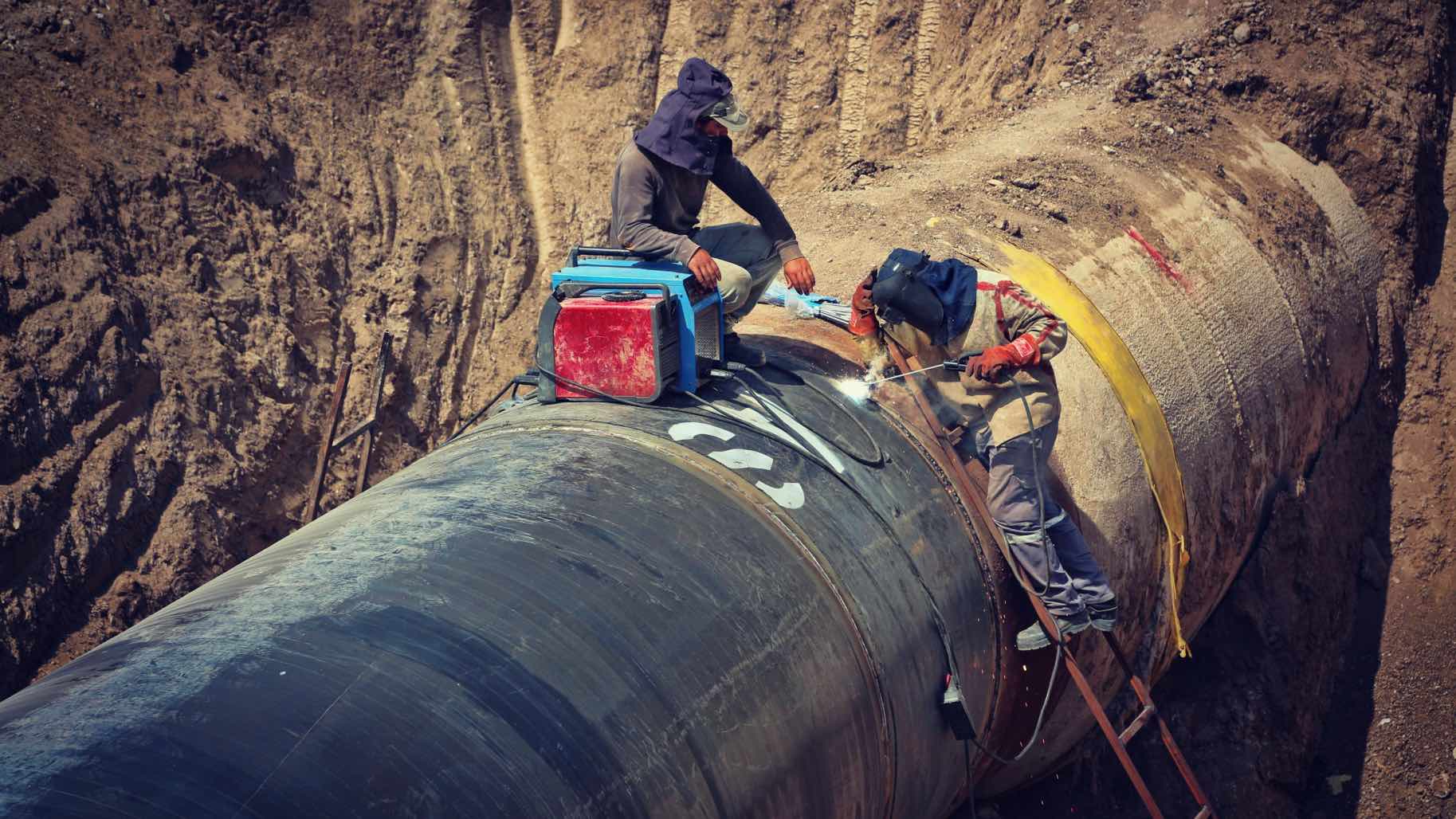
Last spring, U.S. President Donald Trump’s administration gutted the U.S. Agency for International Development, which had employed more than 10,000 people delivering health, education, and development programs around the world.
In March, the U.S. was the only state in the United Nations General Assembly to vote against a resolution establishing an International Day of Peaceful Coexistence and an International Day of Hope. In a letter explaining its stance, the U.S. said it “denounces” the UN Sustainable Development Goals.
This January, the U.S. left the World Health Organization. Also in January, the White House announced that the U.S. would leave 66 international organizations, including many UN bodies. One new study, out just this week, projects 9.4 million additional deaths by 2030.
Meanwhile, Chinese leaders have followed President Xi Jinping in calling economic development the “master key” of modern geopolitics. Xi has launched something called the Global Development Initiative, whose stated purpose is to promote “stronger, greener, and healthier global development.” Alongside it is China’s Belt and Road Initiative, channeling billions of dollars into infrastructure projects across the developing world.
As the United States retreats from global development, is China stepping into the breach? Or is something else happening?
Pritish Behuria is an associate professor at the University of Manchester’s Global Development Institute. Behuria says China has invested enormous sums in infrastructure and industry in developing countries—but it’s not poised to take over from the United States. Because while the Americans have suddenly slashed their aid programs, the Chinese have been pulling back too, if less conspicuously. What’s more, to secure lasting economic gains, developing countries need technological capacity, and China hasn’t been keen to share its know-how. So these countries have had to settle for installing Chinese solar panels rather than producing their own.
In the meantime, European and East Asian countries have also been cutting their aid budgets, which means the private sector matters more as a funder of development. Asset managers haven’t filled the hole governments left, but they carry more weight than they used to. The problem, Behuria says, is that most financiers think quarter to quarter—so they’re unlikely to back the long-term strategic investments developing countries need. But there might be other options …
Your loyal guide to a changing world.
Membership with The Signal means exclusive access to premium benefits:
- Regular profiles on the questions behind the headlines
- In-depth feature interviews with our network of specialist contributors from across America and around the world
- The despatch, our weekly current-affairs and cultural-intelligence briefing
- Early access to new products, including print extras
It also means vital support for an independent new enterprise in current-affairs journalism.
New music
‘Antarctica’
Over to Italy for some quirky modern pop, from Marta Del Grandi. She draws on Talking Heads and Laurie Anderson—in the no-wave art-pop tradition—turning it to the polar ice sheets and the politics underneath them. From her new album, Dream Life, due out January 30.