A most wanted man

Recently: Why is Silicon Valley fighting with the EU? Anu Bradford on how American tech companies are enlisting the White House against European regulation.
Today: A Mexican president who swore off kingpin strikes just ordered the biggest in a decade. What changed? … Washington, Moscow, and Beijing are talking about nuclear arms for the first time since the last treaty expired. No one agrees on who should be at the table. … &c.
For members: Why are so many countries rethinking their nuclear strategies? Serhii Plokhy on the emerging dangers of a new arms race. … & Nearly half the continental U.S. is in drought—and the wheat’s just waking up.
+ New music from Sofia Kourtesis x Novalima ...
Hugs and bullets
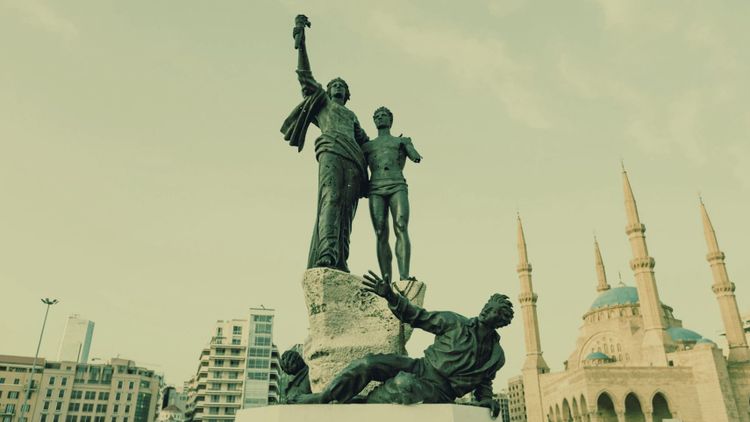
Mexican President Claudia Sheinbaum spent years arguing that killing cartel leaders only fragments organizations and accelerates violence. Her predecessor, Andrés Manuel López Obrador, built a governing philosophy around the idea: “hugs, not bullets.” Sheinbaum campaigned on it, defended it in office, and rejected comparisons to the militarized crackdowns of administrations past. Then, on Sunday, her special forces killed Nemesio “El Mencho” Oseguera Cervantes, the leader of the Jalisco New Generation Cartel (CJNG), in a predawn raid on a mountain compound in Tapalpa, Jalisco—with American intelligence support. The U.S. Drug Enforcement Administration had a US$15 million bounty on his head.
The cartel’s answer was immediate: torched buses, 250-plus roadblocks across 20 states, a Costco ablaze in Puerto Vallarta. By Monday, more than 70 people were dead, 25 of them National Guard members in Jalisco alone. Guadalajara, the state capital—and a 2026 World Cup host city—went dark.
Why’d she do it?
U.S. President Donald Trump had pressed relentlessly—threatening tariffs, designating CJNG a terrorist organization, floating direct military intervention on Mexican soil. But pressure alone doesn’t explain the timing. Mexico’s Defense Secretary Ricardo Trevilla says the military tracked one of El Mencho’s romantic partners to the compound and confirmed his presence. That suggests operational opportunity rather than strategic reversal. The succession question makes the gamble starker: El Mencho’s stepson runs CJNG’s paramilitary wing. At the same time, the Sinaloa Cartel is fracturing after last year’s arrest of Ismael “El Mayo” Zambada—which triggered a war that’s killed more than 2,400 people. Mexico’s two most powerful criminal organizations are splintering at once, four months before the World Cup.

Meanwhile
- Reluctant warrior. General Dan Caine, the chairman of the Joint Chiefs of Staff, warned President Donald Trump that striking Iran risks a prolonged conflict, U.S. casualties, and depleted munitions stockpiles. Trump called the reports “100% incorrect” and said any war would be “something easily won.” Two carrier strike groups are converging on the Middle East—the largest U.S. naval buildup in the region since 2003. Admiral Brad Cooper, the commander of U.S. Central Command—which oversees military operations in the Middle East—hasn’t spoken to Trump since January. The president says he’ll decide on the matter in 10 to 15 days.
- Three powers, two tables. An American delegation held separate meetings with Russian and Chinese teams in Geneva on Monday and Tuesday—the first nuclear-arms discussions since New START, the treaty that capped U.S. and Russian atomic warheads, expired on February 5. Washington wants all three under one agreement. Beijing’s representative, Shen Jian, calls this unrealistic. Moscow says if China joins, so should Britain and France. Which would widen the table—and also make an agreement harder to reach.
- Frozen for five millennia. European leaders visit Kyiv for the war’s fourth anniversary; Hungary’s Prime Minister Viktor Orbán vetoes the €90 billion EU loan designed to replace American aid. … Iranian students clash with pro-regime paramilitaries at universities for a fourth day. … Chad closes its border with Sudan after Sudan’s Rapid Support Forces killed five Chadian soldiers at the border town of Tine. … Panama seizes two canal ports from a Hong Kong company that Trump has demanded leave the waterway. … A 5,000-year-old bacterium from a Romanian ice cave resists 10 modern antibiotics—but may also help fight contemporary superbugs.

You run a business. You worry about compliance. Ever been tired and stuck, miserably documenting something you feel AI must be made for? Good news: AI has finally delivered.
Delve’s AI copilot understands your entire tech stack and tells you exactly what you have to do next. Just ask it, and watch Copilot read your screen and start taking care of it for you.
Feature
‘The Chernobyl parameter’
Why are so many countries rethinking their nuclear strategies? Serhii Plokhy on the emerging dangers of a new arms race.
Monday, Christopher Yeaw of the U.S. Department of State told the Conference on Disarmament in Geneva that “despite its claims to the contrary, China has deliberately and without constraint massively expanded its nuclear arsenal without transparency or any indication of China’s intent or end point.” Russia, moreover, has helped “boost Beijing’s capacity” to increase its stockpiles: “Beijing is on track to have the fissile material necessary for more than 1,000 nuclear warheads by 2030.”
China countered that it’s not going to “engage in any nuclear arms race, with any country.”
But others might.
Russia is modernizing its nuclear weapons program, including major upgrades to its intercontinental ballistic missiles. And the U.S. is upgrading its own nuclear triad: The Congressional Budget Office estimates that modernizing and operating American nuclear capabilities will cost nearly US$1 trillion by 2034—excluding the costs of its new intercontinental ballistic missile program, Sentinel.
In September, Saudi Arabia announced a strategic mutual-defense pact with nuclear-armed Pakistan. In Europe, politicians have begun to speak openly about moving away from the U.S. nuclear umbrella. German Chancellor Friedrich Merz, for example, has said he’s open to the idea of an independent European nuclear deterrent. And the Europeans have already taken some steps: in August, France and Germany said they would build a new European early-warning system.
Earlier this month, the New START treaty expired—the last remaining mutual limit on nuclear weapons between Russia and the United States. Speaking in Beijing, Russia’s Deputy Foreign Minister Sergei Ryabkov said, “This is a new moment, a new reality—we are ready for it.”
What are the risks in all this?
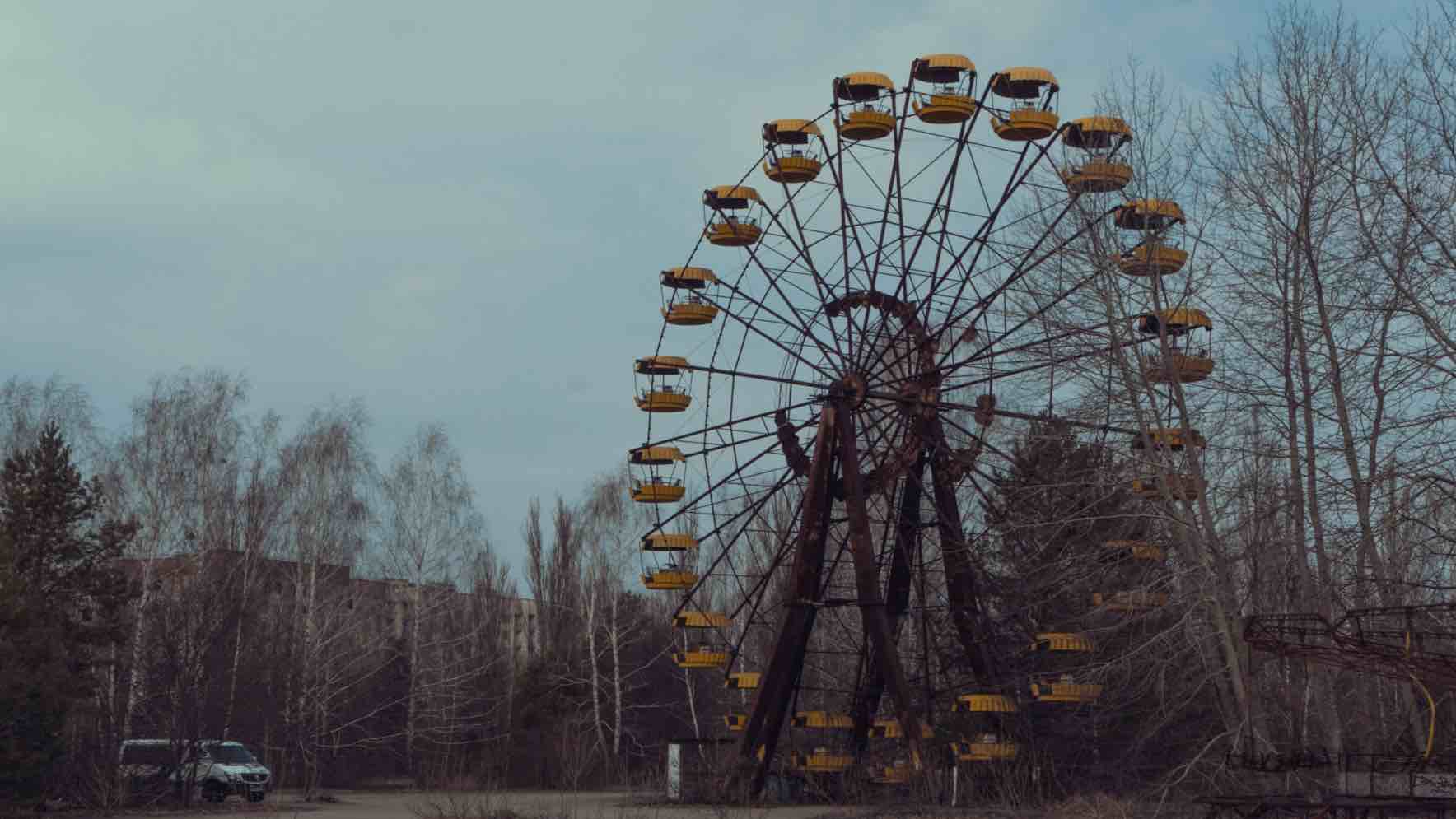
Serhii Plokhy is a professor of history at Harvard University and the author of The Nuclear Race: The Epic Race for Arms, Power and Survival , and David and Goliath: Commentaries on the Russo-Ukrainian War. Plokhy says the world has entered a second nuclear arms race—but a less orderly one. The last treaties on nuclear weapons have expired, leaving nuclear powers without the procedures and rules that once limited risks. And the risks are considerable: Russia has threatened to use tactical nuclear weapons, and it has already occupied Ukraine’s Zaporizhzhia nuclear power plant. While people fear another Hiroshima, the more immediate danger may be another Chernobyl.
As the United States shifts its posture toward the rest of the world, countries in Europe and Asia have begun to reassess their own nuclear strategies. Pakistan’s pact with Saudi Arabia signals that smaller powers feel increasingly insecure. The Russia-Ukraine war, meanwhile, has shown Europe it can no longer rely on American security guarantees. So it’s clear these states will reconfigure their relationships—that’s already begun—but not yet clear at all how they’ll do it …
Weather report
Dust on the High Plains
37.9717° N, 100.8727° W
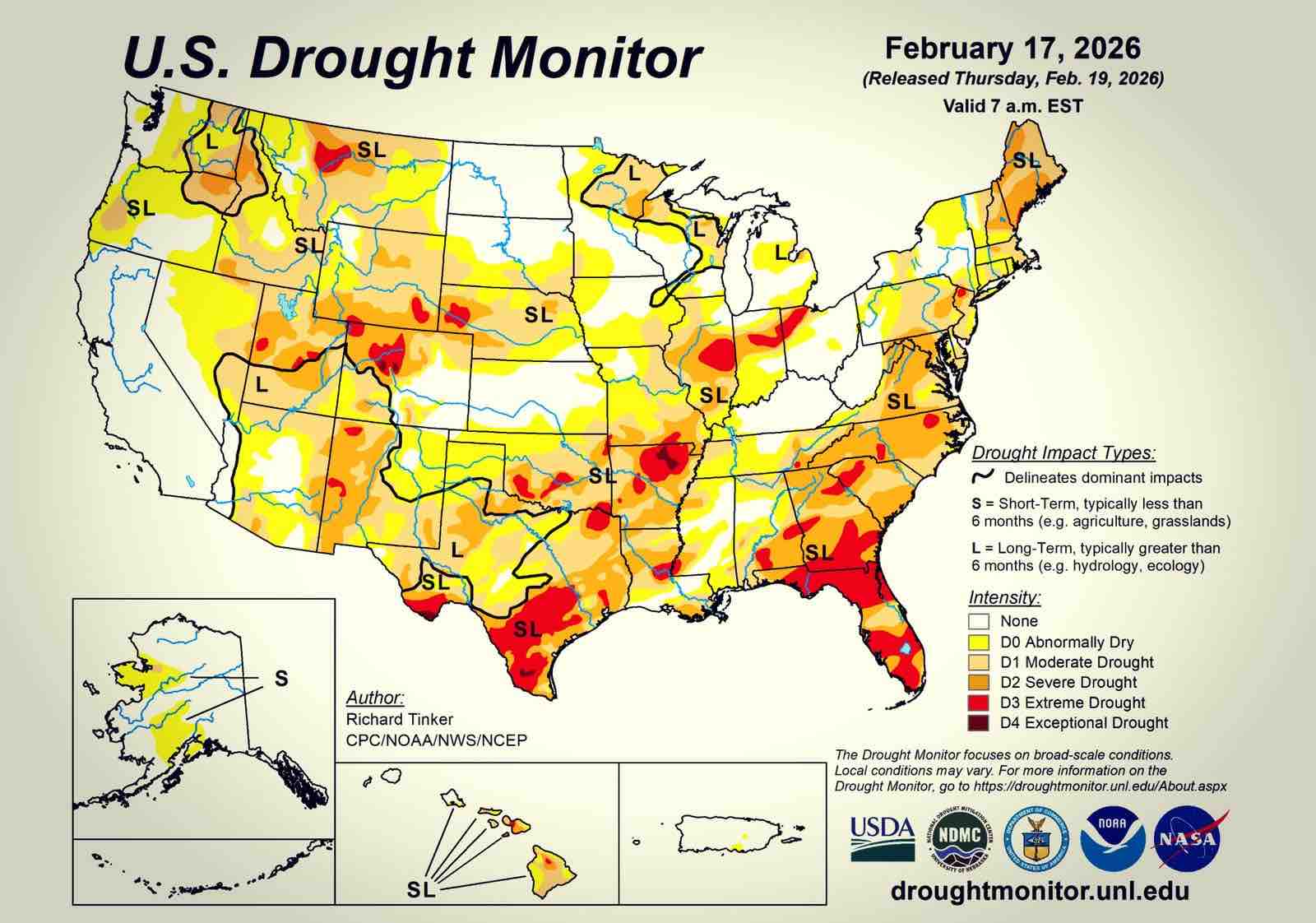
From the weekend despatch: Nearly half the continental U.S. is in drought—and the wheat’s just waking up …
Your loyal guide to a changing world.
Membership with The Signal means exclusive access to premium benefits:
- Regular profiles on the questions behind the headlines
- In-depth feature interviews with our network of specialist contributors from across America and around the world
- The despatch, our weekly current-affairs and cultural-intelligence briefing
- Early access to new products, including print extras
It also means vital support for an independent new enterprise in current-affairs journalism.
New music
‘Los Poemas No Simpre Riman’
From a new DJ-Kicks collection, Sofia Kourtesis teams up with the Peruvian band Novalima—for some gorgeous, dreamy new house music. The title translates to “Poems Don’t Always Rhyme.”