
A crackdown after the crackdown

Recently: As America pulls back from global development, is China taking over? Pritish Behuria on what doesn’t change when the lender does.
Today: Why did Iran arrest senior regime loyalists over the weekend—on the eve of nuclear talks with Washington? The Reformists Front didn’t back the protests; they just asked Khamenei to resign. ... Hong Kong sentences Jimmy Lai to 20 years. … &c.
For members: Why is betting everywhere now? Gerda Reith on how it became so mixed up in sports—and then everything else. ... & Record rainfall drenches Ireland and the U.K.—and the jet stream isn’t done.
+ New music from Geologist ...
The loyal opposition in Tehran
Iran’s theocratic regime declared the protests over in January, after a crackdown that killed thousands—human rights groups have documented nearly 7,000 deaths, with thousands more under investigation. The streets went quiet; the internet came back on. Then, over the weekend, security forces arrested four senior members of the Reformists Front, a coalition trying to change the system from inside. Among them: Azar Mansouri, the front’s leader; Mohsen Aminzadeh, a former diplomat under reformist President Mohammad Khatami; and Ebrahim Asgharzadeh, a former parliamentarian who led the U.S. Embassy storming in 1979’s revolution. Their offence: a January statement calling on 86-year-old Supreme Leader Ali Khamenei to resign. Days earlier, the imprisoned Nobel laureate Narges Mohammadi received another seven-and-a-half-year sentence. The judiciary called those arrested agents of Israel and the United States — the standard accusation.
The Reformists Front didn’t back the protests—it just published a statement calling on Khamenei to resign, working inside the system’s rules. The regime arrested them anyway. Why now?
On Sunday, Foreign Minister Abbas Araghchi told diplomats in Tehran that Iran would insist on its right to enrich uranium—the main obstacle in nuclear talks with Washington. On Wednesday, Israeli Prime Minister Benjamin Netanyahu heads to Washington to press for a broader deal covering missiles and regional proxies. And the USS Abraham Lincoln is sitting in the Gulf. The timing suggests Tehran is eliminating internal complications before external pressure intensifies. But if the intent is to project strength in the negotiations, why crack down on reformists who explicitly opposed the street protests?—a loyal opposition, validating the system by working within it.

Meanwhile
- Twenty years for a newspaper. A Hong Kong court sentenced Jimmy Lai, the 78-year-old founder of the now-defunct Apple Daily, to 20 years in prison on Monday—the longest sentence possible under Beijing’s 2020 national security law and, given his age, close to a life sentence. Six former journalists from Lai’s Apple Daily got six to 10 years. U.S. President Donald Trump says he’d asked Chinese President Xi Jinping to consider Lai’s release. U.S. Secretary of State Marco Rubio called the conviction unjust. Lai smiled at the judges as the sentence came down.
- Takaichi’s mandate. On Sunday, Japanese Prime Minister Sanae Takaichi’s Liberal Democratic Party won 316 of 465 lower house seats—the largest single-party result in Japan’s postwar parliamentary history and enough for a two-thirds supermajority. Takaichi, Japan’s first female PM, called the snap election 110 days into her tenure and immediately indicated she’d move to amend the pacifist constitution’s Article 9, which has limited Japan’s military to a self-defense role since 1947. But analysts warn she may be misreading the mandate: Voters backed her on the cost of living, not necessarily on rearmament.
- Look who’s going to the Moon. Thailand’s Bhumjaithai Party tripled its seats in parliament on a wave of nationalism from a border conflict with Cambodia. … Someone shot Vladimir Alexeyev, a Russian military-intelligence general, in Moscow last week; Russia says the suspect confessed to acting on Ukrainian orders. … The United Kingdom’s Prime Minister Keir Starmer has lost his second chief of staff in 18 months. … A neutrino that shouldn’t exist may have come from an exploding primordial black hole. … & China says it’s on track for a crewed lunar landing by 2030.

Can’t hear yourself think?
The David Lynch Foundation helps bring calm to veterans, students, and communities in need.
Feature
Empress of luck
Why is betting everywhere now? Gerda Reith on how it became so mixed up in sports—and then everything else.

Last October, the U.S. Federal Bureau of Investigation and the U.S. Attorney for the Eastern District of New York charged 36 people with involvement in illegal gambling, many of them former or current National Basketball Association players.
This January, U.S. prosecutors charged 26 people with fixing college basketball games. “This was a massive scheme,” U.S. Attorney David Metcalf said. “It enveloped the world of college basketball." Bribes ranged from US$10,000 to $30,000 a game.
There’s big money in sports betting, and the market is growing fast: In 2017, Americans placed US$4.9 billion in sports wagers; by 2023, that number had hit $121.1 billion.
In football’s English Premier League, 11 of 20 teams have gambling firms as their primary sponsors. That’s generated pushback: Under pressure from the U.K. government, Premier League clubs voted to ban gambling sponsors from the front of playing shirts starting in the 2026-27 season, though logos can still appear on kit sleeves and stadium boards.
Meanwhile, prediction markets—which let people bet on future events—have taken off. In December, prediction-market companies Polymarket and Kalshi oversaw nearly US$12 billion in trades, a 400 percent rise from the previous December. You can bet on almost anything. Last summer, someone cashed out $128,000 after wagering that Israel would strike Iran militarily.
Why does betting now seem to be everywhere?
Gerda Reith is a professor of sociological and cultural studies at the University of Glasgow. It seems so, Reith says, because it is. The phenomenon traces to a 2018 U.S. Supreme Court ruling that opened the way for states to legalize online betting. So far, 38 states have done so, with more ready to follow. At the same time, new technologies have transformed the experience: graphics have grown more sophisticated; marketing is personalized; smartphones let people bet on the go; “in-game” betting has accelerated the pace; and by collecting vast amounts of data, betting companies can push losing bettors into overspending.
All of which has fed a cultural shift. With so much money in play, betting companies have moved into new markets—especially sports. Betting has become so thoroughly integrated with sports that many young people now feel they’re expected to bet while watching. And prediction markets have taken betting—or “events contracts”—out of sports and into current affairs …
Weather report
An Irish deluge
55.3820° N, 7.3734° W
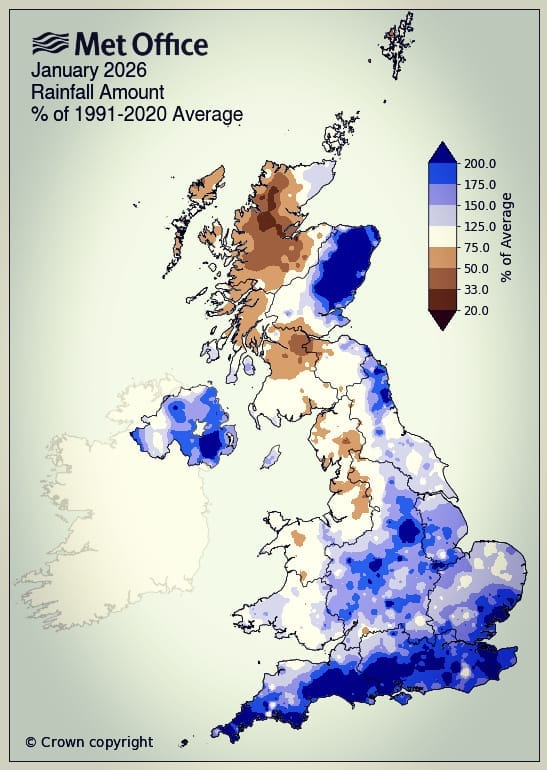
From the weekend despatch: Record rainfall drenches Ireland and the U.K.—and the jet stream isn’t done …
Your loyal guide to a changing world.
Membership with The Signal means exclusive access to premium benefits:
- Regular profiles on the questions behind the headlines
- In-depth feature interviews with our network of specialist contributors from across America and around the world
- The despatch, our weekly current-affairs and cultural-intelligence briefing
- Early access to new products, including print extras
It also means vital support for an independent new enterprise in current-affairs journalism.
New music
‘Government Job’
Geologist—a.k.a., Brian Weitz—is best known from Animal Collective but composes and records outside the band, as well. This piece is an ode to the federal workers of Washington, D.C., from a District local. The ambient textures feel like what you might hear if a bureaucracy had a soundtrack: patient, methodical, occasionally sublime, mostly just persistent.