
Same city, same day

Recently: How did the open web go into such “rapid decline”? Michael Socolow on why search engines have gotten worse, old links no longer work, and the internet is increasingly siloed.
Today: The “city of peace” just hosted back-to-back, high-stakes talks—with very different results. … An Islamist party that opposed Bangladesh’s independence—and whose leaders were convicted of wartime rape, torture, and murder—just won 68 seats in parliament. … &c.
For members: What’s online gambling doing to American society? Gerda Reith on the new “ecosystem” tech, finance, and marketing firms are cultivating together. ... & A year of rain in three weeks—and strange winter heat from Tehran to Cairo.
+ New music from Skee Mask ...
Two tables in Geneva
On Tuesday, U.S. envoys Steve Witkoff and Jared Kushner led two separate negotiations in the same city on the same day. In the morning, they sat with Iranian officials at the Omani ambassador’s residence for indirect talks over Tehran’s nuclear program. In the afternoon, they walked to the Intercontinental Hotel and joined Russian and Ukrainian delegations for a third round of war negotiations—a week before the fourth anniversary of the full-scale invasion. Iran temporarily closed the Strait of Hormuz for military drills as the nuclear talks opened. A second U.S. aircraft carrier strike group sat in the Gulf. Russia launched another wave of missiles and drones at Ukraine’s energy grid the night before the peace talks began.
The two tables produced different results. Iran’s foreign minister, Abbas Araghchi, said both sides agreed on “guiding principles” for a potential deal and would exchange draft texts before a third round. An American official confirmed “progress” but said the U.S. expects detailed Iranian proposals in two weeks. The Ukraine session ran six hours, focused on territory—Russia’s demand for all of Donetsk, including the parts it hasn’t conquered—and ended with no visible movement. Talks continue on Wednesday.
The asymmetry tells us something. At the Iran table, Washington is the coercive power—carrier groups, sanctions, fighter jets overhead. At the Ukraine table, it’s supposed to be the honest broker. Witkoff and Kushner played both roles in the same city on the same afternoon. Tehran got “guiding principles.” Kyiv got Trump telling reporters, “Ukraine better come to the table fast.”

Meanwhile
- Saeppyol Street. North Korea has opened a new housing district for families of soldiers killed fighting alongside Russian forces in Ukraine. State media showed Supreme Leader Kim Jong Un walking through the district with his daughter, pledging to repay the “young martyrs” who “sacrificed all to their motherland.” South Korean intelligence estimates 6,000 North Korean troops have been killed or wounded since Pyongyang deployed 11,000 soldiers in 2024.
- A party that opposed independence. Jamaat-e-Islami has become Bangladesh’s official opposition for the first time, winning 68 seats in last week’s parliamentary elections—nearly four times its previous record of 18. The party opposed Bangladesh’s independence in 1971; its leaders were convicted of wartime atrocities, including rape, torture, and murder; and its leader, Shafiqur Rahman, has said no woman can lead the party. The Bangladesh Nationalist Party won a landslide 212 of 300 seats, securing a two-thirds supermajority.
- It was murder in Kharp. … Israel approved its first West Bank land registration since 1967—Palestinians who can’t prove ownership lose their land to the state. … Canada is leading talks to link the EU and a 12-nation Indo-Pacific trade bloc against tariffs from Washington. … The Pentagon is deploying 200 troops to Nigeria to fight Islamist militants. … The Rev. Jesse Jackson, civil rights leader and two-time presidential candidate, passed away on Tuesday at 84. … & Five European governments have confirmed that Alexei Navalny was murdered by the Russian state—poisoned with a lethal toxin while imprisoned in an Arctic penal colony.

AI will eliminate millions of jobs in the next five years. Yours doesn’t have to be one of them. Here’s how to future-proof your career: Join the Superhuman AI newsletter, read by 1M+ professionals throughout leading tech companies and across sectors. Learn critical AI skills in just three minutes a day—and become the AI expert on your team.
Feature
‘A casino in your pocket’
What’s online gambling doing to American society? Gerda Reith on the new “ecosystem” tech, finance, and marketing firms are cultivating together.

If betting now seems to be everywhere, Gerda Reith said recently here in The Signal, that’s because it is. Over the last few years, 38 American states have legalized online betting, and sports wagers have hit record volumes. In the meantime, prediction markets—which let people bet on future events—have gone mainstream. Since the beginning of last September, the amount wagered on prediction markets has grown nine times over. In the last week of January alone, people wagered US$4.3 billion.
But as betting has become ever more visible, Americans have begun shifting their views on it. A growing share sees legal sports betting as bad for both society and sports, according to a Pew Research Center survey. In July 2022, 34 percent said it was bad for American society; by July 2025, that number had climbed to 43 percent. The percentage who thought it bad for sports rose from 33 to 40 percent over the same period.
Politicians, too, have begun to notice. Ohio Governor Mike DeWine signed a sweeping legalization of online sports betting into law in 2021, but now says he “absolutely” regrets it. He’s doubled Ohio’s tax on sports betting and called on the major American sports leagues to ban player-specific, in-game bets on the grounds that they’re too easily fixed. “They’re just playing with fire,” he told the Associated Press. “I mean, they are just asking for more and more trouble, their failure to address this.”
What’s this surge of betting doing to American society?
Reith is a professor of sociological and cultural studies at the University of Glasgow. The gambling industry has seen spectacular growth since the U.S. Supreme Court legalized online betting in 2018, Reith told The Signal. And where there’s more betting, there are more problems with betting—problems that ripple through American life: Gambling leads to physical and mental health problems; in some cases, it may lead to suicide. There’s already evidence that credit scores have fallen in states that have legalized online gambling.
But to understand why the industry has surged, it’s not enough to look at the commissions these companies take from a growing number of gamblers. They’re no longer just offering bets—they’ve integrated themselves into what Reith calls an “ecosystem of gambling.” As this ecosystem has spread online and into smartphones, these companies have struck up partnerships with firms in every sector, from tech to finance …
Weather report
The rain in Spain
36.7587° N, 5.3684° W
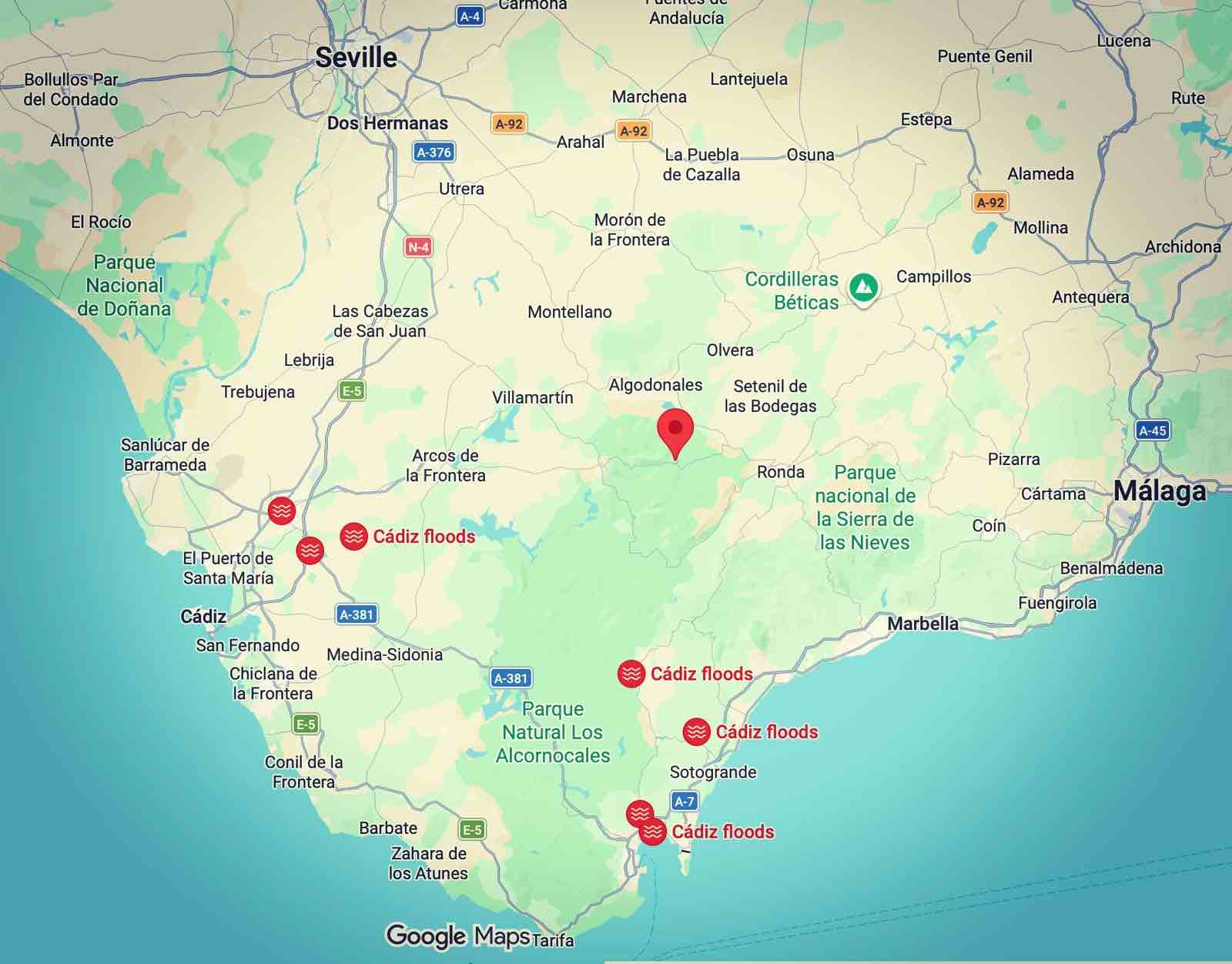
From the weekend despatch: A year of rain in three weeks—and strange winter heat from Tehran to Cairo …
Your loyal guide to a changing world.
Membership with The Signal means exclusive access to premium benefits:
- Regular profiles on the questions behind the headlines
- In-depth feature interviews with our network of specialist contributors from across America and around the world
- The despatch, our weekly current-affairs and cultural-intelligence briefing
- Early access to new products, including print extras
It also means vital support for an independent new enterprise in current-affairs journalism.
New music
‘The Usual Suspects’
Bryan Müller, the Munich-based electronic producer who records as Skee Mask, returns with another four-track EP in his ISS series. This is the opening track on ISS012, and it dives in with pummeling drums and a clipped hi-hat. German-engineered for dance-floor supremacy.