Lone and level sands
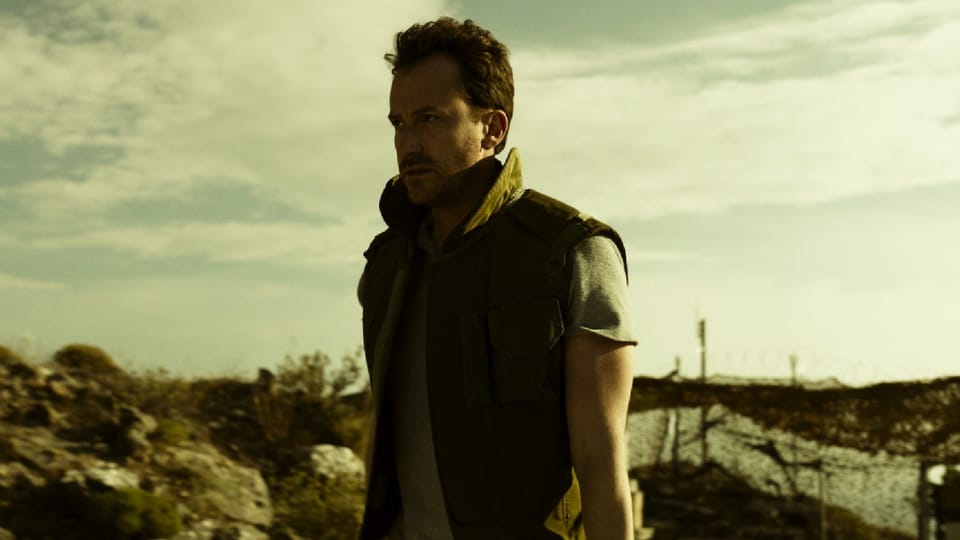
Late one day in the summer of 1999, the Israeli architect Yaakov Rechter got an unexpected call at his office in Tel Aviv. It was his friend Uri Lubrani, a diplomat then coordinating government operations in Lebanon for Israel’s Ministry of Defense. Lubrani sent a car. It took Rechter, with his son—and partner—Amnon, to a darkened restaurant across the city.
Where things got stranger.
After showing them to their table, Lubrani left the room and returned with General Antoine Lahad, the head of the South Lebanon Army. At the time, Israel was occupying Southern Lebanon, fighting alongside the SLA to keep Hezbollah and other Islamist militants from seizing the “Security Zone” Israel had established north of the border. He had an astonishing proposal. He wanted the Rechters to design a monument to fallen SLA soldiers and oversee its construction—inside Lebanon.
What came next is the subject of Bryan Singer’s new film, Monument—written and shot entirely before the October 7 Hamas attack on Israel in 2023 and everything that’s now followed. Here, in an exclusive first interview, Singer explores the film and the questions it raises—about the fraught bonds between parents and children, the distance between generations marked by the Second World War, and what happens to a movie when the world around it changes …
John Jamesen Gould: When this call comes out of nowhere, it’s a mysterious thing. Did that really happen?
Bryan Singer: It really happened. Yaakov got the call. A car came for them, drove them to this restaurant across town. It was closed. They didn’t know why they were there. And when Lahad walked in, they were stunned. Anyone who knew of Lahad would have expected him to be in Southern Lebanon, but here he was, sitting down across from them, lights down. It was all very clandestine—and for a couple of architects, very disorienting.
Gould: After they leave, they’re at odds right away: Yaakov knows Lubrani, respects him, and feels bound to say yes; Amnon is skeptical and agitated. What about that?
Singer: In life, as I understand it, yes, there was a real argument about whether to take the job. And for the film, we saw an opportunity to articulate the dichotomies and quandaries Israelis were struggling with—between generations, especially—about the war in Lebanon.
So as the two drive home, the son starts listing all the hypocrisies he sees behind the proposal: He says the Security Zone should be called what it is—a war zone. The South Lebanon Army should be understood for what it is—Israel’s proxy militia. Our government is constantly undermining ideals it claims to stand for: Peace is war; ceasefire is rearmament; and now, memory is going to be propaganda.
And the father responds, “I disagree with every word you say.” He says Israel itself is a war zone—that we live surrounded by enemies committed to destroying us. Yes, we make mistakes as we strive on, but that’s human. Your grandfather built this country, and the SLA soldiers who’ve died in Southern Lebanon—they died to protect that.
Gould: The argument isn’t resolved, but Amnon ends up agreeing to the proposal—reluctantly, with conditions. Yaakov is dying of cancer, and Amnon knows that if Yaakov takes on the project alone, it’ll be dangerous and draining for him.
Then there’s a moment when everything seems to change—and it’s not entirely about his dad anymore: An idea for the monument comes to him. How do you understand that?
Singer: Yes, Amnon is looking at his twin babies and it hits him. And once it hits him, it just starts taking over.
We don’t immediately know what the idea is, but he sees something—and he starts drawing; he starts talking to his colleagues; he’s exhilarated. He ends up holding forth to the twins about it, strolling them in the park, even though they’re infants and can’t understand a thing he’s saying.
Knowing of Lahad would have meant expecting him to be in Southern Lebanon, but here he was, sitting across from them in a closed restaurant, lights down. It was all very clandestine—and for a couple of architects, very disorienting.
To me, this is an artist who’s floating on air—and all his complaints about the project, all his moral and political reservations about it, all his frustrations with doing it in the first place are falling away. Because now it’s on.
Gould: You understand this.
Singer: I relate very much to the experience as a director—when out of nowhere, there’s an idea that suddenly makes sense and puts what you’re doing in a new light. It could be an idea I come up with, or one a collaborator comes up with, or one we come up with together. I don’t know how other filmmakers feel, but this puts me on air. I feel like I’m floating in the moment. I feel—you know, I’m usually a pretty dour person by nature, but I feel this flood of happiness. It’s transporting.
Gould: The idea has you …
Singer: Oh yeah. And for me, it’s one of the most fulfilling experiences in my work—when you stumble on an idea, or it connects dots for you, or you have this experience of, wow, I’m seeing and feeling something so meaningful in what I’m doing, and it’s just hit me. I can get very emotional about it, honestly. I can choke up, right in front of people.
But there’s a compulsion in it, too. So while Amnon still has all his concerns, they’ve given way in the sense that he’s now driven to follow the idea and realize it.
This is a kind of drive I think you can see writ large in a figure like Robert Oppenheimer. Once you’re in the grip of an idea, the misgivings you may have had at the outset fall to the side. Because whether you’re an artist, an architect, a physicist—suddenly, there’s this thing compelling you, and you need to finish it. It takes precedence over everything. You just have to see it done.
To me, that describes the obsession of the artist or the creative person in any field. There can be a lot of tension in this obsession—but it’s a creative tension.
Gould: It seems conspicuous that as the project develops, no one other than Amnon appears to care about his idea. Yaakov supports him and defends his vision. Others work with him to realize it, more or less cooperatively. But only Amnon seems captured by the idea. Yaakov even ridicules him for it.
Singer: Yeah, Yaakov is always teasing him. Which I love. So it felt perfect to me when, in a scene where Amnon is very frustrated and angst-ridden about how things are going, Jon Voight—who plays Yaakov—improvised the line, “You’re taking yourself so seriously.”
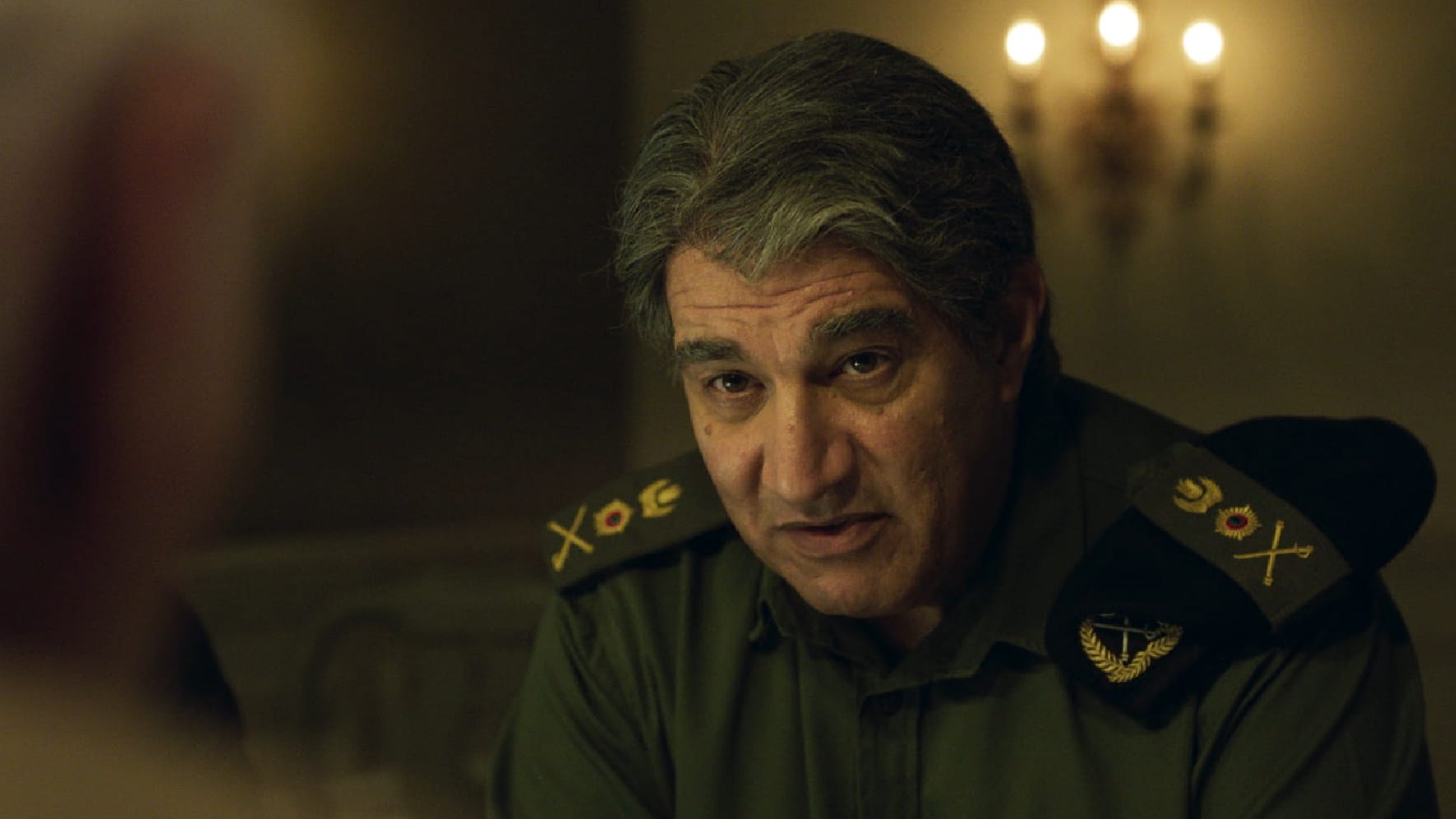
It lets the audience share in an awareness about Amnon: He’s doing something important, and he feels it deeply, but he can also, yes, take himself very seriously. It may be a peril of his obsession. And Joe Mazzello can play him with a lot of intensity. But I love the way this spontaneous moment lets us see Amnon through Yaakov—and all the warmth and humor Jon brings to him.
Gould: Still, there’s a real argument in the undercurrent. Yaakov takes issue with the substance of what Amnon is doing artistically—not just his style.
Amnon identifies as a conceptualist—that’s how he names the role of ideas in his work—and Yaakov sends him up for it: “Ohhh, conceptualism!”
Singer: He does—and I think Yaakov isn’t just sending up Amnon; he’s sending up Amnon’s generation and their whole way of thinking about political morality. The son has a point of view that he’d understand as principled—but that can also be abstract. The father has a more historical point of view—one that focuses on Israel’s formation and surroundings and conflicts.
Looking at it that way, the film is every bit as much about generations negotiating the distances between them as it is about living under the shadow of your father—or in Amnon’s case, your father and your grandfather.
Gould: Maybe it’s me, but even though I know both characters were born in Israel, and both the actors are from the U.S., I almost hear Yaakov as European-Israeli and Amnon as an American-Israeli—an old-world father and a new-world son.
Singer: No, I hear that. And some of it is probably me harking back to my World War II obsession. Which may be more pronounced in other films I’ve done—Apt Pupil, the first X-Men, Valkyrie. But the Second World War is everywhere in the background here, too. And what happened to the Jews specifically in the Second World War is much closer to Yaakov than it is to Amnon.
So it speaks to me that there’s a generational distance between them, not only in their overall moral and political outlooks but also in how visceral this specific background is to them—and I think you can hear that in the ways Jon and Joe express their characters.
Gould: In the meantime, Amnon has kept what he’s doing from his wife, Osnat. And when he eventually lets her in on it, there’s a new argument—maybe a subtler argument, since it’s within a shared generational frame of reference. Osnat even sounds a little like Amnon did back in the car with Yaakov.
We don’t immediately know what the idea is, but he sees something—and he starts drawing; he starts talking to his colleagues; he’s exhilarated. He ends up holding forth to the twins about it, strolling them in the park, even though they’re infants and can’t understand a thing he’s saying.
She says, “Don’t you see what this is? It’s a statement—of our might and domination. Architecture is not politics!” And Amnon snaps, “Everything is politics!”
Singer: “—even the Holy Scripture.” It’s one of my favorite lines.
Gould: This is a film with a lot of debate in it. Everyone’s arguing all the time.
Singer: Yeah, and that’s life in Israel. They really do argue all the time. Oh my God, I’ve been at a table with friends—I have this one friend who’s Palestinian and another who’s Israeli, who served in Lebanon. We all went out to dinner together, and the two of them just went at it.
Did they go at it at dinner! They started out in English, and they kept going at it, and then they switched to Hebrew, and kept going at it—until finally, I interrupted them. I said, “English!” By that time, the whole restaurant could hear us. And then a few minutes later, they were picking off each other’s plates—like, what, are you going to finish your dessert? We ended up having multiple dinners together—and they’d always get into some kind of a tête-à-tête. For me, it was a real learning experience.
Gould: What do you make of Amnon’s answer to Osnat, then—“everything is politics”? He seems to mean what he’s saying—but it’s also a little cryptic.
Singer: Yeah, there’s an obvious sense in which everything isn’t politics—so this is ambiguous.
But I think it captures something unavoidable for Amnon: They’re building a monument in Southern Lebanon; that’s inherently risky. The monument is meant to be a pillar of peace; but it’s also daring and challenging. The instant Lubrani said they wanted to build it inside the Security Zone, Amnon knew that was a big deal.
He’s a politically-minded guy—he makes that clear early on. He knows what he’s doing is politically charged.
So when Osnat says architecture isn’t politics, and Amnon says everything is politics, to me, he’s saying, I know that what I’m doing matters. I don’t know whether it’s going to be successful; I just know what it is—and that it will stir the pot. I know I’m doing something political.
He’s also saying this in Israel. Which is a tiny country—about the size of New Jersey, by area or population—and which is a site of deep, enduring conflicts. It’s a democracy, surrounded by countries it has fraught relations with, historically. And it’s just a very complex place to have a Jewish state, as we know. No matter what happens in Israel, whatever anyone does, it always has some political ramifications.
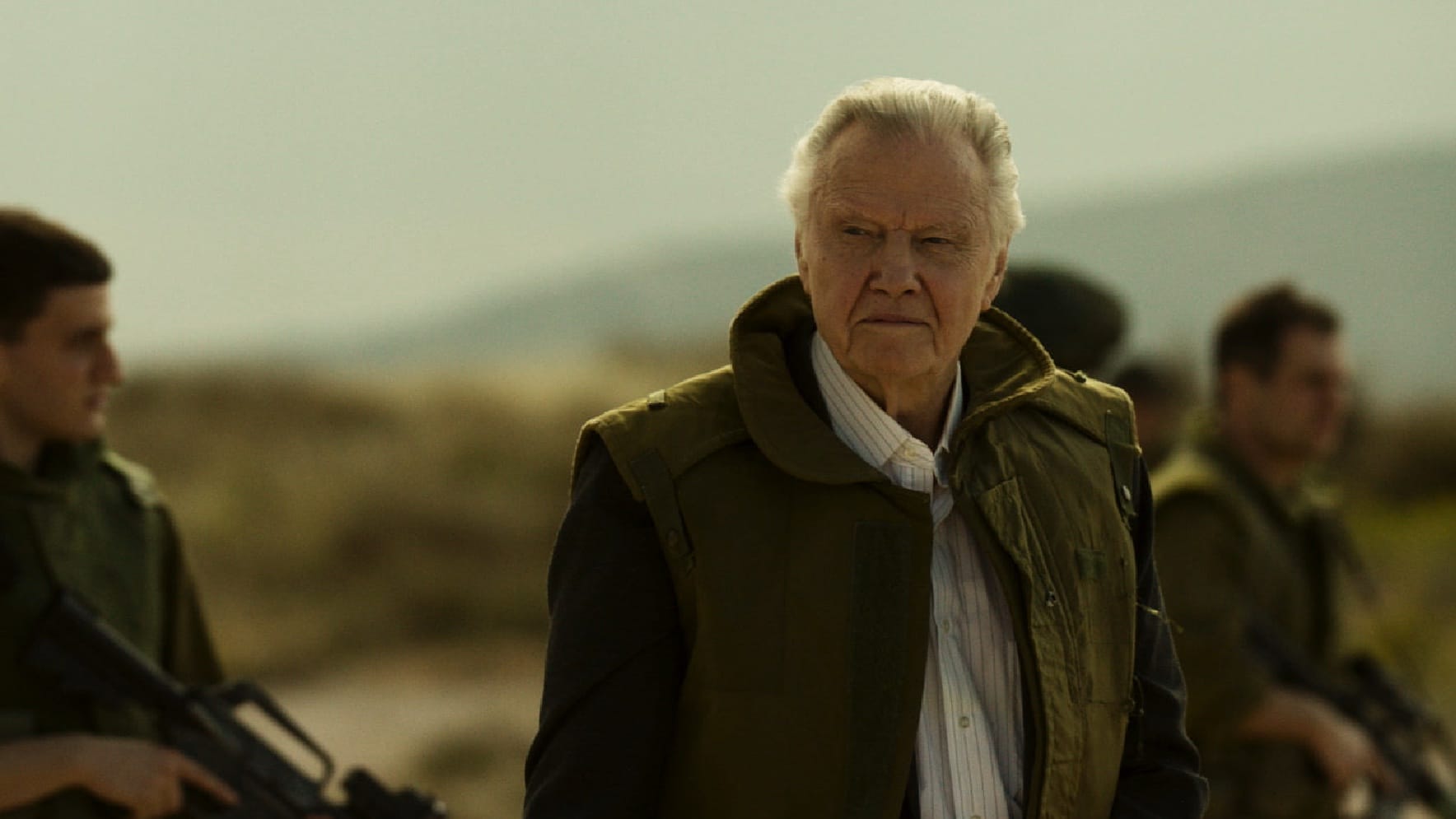
At the same time, some of the ambiguity in what Amnon says here is that whenever human beings are involved, there’s also a way—and I think everyone can relate to this on some level—in which everything is politics. Even running a family is politics. There are arguments, there are compromises, there are stalemates, there are solutions—there are all these things, and that’s all politics. And it’s true—when you look at the Holy Scriptures, you see a lot of complexities and a lot of debate, and you could say that’s all politics, too.
So no, not everything is politics in the usual sense of the word, but I’d say there’s no bright line, either, separating the word entirely from what we have to do anytime we navigate things with other people.
Gould: There’s no bright line separating non-politics from politics, and it seems there are also no straightforward definitions of the political issues Amnon is navigating. They’re all ambiguous: Is it a security zone or a war zone? Is the SLA a Lebanese national army or an Israeli proxy militia? Is the war a defense of an ally or the occupation of an enemy?
Singer: Very much. The Security Zone is in Lebanese territory; but it’s full of Israeli soldiers. These soldiers have a mission to keep the peace there; but not everyone likes the idea of them keeping the peace there. And yes, some—not least in Lebanon—look at the SLA as the IDF’s proxy militia and what they’re doing as an occupation.
These questions are ambiguous, morally and politically, but I see them also as sources of tension, dramatically. Which is something I’m always drawn to—this interplay of ambiguity and tension.
It’s part of why I like The X-Men so much. Professor X and the villain Magneto are mortal enemies; but they’re also friends. Ultimately, I think, they both want the same thing for mutants; they just see very different paths to it. Which creates an ambiguity between them that I like—and that drew me into their world in the first place. It also creates tension in the ways Xavier and Magneto go about instilling their views on how mutants should live and be treated in the world. And there, as here, I think, that makes for a much more interesting film than one that says, Okay, these are the good guys, and these are the bad guys.
I’d been spending a lot of time in the Middle East, and it was a different world. When I went to the Israeli-Lebanese border on the coast, there was nothing but a guy standing there with a machine gun and a cat making its way across the line.
Gould: All the politics here, all the ambiguities and tensions it generates—it seems to me they’d now have to belong to the film you’ve made as much as they did to the monument Amnon built. And so, you’d have to navigate these ambiguities and tensions in your way as much as Amnon did in his—including, I imagine, through a creative process with lots of people. How do you think about that?
Singer: Probably the most important thing to know about the making of Monument is that it was all before the October 7 attack in Israel and everything that’s happened since.
I’d been spending a lot of time in the Middle East, and it was a different world. When I went to the Israeli-Lebanese border on the coast, there was nothing but a guy standing there with a machine gun and a cat making its way across the line. The scene couldn’t have been more relaxed. There was a wedding going on, like, 200 feet away. Of course, things looked a little different when I went off-road to the Syrian border; that was a bit more tense, with gates and minefields and some Israeli tanks parked on a base—not facing Syria, but there, just in case. And the region was meanwhile full of all its ongoing tensions and conflicts. But this was my experience before making the movie.
I got to spend a lot of time, not just around Israel but across the region—in Jordan, in Turkey, elsewhere—talking to people with different points of view about it. The range of perspectives you encounter is pretty vast, as you can imagine. But one consistent theme I heard, speaking with people one-to-one, was this tremendous desire for peace—for the chance to build their economies and their societies and their lives. From afar, that’s going to be even harder to see now than it was then—but that’s what I encountered, and that’s the experience I brought to the project.
Still, there were always going to be political ramifications, right? And early in the creative process, there was a pivotal conversation with Jon Voight, who’s a committed conservative, as you may know. He was processing some skepticism about this potentially being a film with an anti-Zionist message or maybe one that would be super-liberal in some way. And the two of us ended up having an intense and ultimately wonderful discussion about it.

I don’t think Jon realized that, as we were talking, I was jostling through an airport trying to make a flight to get to my mother’s 90th birthday. I was with a friend, one of our producers, Guy Shalem. Fortunately, Guy got searched and I didn’t, so I could keep speaking with Jon while Guy was being patted down and they were going through all his stuff.
I was worried, because I felt desperate not to lose Jon. If I had? Then I’d just been sitting there on a flight for all those hours? Oh, God. But what I was thinking, and what I said to him, was: Look, the questions you have are good. I want you to bring them to the character of Yaakov. I want you to bring the moral and political convictions they come from to Yaakov, too. I want you to bring these questions and commitments to him and to his voice—and to his relationship with his son.
And as we talked, Jon wasn’t only receptive but very engaged. He had ideas for lines; he had other ideas he was interested in contributing; and I was excited, because I love it when actors want to bring these things to a role. I was also still anxious, because I really didn’t want to lose him. But the conversation ended beautifully—at the exact moment I sat down in my seat. And I turned to Guy and said, I think he’s still in!
Of course, we ended up having many more conversations, but they weren’t threshold conversations; they were collaborative conversations. Here, on the phone, I think Jon and I were able to get to a place where he could see how to bring his point of view into his character—and what that could mean for the film as a whole.
Which I don’t even think he experienced as morally or politically satisfying, as such. What you find out when you work with Jon Voight is that he’s an actor first and foremost—and in addition to being such a huge talent, just a tremendously generous, tolerant, good person. He’s in his mid-80s, but you’d never know it. He puts so much energy and care and devotion into his work. We had to shoot fast and lean, too, and not always in the easiest conditions. But he would just roll with it. He was a model, really. And once we were all together making the film, everyone was as on board as he was to key off the script we’d developed and bring the story to life.
We were doing just as much translating back and forth between English and Hebrew and Arabic and Greek on the set as you see between English and Arabic or English and French in the film. You’d have no idea how much translation was going on. It was hilarious—and yet it worked.
Gould: Does it seem to you that there might be a lot of parallels between what we see it taking for Amnon’s team to build this monument in Southern Lebanon and what it took for your team to make a film about it?
Singer: So much goes into building anything. With architecture, it’s not just architects; it’s builders, craftspeople, experts in foundation, in substance—whether it’s concrete or glass, or whatever you’re building with. The same is true with filmmaking. In my case, it starts in the relationships between me and our producers, Guy, Yariv Horowitz, and Jason Taylor, then me and our screenwriter, Alena Alova, and eventually me and the crew. And on this movie, those relationships were very challenging, because we had Americans, Israelis, Palestinians, and—since we shot the film mainly in and around Athens—Greeks, all working together. But that’s what it takes to make a movie—and, yeah, that’s, I learned, what it took to build a monument.
I tried to illustrate this, too, by emphasizing the language barrier, particularly between Amnon and the Lebanese builders he worked with. In the film, we have what would have been Hebrew as English, because I’m an American making a film in English. But I kept the Arabic and the French because I wanted to show the complexity of bringing together the right people from different backgrounds to build something like this.
Meanwhile, we were doing just as much translating back and forth between English and Hebrew and Arabic and Greek on the set as you see between English and Arabic or English and French in the film. You’d have no idea how much translation was going on. It was hilarious—and yet it worked. And we had so little time, so it had to.
Gould: This was all before October 7, but the movie is coming out in a very different world. Do you think the new context changes it in any way?
Singer: The idea, the script, the shooting—that was all done before October 7. I cut it all together before and after, but only as I’d intended to from the beginning. So the new context didn’t change the film. But it has to alter the way people experience it. And I’d say that in turn will alter the way they end up interpreting it.
Before October 7, Israel might not have had the same meaning to some as it does now; Lebanon mightn’t have had the same meaning. So for people who watch the news or follow current events, or certainly for anyone affected by them, the movie will be more charged. It’ll create conflict—or I won’t say conflict; it will create dialogue.
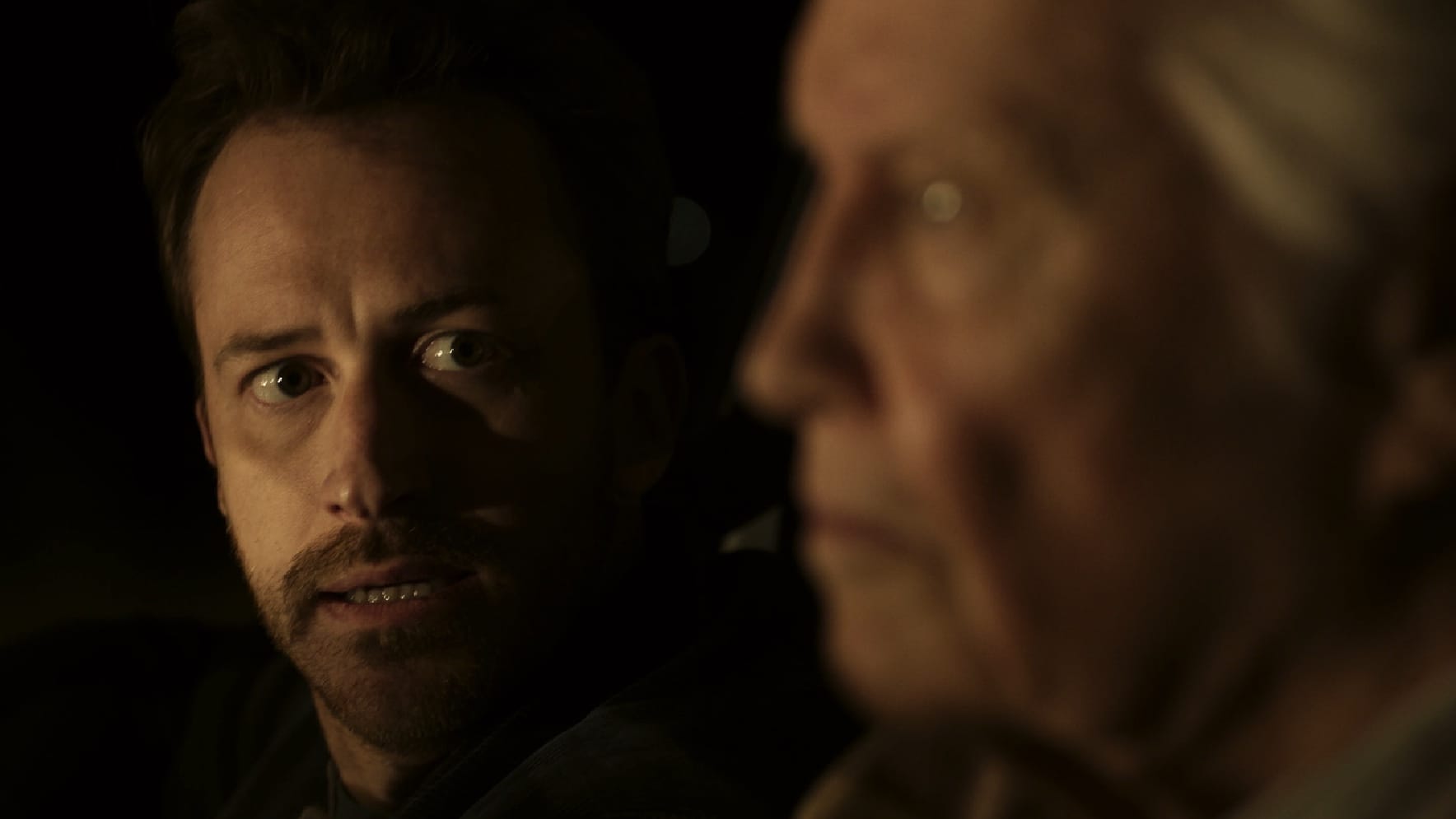
Already, we’ve been able to hold some screenings. One, for a group of UCLA students, led to more than an hour and a half of conversation—among American students, Israeli students, Arab students, Lebanese students, other students. It was great to see—and listen to. A lot of them asked to watch the movie again, and I was very flattered by that—but what was most important to me was the dialogue I could see it sparking. And that’s something I’ve seen after every screening we’ve done so far. It’s always a little different. Some of it has to do with the movie on its own terms; some has to do with current events; and some, with the two together.
The heart of the movie itself is still the emotional journey of its characters. That’s the real through line, not Israel or Lebanon, or anything else. It’s the characters and their challenges, and their conflicts, and how they navigate them. It’s how Yaakov deals with his illness; how a son deals with his father; how the father deals with him; how a wife deals with her husband; how the husband deals with her; how Amnon and the Lebanese guys he works with all deal with one another—to me, these relationships define the film. Lubrani, Lahad, the SLA, the IDF, Hezbollah—they’re all essential elements, too. But they’re essential because of the way they shape the specific journey of these specific characters.
The ways this journey is meaningful to people, though—that happens beyond the film, as they navigate their own lives and experiences and understandings of the world. And now, that world includes this new time of tragedy in the Middle East—I’ll call it that, because war is tragedy. It’s mortifying, but it’s happened, and it will change the experiences and understandings of the world that people will interpret Monument through. And that changes the conversations that will come out of it.
Every time we’ve shown the film, I’ve tried to bring together a mixed audience with different backgrounds and political orientations, so it’s not just a bunch of people with the same points of view who might watch the film and then pat each other on the back for the way they see it—or pat me on the back, you know: Nice movie. No, they really get into it with each other.
I don’t sit in theaters and watch my movie over and over again, but I definitely like watching the movie that plays out after the movie. I wish I could be a fly on the wall at every theater where it ends up playing.