Who knows better about surprise

Recently: Spring and winter are fighting it out around the Northern Hemisphere. Who’s winning where?
Today: Israel struck a gas field it shares geologically with Qatar—and Iran retaliated against four countries that aren’t at war. … The Pentagon wants $200 billion for the war; the commander in chief’s own party is balking. … &c.
For members: Will Ukrainian democracy survive the Russian assault? Serhii Plokhy on the historical clues. ... & What turned Libya from a fledgling democracy into a civil war? Inga K. Trauthig’s new book, Ruining Revolution: How International Islamists and Salafi Forces Have Held Libya Hostage Since 2011.
+ New music from Mandy, Indiana ...
The field they share
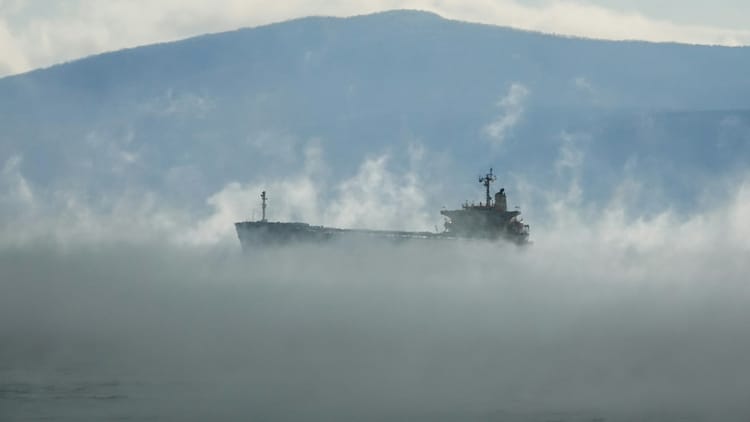
On Wednesday, Israel struck the South Pars gas field—the world’s largest natural gas reserve, which sits beneath the Persian Gulf and belongs, geologically, to both Iran and Qatar. Iran’s processing hub at Asaluyeh went offline. Trump said Washington “knew nothing” about the strike. Israeli and U.S. officials say it was coordinated with the White House. Then Iran published a target list—five facilities in Saudi Arabia, the United Arab Emirates, and Qatar—and, overnight, hit them all. Iranian missiles struck Qatar’s Ras Laffan Industrial City, the world’s biggest liquefied natural gas complex; drones hit two of Kuwait’s largest refineries; Saudi Arabia intercepted a ballistic missile aimed at Yanbu, now its only functioning oil-export port. Qatar expelled Iran’s military attachés. Oil prices crossed US$110 a barrel. Trump threatened to “massively blow up the entirety of” South Pars—the same field Israel just struck—if Iran attacked Qatar again. The sequence raises a question no one in the Gulf can cleanly answer: who, exactly, is at war with whom here?
Iran says it targets American assets on Gulf soil—bases, not countries. The Gulf states aren’t at war with Iran, but their infrastructure is burning. Saudi Foreign Minister Faisal bin Farhan said on Thursday that “what little trust there was has completely been shattered.” Qatar condemned Israel’s strike on South Pars as “dangerous and irresponsible”—then took Iranian missiles hours later. Trump’s threat to destroy South Pars to protect Qatar puts Washington in the position of threatening to obliterate an asset Qatar partly owns to defend Qatar from Iran’s retaliation for an Israeli strike Trump says he didn’t authorize. The Pentagon, meanwhile, has asked the White House to approve a $200 billion supplemental war budget. Defense Secretary Pete Hegseth offered no timeline for the war’s end. “It takes money,” he said, “to kill bad guys.”

Meanwhile
- Holding pattern. The U.S. Federal Reserve, the Bank of England, and the European Central Bank all held interest rates steady this week, each citing the Iran war as the complicating factor. The Fed held at 3.5–3.75 percent; Fed Chair Jerome Powell said American job creation has slowed “to essentially zero.” Bond traders now price zero Fed rate cuts for 2026. The ECB warned the outlook is “significantly more uncertain.”
- ‘It takes money.’ The Pentagon has asked the White House to approve a $200 billion supplemental budget for the Iran war—more than every country on Earth except the United States spends on defense annually. Hegseth confirmed the figure “could move.” Republican fractures are already visible: Senator Lisa Murkowski of Alaska demands a plan before funding; Representative Lauren Boebert of Colorado says she won’t support funding the war under any circumstances. Trump had said it would last four to five weeks.
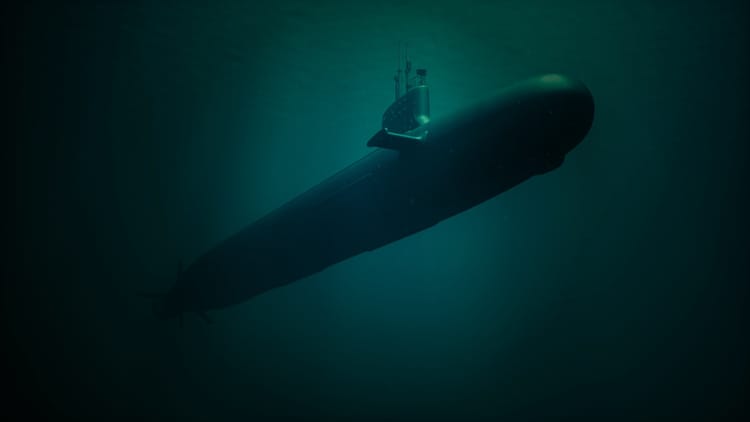
- The element of surprise. Kuwait arrests a second Hezbollah cell in a week—10 operatives trained in drone warfare. … Iranian cluster munitions kill Palestinian women near Hebron. … Russia’s state nuclear agency Rosatom evacuates most staff from Iran’s Bushehr nuclear plant. … The USS Gerald R. Ford docks in Crete after 268 days at sea. … & Asked why the U.S. didn’t warn allies before striking Iran, Trump told Japan’s Prime Minister Sanae Takaichi: “We wanted surprise. Who knows better about surprise than Japan? Why didn’t you tell me about Pearl Harbor?”

Your reading list for a changing world
Browse The Signal’s bookshop—organized into collections that track key themes in our investigations of current affairs: what’s driving the information wars, why societies are fracturing, how power keeps reinventing itself. Contributors’ titles alongside books we've featured in our coverage.
Feature
An Orwellian war
Will Ukrainian democracy survive the Russian assault? Serhii Plokhy on the historical clues.
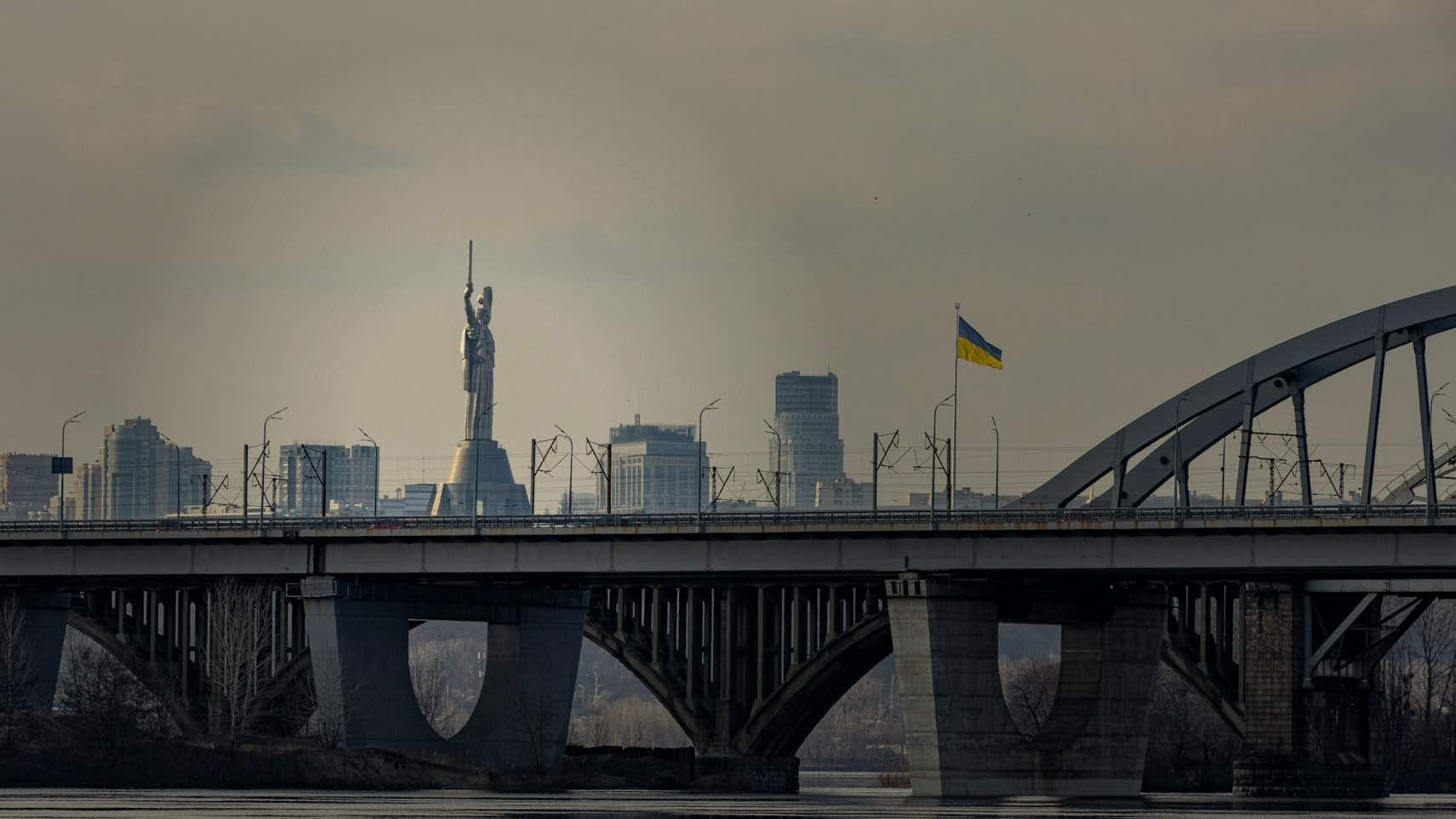
Last year, the American president called his Ukrainian counterpart “a dictator without elections.” Neither is Donald Trump the only figure on the American right to make this claim: The political commentator Tucker Carlson has also called Volodymyr Zelenskyy a “dictator,” while the technology mogul Elon Musk has accused Zelenskyy of “having seized control of ALL (sic) Ukrainian media.”
Under Ukrainian law, there should have been an election in 2024, but the country has been under martial law since the Russian invasion in 2022, and the government has indefinitely postponed elections. It has also outlawed several political parties for purportedly being “pro-Russian” and imposed wartime censorship on the Ukrainian press.
Is the Russia-Ukraine war hollowing out Ukrainian democracy?
Serhii Plokhy is a professor of history at Harvard University and the author of The Nuclear Age: The Epic Race for Arms, Power, and Survival , and David and Goliath: Commentaries on the Russo-Ukrainian War. Even though Ukrainian democracy is young and therefore vulnerable, Plokhy says, it has so far proved resilient. But the war is putting it under pressure. Ukraine’s press isn’t as free now as it was in peacetime. But censorship, Plokhy says, is normal—though not pleasant—in wartime: The United Kingdom silenced its press when it fought World War II. Democracies can weather temporary limits on freedoms, he says, provided those limits in fact remain temporary.
Maybe the more worrying trend, Plokhy says, is that the war is threatening Ukraine’s tradition of pluralism. By launching a full-scale invasion, Russian President Vladimir Putin unified Ukrainian society like never before. But it’s precisely Ukraine’s fractured political and cultural landscape that has forced Ukrainian leaders to compromise. Kyiv has never had the kind of power over Ukraine that Moscow has over Russia. Division, in other words, has been Ukraine’s guardrail against any one leader or faction becoming too powerful. Now that’s changing …
Books
Uncivil society
What turned Libya from a fledgling democracy into a civil war? Inga K. Trauthig’s Ruining Revolution: How International Islamists and Salafi Forces Have Held Libya Hostage Since 2011.
Zintan, Libya, on February 3: Gunmen stormed the home of Saif al-Islam Gaddafi, the second son of Libya’s erstwhile leader Muammar Gaddafi, and shot him dead.
Libya has fought a civil war that has claimed more than 20,000 lives since rebel forces seized and killed Muammar Gaddafi in 2011. Today, the country is torn between the Government of National Unity in Tripoli and the House of Representatives in Benghazi, which relies heavily on the general commander of the Libyan National Army, the mercurial Khalifa Haftar; independent militias control territory throughout the country.
Every faction is jockeying for international support. Turkey intervened in 2019 on behalf of the United Nations–backed Tripoli government; Russia, Egypt, and the United Arab Emirates officially recognize Tripoli but secretly back Haftar’s forces. Russian mercenaries guard oil fields in Haftar-held territory. Haftar, in return, helps the Kremlin evade Western sanctions. The country has become a testing ground for new weapons systems, including Turkish autonomous drones—“killer robots.”
Back in 2011, though, it looked like Libya might—however tentatively—embark on a path toward democracy.
Your loyal guide to a changing world.
Membership with The Signal means exclusive access to premium benefits:
* In-depth feature interviews with our network of contributors
* The despatch, our weekly current-affairs and cultural-intelligence briefing
* Early access to new products, including print extras
It also means vital support for a new, independent venture in current affairs.
New music
‘Cursive’
How about some noise rock from a band that splits its time between Manchester and Berlin. Mandy, Indiana’s vocalist, Valentine Caulfield, sings almost exclusively in her native French. The energy is high, and the video makes it look like they moved into a subway car. Expect the unexpected.