Four objectives, five days

Recently: Why is Los Angeles’s entertainment industry in such crisis? Andrew deWaard on the shape-shifting effects of financialization and monopoly.
Today: The American president has offered at least four different justifications for bombing Iran. None yet comes with an exit strategy. … One-fifth of the world’s traded oil is loaded on ships that can’t move—while the insurers just walked away. … &c.
& Open feature: How could unexpected events transform a work of art? Bryan Singer on a secret monument in Southern Lebanon, its tangled politics, and his first film in seven years.
For members: It’s heating up early across India and Pakistan, with the monsoons still months away.
+ New music from Squarepusher ...
Moving targets
When U.S. and Israeli warplanes killed Iran’s supreme leader, Ali Khamenei, in an airstrike on his Tehran compound on Saturday, it was an early salvo in a campaign that’s now struck more than 1,700 targets across the country. By Tuesday afternoon, U.S. President Donald Trump sat beside German Chancellor Friedrich Merz in the Oval Office and declared Iran “beaten militarily.” He confirmed strikes had hit Iran’s newly formed interim leadership that morning. Six American service members are dead. Iran’s Red Crescent puts the Iranian toll at 787. At the same time, Washington insists this isn’t regime change.
So what would it be?
The administration appears to keep shifting its objectives. Trump’s announcement on Saturday cited four goals: destroy Iran’s ballistic missiles, sink its navy, prevent a nuclear weapon, and end Tehran’s proxy funding. Secretary of State Marco Rubio told Congress on Monday the purpose was narrower: to “destroy that missile capability.” But the U.S. Central Command’s mandate goes further: dismantle the regime’s security apparatus. And Trump, pressed by reporters on Tuesday, mused about who should replace the current leadership, warned Iranians against protesting while bombs fall, and said the worst-case scenario is “somebody takes over who’s as bad as the previous person.” Senator Mark Warner, the top Democrat on the Senate Intelligence Committee, said he’s counted four or five stated objectives. None, so far, has clarified an endgame. … See “Inside Iran.”

Meanwhile
- The war next door. Hezbollah fired rockets and drones at an Israeli military base near Haifa early on Monday—its first cross-border attack since the U.S.-brokered ceasefire that halted fighting between Israel and Hezbollah in November 2024. Israel struck back across Lebanon, killing at least 52. On Tuesday, the Israeli military launched a ground incursion into southern Lebanon, deploying troops to what it called “strategic points” along the border. Lebanon’s government formally outlawed Hezbollah’s military operations and ordered the arrest of those who fired the rockets.
- The strait. Iran’s Revolutionary Guard Corps has declared the Strait of Hormuz “closed” and threatened to set fire to any ship attempting passage. Tanker traffic has effectively halted—roughly 77 million barrels of oil sit loaded on vessels stranded in Gulf waters, according to data compiled by Reuters. Major marine insurers scrapped war-risk coverage, supertanker rates hit an all-time high, and shipping giants Maersk and Hapag-Lloyd suspended all strait transits.
Forty thousand years of notation. Iranian drones strike three Amazon Web Services data centers in the United Arab Emirates and Bahrain—the first military damage to major American tech infrastructure. … Spain has blocked U.S. use of its military bases for Iran strikes, while Trump has threatened to cut off all trade with it. … Iranian drones have struck the U.S. embassy in Riyadh, Saudi Arabia; the U.S. has now closed the compound. … On Wednesday, the U.S. Senate will vote on a war-powers resolution to block unauthorized combat in Iran. … Researchers confirmed that Ice Age humans carved repeated patterns of dots, lines, and crosses into tools more than 40,000 years ago—among the oldest known systems of recorded information.

Your reading list for a changing world
Browse The Signal’s bookshop—organized into collections that track key themes in our investigations of current affairs: what’s driving the information wars, why societies are fracturing, how power keeps reinventing itself. Contributors’ titles alongside books we've featured in our coverage.
Feature
Lone and level sands
How could unexpected events transform a work of art? Bryan Singer on a secret monument in Southern Lebanon, its tangled politics, and his first film in seven years.
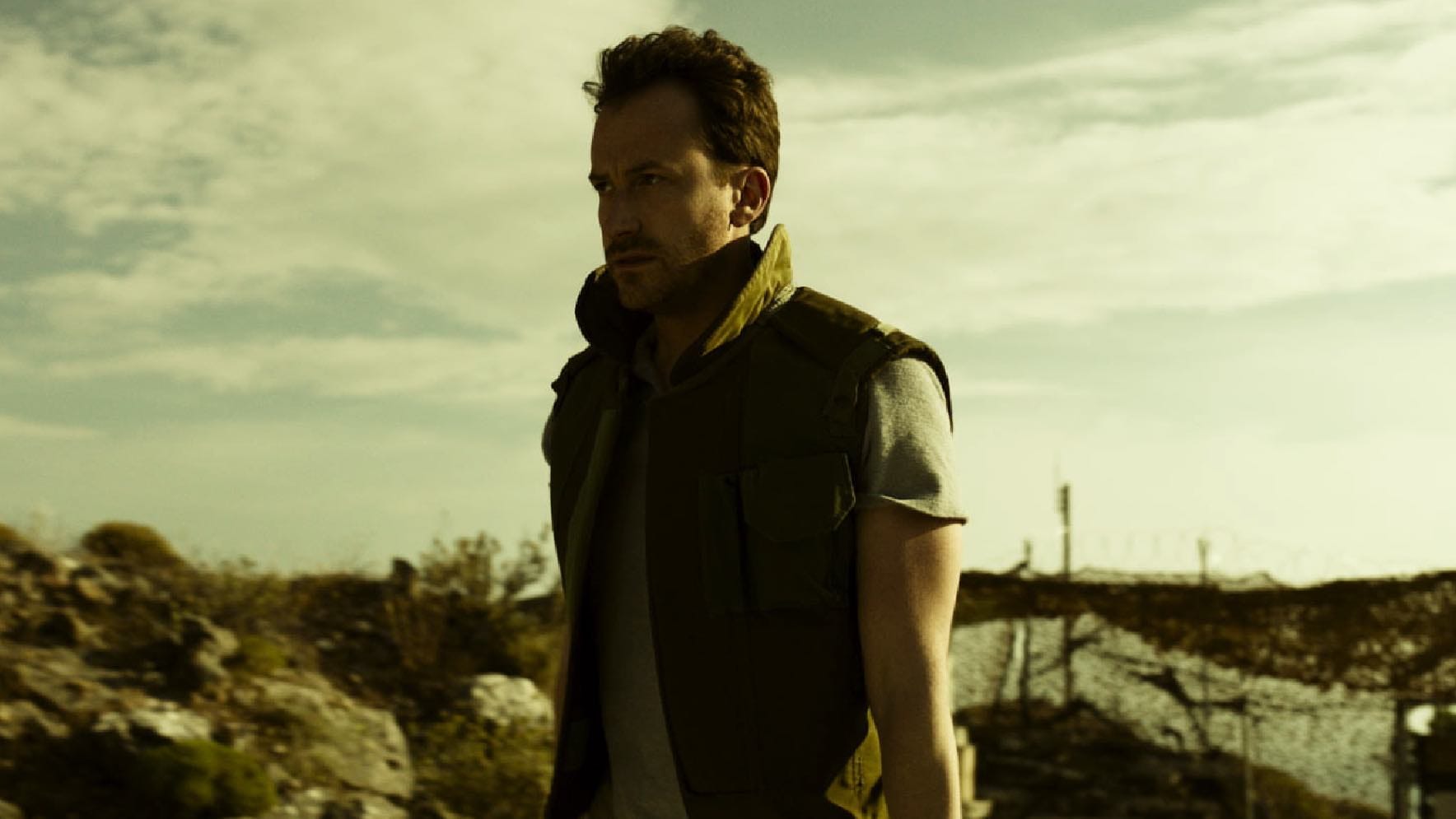
Late one day in the summer of 1999, the Israeli architect Yacov Rechter got an unexpected call at his office in Tel Aviv. It was his friend Uri Lubrani, a diplomat then coordinating government operations in Lebanon for Israel’s Ministry of Defense. Lubrani sent a car. It took Rechter, with his son—and partner—Amnon, to a darkened restaurant across the city.
Where things got stranger.
After showing them to their table, Lubrani left the room and returned with General Antoine Lahad, the head of the South Lebanon Army. At the time, Israel was occupying Southern Lebanon, fighting alongside the SLA to keep Hezbollah and other Islamist militants from seizing the “Security Zone” Israel had established north of the border. He had an astonishing proposal. He wanted the Rechters to design a monument to fallen SLA soldiers and oversee its construction—inside Lebanon.
What came next is the subject of Bryan Singer’s new film, Monument—written and shot entirely before the October 7 Hamas attack on Israel in 2023 and everything that’s now followed. Here, in an exclusive first interview, Singer explores the film and the questions it raises—about the fraught bonds between parents and children, the distance between generations marked by the Second World War, and what happens to a movie when the world around it changes …
Weather report
The heat before the heat in India
28.6139° N, 77.2088° E
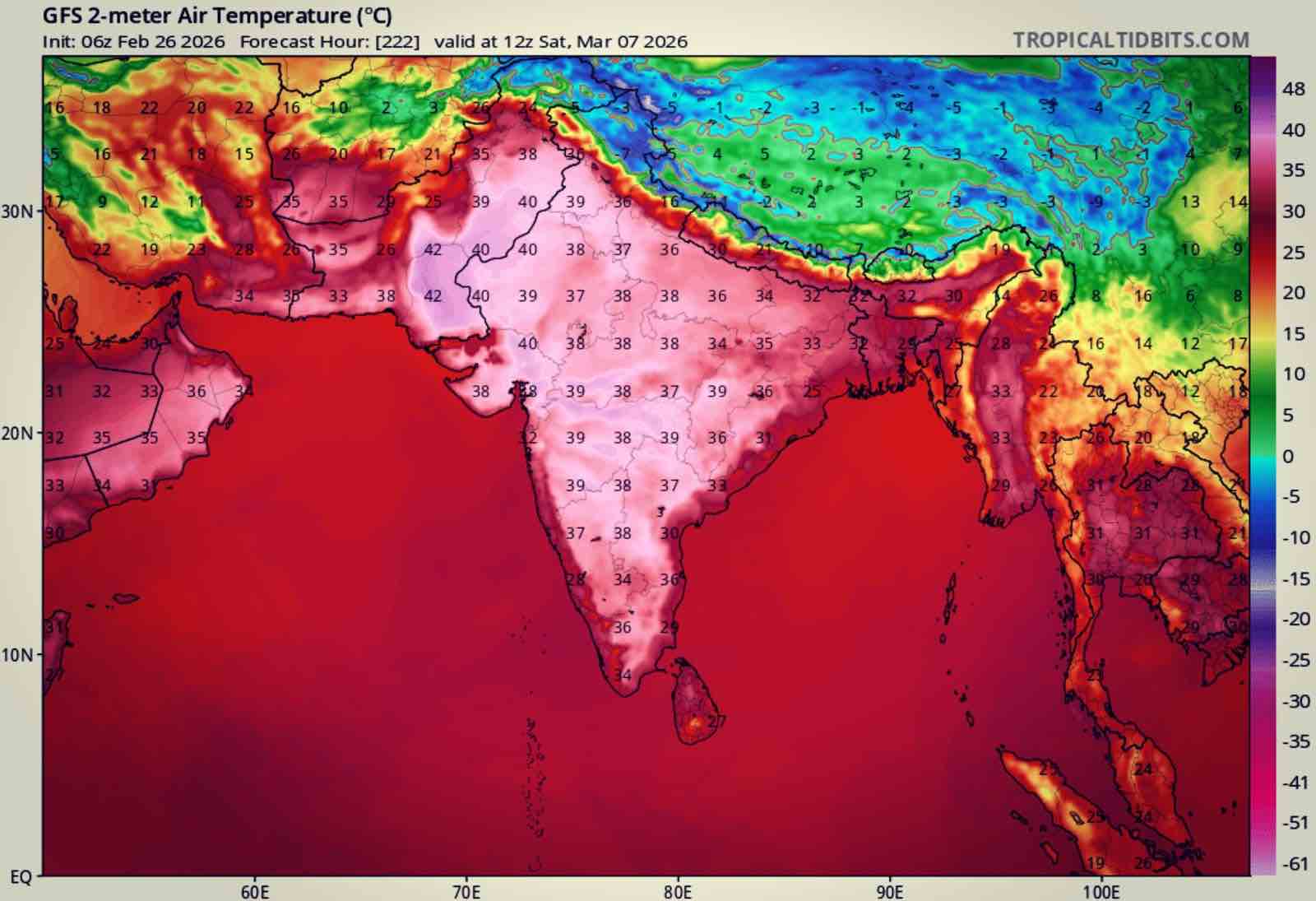
From the weekend despatch: It’s heating up early across India and Pakistan, with the monsoons still months away …
Your loyal guide to a changing world.
Membership with The Signal means exclusive access to premium benefits:
* In-depth feature interviews with our network of contributors
* The despatch, our weekly current-affairs and cultural-intelligence briefing
* Early access to new products, including print extras
It also means vital support for a new, independent venture in current affairs.
New music
‘K2 Central’
The electronic producer Squarepusher, giant of the rave era, is back with a slowly building electro-acoustic composition scored for string quartet and breakbeats. This is the first track from a full-length Kammerkonzert—a chamber concerto—due out on April 10 from Warp Records.