‘A low but solid virtue’
At the 2016 U.S. Democratic National Convention, Michelle Obama, the wife of then-President Barack Obama, gave her party a motto: “When they go low, we go high.” This May, the Democratic Party’s official account on X replied to Stephen Miller, the White House deputy chief of staff, with “shut up you ugly fuck.” Perhaps that was just a junior staffer getting carried away. It certainly caught the tone of social media.
Plenty of Americans now think their society has become less civil, and the U.S. government is among them. “Civil discourse at America’s colleges and universities has been undermined by campus takeovers, violent riots, and even a recent high-profile political assassination,” the U.S. Department of Education said, as it set aside US$60 million for programs to promote it.
The universities are acting on it, too. Harvard and Columbia now ask applicants to describe a time they disagreed with someone. More than 200,000 students have taken Perspectives, an online course from the Constructive Dialogue Institute that promises to teach them how to “find common ground.” At Yale and New York University, it’s mandatory for first-years.
But are Americans really any less civil than they used to be?
Teresa M. Bejan is a professor of political theory at the University of Oxford, a fellow of Oriel College, and the author of Mere Civility: Disagreement and the Limits of Toleration and First Among Equals: Visions of Equality Before Egalitarianism. Bejan says there’s something to the talk of a “crisis of civility”—just not what most people who complain about it think.
The people calling for civility are often, she says, after something else. The kind she thinks a democracy needs is both humbler and tougher than niceness, and it makes demands of the people doing the calling …
This feature is open-access, courtesy of the Marlborough House Foundation.
Gustav Jönsson: Has public life in the U.S. actually gotten less civil?
Teresa M. Bejan: In recent decades there’s been a very definite feeling that there’s a crisis of civility—and particularly in American politics. Some empirical studies have tried to measure it, and some have found more people describing politics as rude or nasty, so the evidence seems to bear the feeling out. There’s also a growing body of research documenting a rise not just in partisan polarization but in negative polarization—how much you dislike your political opponents. Researchers have measured it in all sorts of ways, in the U.S. and in Europe, and it seems to be rising pretty much everywhere.
But concluding from that data that incivility is on the rise runs into the problem of the baseline: What are we comparing it to? In my view, our sense of rising incivility takes for granted something that was actually fairly exceptional. If we think of the American postwar period of liberal consensus politics as an interglacial period, then what we see now looks like a return to normal. American politics has always lent itself to the partisan rough-and-tumble. Americans didn’t invent the flinging of insults or the war of words in the late 20th century.
And it’s worth remembering that this crisis of civility has been going on for a while. People were complaining about it in the early 1990s, with the rise of talk radio and cable news.
Jönsson: What’s it mean to be “civil,” then?
Bejan: When you press people calling for more civility, you often find they haven’t really thought that bit through. Calls for civility generally work in two ways. They elevate the speaker as a model of decorum—the person calling for civility presumably sees himself as an exemplar of civil discourse. And they’re a stick to beat the speaker’s opponents with. In politics or religion, our opponents are always the paragons of incivility, and we always need to discipline them.
The problem, of course, is that you can define civility as a conversational virtue in more or less demanding ways. In American politics, the call for civility is often an attempt to smuggle in a deeper ideological consensus—an appeal to return to that postwar period, when there was more substantive agreement on certain ideological priors than there is today. Other times, when you press people on what they mean, they fall back on everyday conversational virtues like “niceness” or “politeness.” But when we talk about civility, I think we’re talking about something more distinctive.
I think of civility as a conversational virtue akin, but not equivalent, to politeness or decorum. What’s distinctive is that it pertains to disagreement. My husband makes fun of me because I always want to turn to early modern authors to describe what I mean, but one Renaissance Italian writer, Stefano Guazzo, defines civility as an art of being in the world. I think that captures something important. Civility is the virtue that makes it possible for us to live side by side with others—to rub along with the people we disagree with.
There’s a reason ‘disagreeable’ is a synonym for ‘unpleasant,’ and ‘agreeable’ a synonym for ‘pleasant.’ When you make disagreement agreeable, you’re really just trying to get rid of the wrinkle that is the disagreement.
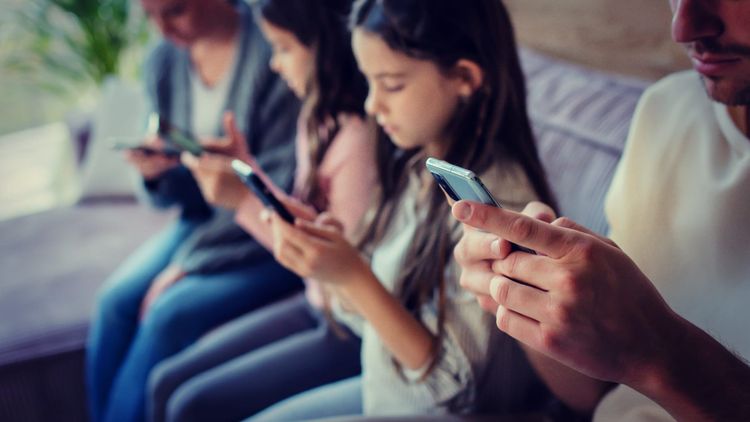
Jönsson: How has the internet changed this? When people complain that others aren’t civil, they’re often thinking of something they saw on social media. But maybe what’s grown is just how visible certain kinds of rudeness are.
Bejan: That’s right. There may be a few different things going on. One may well be that the algorithms curating social media feeds amplify that kind of uncivil content. There’s good work showing that “outrage bait,” if you will, drives more engagement, so the algorithms may reward it out of all proportion.
The sense that incivility is rising in the internet age can also tell us something about what’s distinctive about civility. The internet, and social media especially, has meant far more communication that isn’t face to face. We’re now communicating at some remove, in the realm of what we might think of as “parasocial” relations.
That’s particularly destabilizing for civil disagreement, because we can’t judge whether what we say suits a particular audience. Internet disagreements very often involve “context collapse”: An argument meant for one audience, and suited to its sensitivities, gets broadcast to an entirely different audience—and the outrage cycle begins.
So it’s complex. Some aspects of the internet age are new and particularly problematic for civil disagreement. But in other ways it’s just another version of a crisis we’ve experienced before: a response to a rapid shift in communications technology, and a lag while new norms of speech and conduct catch up. I’m really intrigued by the parallels with the early modern religious wars, which erupted not just in response to Martin Luther nailing his Ninety-five Theses to the church door in Wittenberg in 1517 but also in response to the printing press, and the flood of uncivil disagreement that followed.
Jönsson: Politics runs on disagreement. So what kind of civility does it need, and what kind doesn’t it?
Bejan: I think of civility as something “mere”—an early modern word that originally meant “pure” or “undiluted.” Mere civility is civility unmixed with other things.
On the American left, there’s a tendency to redefine civility in terms of some substantive consensus on liberal or progressive values. You’ll often hear civility linked to tolerance, understood as the celebration of diversity, or to respect, in a way that commits us to a certain kind of identity politics: We accept people’s claims about their own identities and adopt the speech norms they want us to adopt.
Something similar happens on the other side. On the American right, people increasingly tie civility to a distinctly Christian tradition, where it means something like civil charity: We love the sinner but hate the sin.
I think both views are equally problematic, because they try to smuggle in an agreement that’s meant to make our disagreements unthreatening. You often hear this framed as “disagreeing agreeably.” But there’s a reason “disagreeable” is a synonym for “unpleasant,” and “agreeable” a synonym for “pleasant.” When you make disagreement agreeable, you’re really just trying to get rid of the wrinkle that is the disagreement.
Jönsson: So what’s left of civility once you take the agreement out?
Bejan: The sort of “mere civility” I favor is civility understood as a low but solid virtue. Very minimally, it’s a commitment to continuing the political disagreement, and to working through the medium of words, not swords. It’s fundamentally a commitment to nonviolence, but it requires more than that: a commitment to continuing the conversation. Incivility often works to end the conversation. It’s a conversation stopper. Civility is the kind of conversational behavior that keeps the conversation going.
We often use metaphors like “staying in the room” or “coming to the table,” and they capture that sense of civility as an ethical commitment to living together—sharing a society with the people we disagree with, and conducting our disagreements face to face. Disagreeing, in other words, with other people as people.
I think we often undersell the courage it takes simply to say what we think in front of people we know disagree with us. We don’t tend to think of the fear of speaking one’s mind as a form of incivility, but I think that’s what it is: a kind of uncivil silence, if you will. It makes disagreement impossible. If we only ever talk about our commitments in front of people we’re confident will agree, we never even have the disagreement.
Jönsson: But keeping quiet can be a sound strategy. Your boss might not like what you think. And in some places, the local henchmen might come knocking.
Bejan: Very true. There’s “uncivil silence,” but you might also think of “civil silence” as an important virtue. I’m interested in the 17th-century English philosopher Thomas Hobbes, who was a kind of apostle of civil silence. So I don’t want to undersell it: There may well be cases where silence is the sound strategy. But it isn’t an antidote to uncivil disagreement. Not having the disagreement might be an option, but you haven’t solved or managed the problem. You’ve just sidestepped it.
Jönsson: When an argument gets pointed, it’s rarely just one person who ends the conversation. So isn’t civility a duty as well as a demand—to put up with a fair amount of disagreeableness yourself?
Bejan: Exactly. Civility is a two-way street. It begins at home.
I mentioned courage as an element of civility. Another old-fashioned virtue is tolerance—but tolerance in its traditional sense, not as a celebration of diversity but as a commitment to putting up with a person or thing you take to be an evil.
Medieval scholastic theologians wrestled with how much tolerance they owed acknowledged evils like sewage or prostitution. In the 20th century, understandably, there was a lot of emphasis on a more aspirational tolerance, in which we could all come together as a community of difference. But I think those efforts may have made us lose sight of what was itself an impressive achievement: the mere permission of diversity. I don’t think we can take that for granted. One of the most striking cultural shifts in my own career has been the transformation of tolerance talk into mostly calling other people out for intolerance—which excuses us from having to tolerate them at all.