Total ownership
The 2026 Spanish Supercopa final—between Barcelona and Real Madrid—didn’t take place in Spain. It took place at the King Abdullah Sports City Stadium, 30 kilometers north of Jeddah, Saudi Arabia. Every Supercopa final has been held in Saudi since 2020—with one exception, when the Covid-19 pandemic forced the tournament back to Seville in 2021—as every one will be until at least 2029.
Meanwhile, the United Arab Emirates hosted the Asian Cup in 2019; Qatar did in 2024; Saudi Arabia will in 2027. That’s three Asian Cups in a row, in a corner of Asia that represents just over 7 percent of the continent’s total area—most of it desert—and 1 percent of its population.
Qatar held the World Cup in 2022; it’ll be Saudi in 2034.
The Gulf has poured money into football. Since 2008, its three wealthiest states have bought more than 20 clubs around the world—including three of the biggest in Europe: The United Arab Emirates owns Manchester City; Qatar, Paris Saint-Germain; and Saudi Arabia, Newcastle United.
We know this isn’t the first time ultra-wealthy interests have brought big money into the game—and transformed it. But these aren’t just ultra-wealthy interests. They’re ultra-wealthy governments. And they’re all dictatorships.
So what are they doing—and what do they want out of it?
Sarath K. Ganji is an analyst based in Washington, D.C., and the founding director of the Autocracy and Global Sports Initiative. Ganji notes that as the Gulf states have been buying their clubs, they’ve also been investing in sponsorship deals, media rights, and property developments—port infrastructure, too—all while the executives running these investments have taken positions inside football’s key governing bodies. And curious changes have followed—in what local politicians say, journalists write, even some artists end up doing …
From The Signal’s new limited-edition print extra, Shadow Play.
Gustav Jönsson: Why have these guys bought into England and France—and not, I don’t know, Mexico or Turkey?
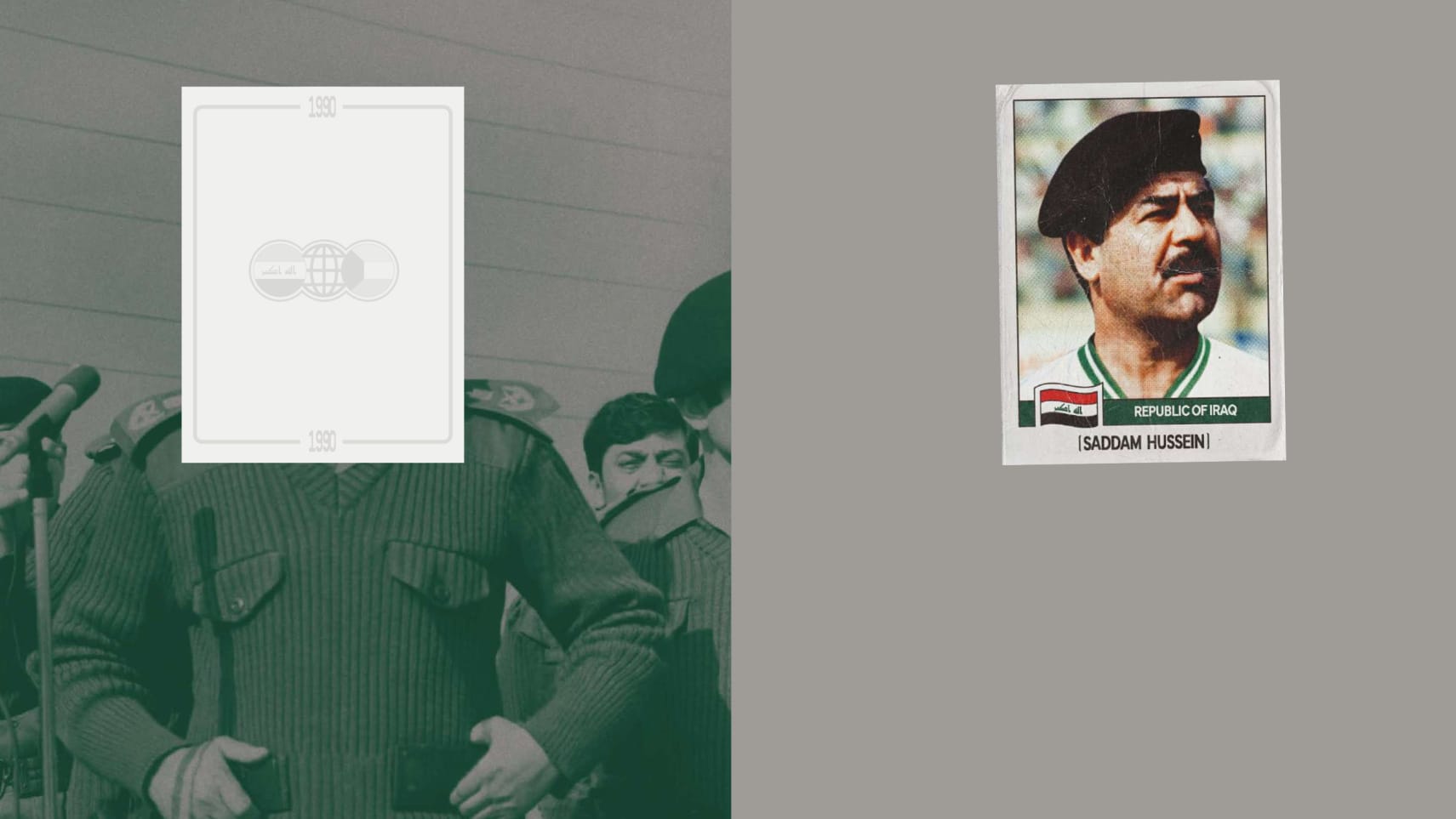
Sarath K. Ganji: It goes back to August 1990, when Saddam Hussein’s Iraq invaded Kuwait. This was a traumatic experience for the Gulf states, particularly the smaller ones—Kuwait, obviously, but also Bahrain, the U.A.E., and Qatar—who were basically satellites to the Kingdom of Saudi Arabia. If, as it now seemed, none of their existing relationships could guarantee their security, they were going to have to look elsewhere. After the United States put together an international coalition and expelled Iraqi forces, the Gulf states saw that elsewhere—and started building ties with Washington.
Today, Qatar hosts Al Udeid, the largest U.S. air base in the Middle East. Bahrain, Saudi Arabia, Kuwait, and the U.A.E. all house U.S. military personnel. The logic goes something like this: If a country hosts a U.S. military base and that base is attacked, it’s virtually as if the United States itself has been attacked.
Fast forward another decade, and these interdependencies had expanded beyond the military domain into different civilian domains, too—healthcare, higher education, media, sports. Same logic: If you attack a country that has an American hospital or university, it’s like attacking America.
Football fits the pattern. It’s a big business with low barriers to entry and high visibility. Some countries have ownership laws and investment restrictions that shut out foreign money, but on the whole, football is remarkably unregulated—especially since the early 1990s, when foreign investors first started targeting European clubs. On top of that, if you’re a small country like the U.A.E. or Qatar, football’s global reach, its big-name players, its century-old, iconic clubs—it’s all a powerful way to project your brand. And football is rich in stakeholders: media conglomerates, federation officials, government ministers, the clubs themselves. It’s a sport that gives investors access to networks they wouldn’t otherwise have. All of which makes it enticing for autocratic governments looking to develop interdependencies across the West.
One arm of the Qatari state is paying another to keep PSG competitive. That’s not a sponsorship in any normal sense. That’s a government subsidizing its own football club sideways.
Jönsson: Is this what people mean by sportswashing?
Ganji: Partly—it does distract from the darkness of these autocracies, particularly their chronic human-rights abuses—but sportswashing is a limited way to look at what’s going on here. The Gulf states’ move into football is fundamentally about money and power. Autocrats invest in football to gain leverage over its machinery—and through that, to support their influence across borders. The reputational benefits people associate with sportswashing—more positive media coverage, direct engagement with fans—are part of what that leverage produces. But there are others. Once a city or a company or a media outlet depends on Gulf money, they tend to stop criticizing. They tend to cooperate. They tend to look the other way when dissidents abroad need protection. Football creates a whole repertoire for leverage.
Jönsson: What patterns are you seeing in where and how the Gulf states are investing in it?
Ganji: A lot of it is opportunistic. Some countries have stringent laws preventing foreign investors from buying up their sports industries. Britain and France don’t—which makes them as available as they are appealing.
Qatar has been engaged in sports regionally since the 1970s, hosting racing and football events. By the early 2000s, it had established itself as a place that could host major competitions—even the 2006 Asian Games. Since then, it’s moved up the value chain—from hosting events, to broadcasting them, to sponsoring and owning sports assets abroad.
Through Al Jazeera Sport—now beIN Media Group—Qatar secured the rights to broadcast France’s Ligue 1 matches. Not just in Qatar. In France itself. A French national in Paris trying to watch their home team might have to watch through a Qatari company linked to the Qatari government. I’ve counted 43 global markets—the Middle East, Europe, Southeast Asia, North America—that have, or have had, broadcasting contracts with beIN Media.
A few years ago, when the United Kingdom was debating whether to permit Saudi Arabia’s Public Investment Fund to buy Newcastle United, The Times of London and The New York Times revealed that the U.K. government saw the investment as part of a broader relationship with the country. And that relationship would be at imminent risk if the English Premier League’s fitness-and-propriety test took the fund’s foreign ownership fully into account.
This wasn’t just a foreign government putting money into a random football club. Newcastle is strategically valuable to Saudi Arabia: They see the deindustrialized northeast of England as a launching point for alternative-energy investments—there are wind farms off the coast—and as a future hub for Saudi shipping and aviation, competing with Emirates and Qatar Airways.
When the U.A.E. bought City and Qatar bought PSG, they were making similar calculations. By now, the U.A.E. has ownership stakes in a dozen teams around the world—the U.K., Italy, Spain, Japan, Brazil, Argentina, Uruguay. For the most part, top-tier clubs. They’re building bridges with these countries by investing in an under-regulated but politically connected dimension of their economies.
Jönsson: So they’re in—then what? What’s the strategy look like?
Ganji: You might have heard the term “total football”—the fluid, position-switching, whole-team-moving-as-one style the Amsterdam club Ajax and the Dutch national team made famous in the 1970s. I’d say autocratic investors have pioneered a “total ownership” model. Where you once had different stakeholders claiming different pieces of the football value chain—broadcasting, sponsorship, ownership—today you’re seeing it centralized in a single hub. And that hub is ultimately an autocratic government.
So let’s look at Qatar’s investments again—and see how they connect: It’s not just that the Qataris hosted sporting events starting in the ’70s. Through Al Jazeera Sport, they bought up media rights across the Middle East and Europe. Then they scaled into sponsorship: Qatar Airways on the front of the PSG shirt—but also the Barcelona shirt and others.
Once a city or a company or a media outlet depends on Gulf money, they tend to stop criticizing. They tend to cooperate. They tend to look the other way when dissidents abroad need protection.
About a decade ago, the Qatar Tourism Authority signed a sponsorship deal with PSG that plowed many millions of euros into the club—without any real promotional value involved. Someone leaked the contract, which showed that all Qatar cared about was PSG playing in Europe’s Champions League. That’s it. No tourism campaigns. No advertising metrics. The Qatar Tourism Authority was just funneling money into a club Qatar already owned—to help underwrite that club’s ability to stay good enough to keep qualifying for the world’s most prestigious, and most-watched, club competition.
One arm of the Qatari state is paying another to keep PSG competitive. That’s not a sponsorship in any normal sense. That’s a government subsidizing its own football club sideways—a wild distortion of how sponsorship is supposed to work.
All of which runs through Nasser Al-Khelaifi, the head of Qatar Sports Investments and a figure very close to the House of Thani, Qatar’s royal family. Al-Khelaifi isn’t just the head of QSI; he’s the president of Paris Saint-Germain; he’s the head of beIN Media Group; and he’s been a member of the executive committee of UEFA, European football’s governing body.
Jönsson: That’s a lot of hats.
Ganji: It is. And as investigations by The Sunday Times and France Football later documented, Qatar’s investments across France’s media and sponsorship landscape ended up helping them win the bid for the 2022 World Cup. They made the integration work for them.
Jönsson: Impressive. Then again, Jürgen Klopp, the former manager of Liverpool, famously referred to football as “the most important of the least important things.” Why does any of this matter beyond the game?
Ganji: Good question. It matters because autocracies don’t just export capital—they export the whole way they do business with it.
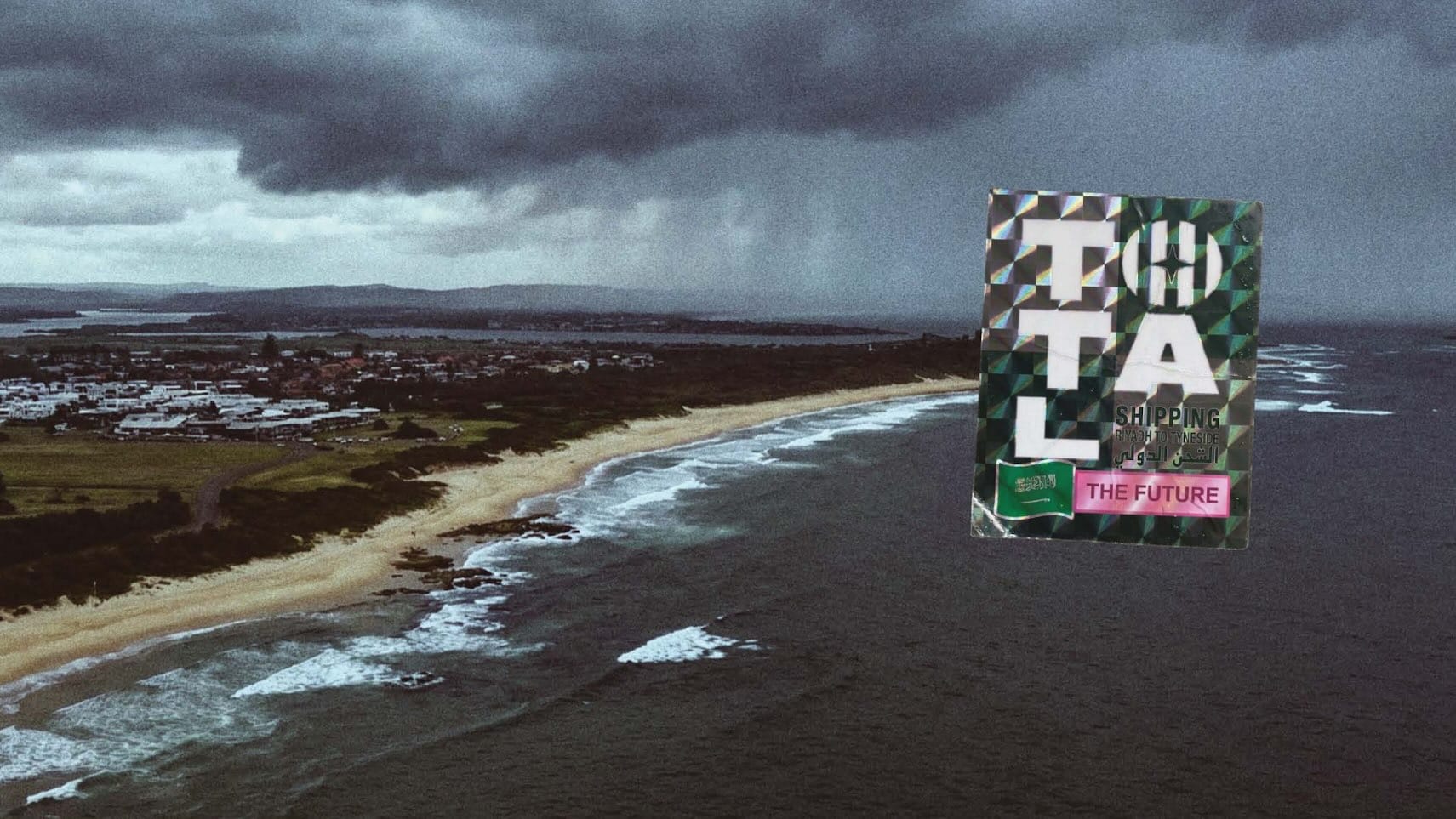
A few years ago, a U.S. Senate committee investigated whether Saudi investments in the golf industry might affect American security interests. The committee wanted to subpoena the global management consultants McKinsey and Boston Consulting Group, who’d been working for Saudi Arabia. So the Saudi Public Investment Fund sued these firms, in Saudi courts, to keep them from cooperating. Effectively, the Saudis prevented two American companies from giving American documents to an American federal-oversight body. These firms were caught between two sovereign entities—and chose to comply with the one giving them the money.
That’s what this leverage really looks like. And it goes all the way down into the communities where these investments land. After the U.A.E. bought Manchester City, the Abu Dhabi United Group secured a 10-year joint-property venture with the Manchester City Council. The goal was to bring affordable housing to the area and rejuvenate this once-industrial city. But what actually happened, according to a study out of the University of Sheffield, was that the Abu Dhabi United Group bought public lands below market prices on a 999-year lease—and routed the procurement through an offshore haven in the Channel Islands. A 2024 report by the research group FairSquare then found that local politicians, and even local reporters, started cooling their criticisms of the U.A.E.—or the ownership structure around Manchester City.
This will tell you something: In 2019, as Manchester prepared to commemorate the 200-year anniversary of the Peterloo Massacre—when British cavalry killed protesters demanding the right to vote—the city council commissioned a play about it. The playwright’s draft included references to human-rights abuses in the U.A.E. After council members got hold of it, they scrubbed the references. Witnesses to the discussion called it censorship. It’s hard to know exactly how many instances like this there’ve been—of self-censorship, or under-the-radar censorship. But the instances we do know about fit the operating pattern of contemporary dictatorships—and illustrate its logic: They’ll extend their leverage inside a target economy’s political institutions as far as they can.