Players
Very exciting: The World Cup is on, across Canada, Mexico, and the U.S.—the biggest yet: 48 teams, more matches than anyone can sensibly watch, and the first ever co-hosted by three countries.
You may recall the last one, in 2022, was in Qatar. The next, in 2030, will be in Morocco, Portugal, and Spain. And the one after that, 2034, will be in Saudi Arabia—strangely, the only country formally to submit a bid for it.
Qatar was a slightly curious place to hold the World Cup, come to think of it: a country of about three million, with no real footballing tradition—and, until they built the stadiums, nowhere much to play. Saudi Arabia ’34 is curiouser still: same part of a big world as Qatar ’22—just eight years later, just a few hundred kilometers down the coast. Why would FIFA go back so soon to the Gulf, of all places?
The reason might be hard to see, apart from a broader pattern: For 18 years, Qatar and Saudi Arabia, along with the United Arab Emirates, have been buying up major European clubs—Paris Saint-Germain, Newcastle United, and Manchester City; they’ve been buying up the broadcasters that carry them and the sponsorships that pay for them; they’ve been placing their executives in seats on global football’s governing bodies, too.
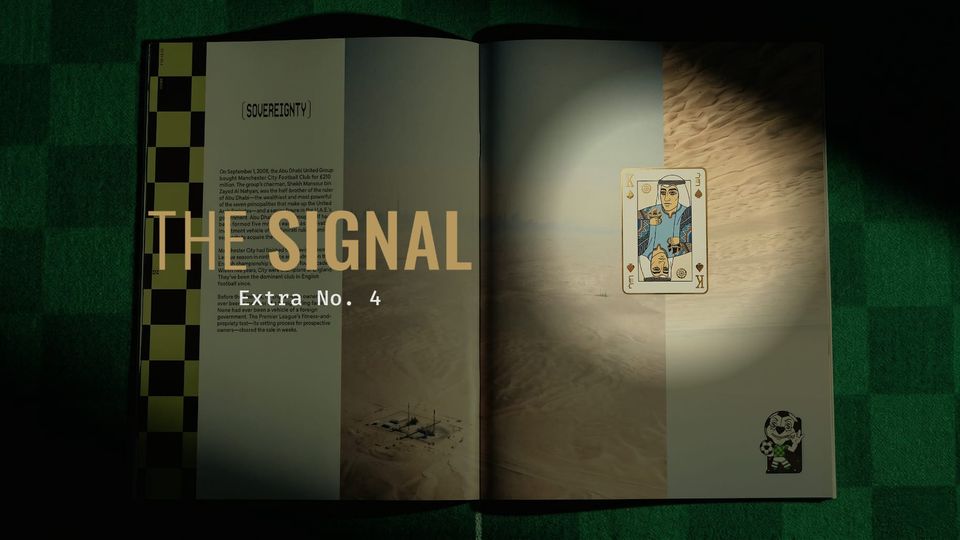
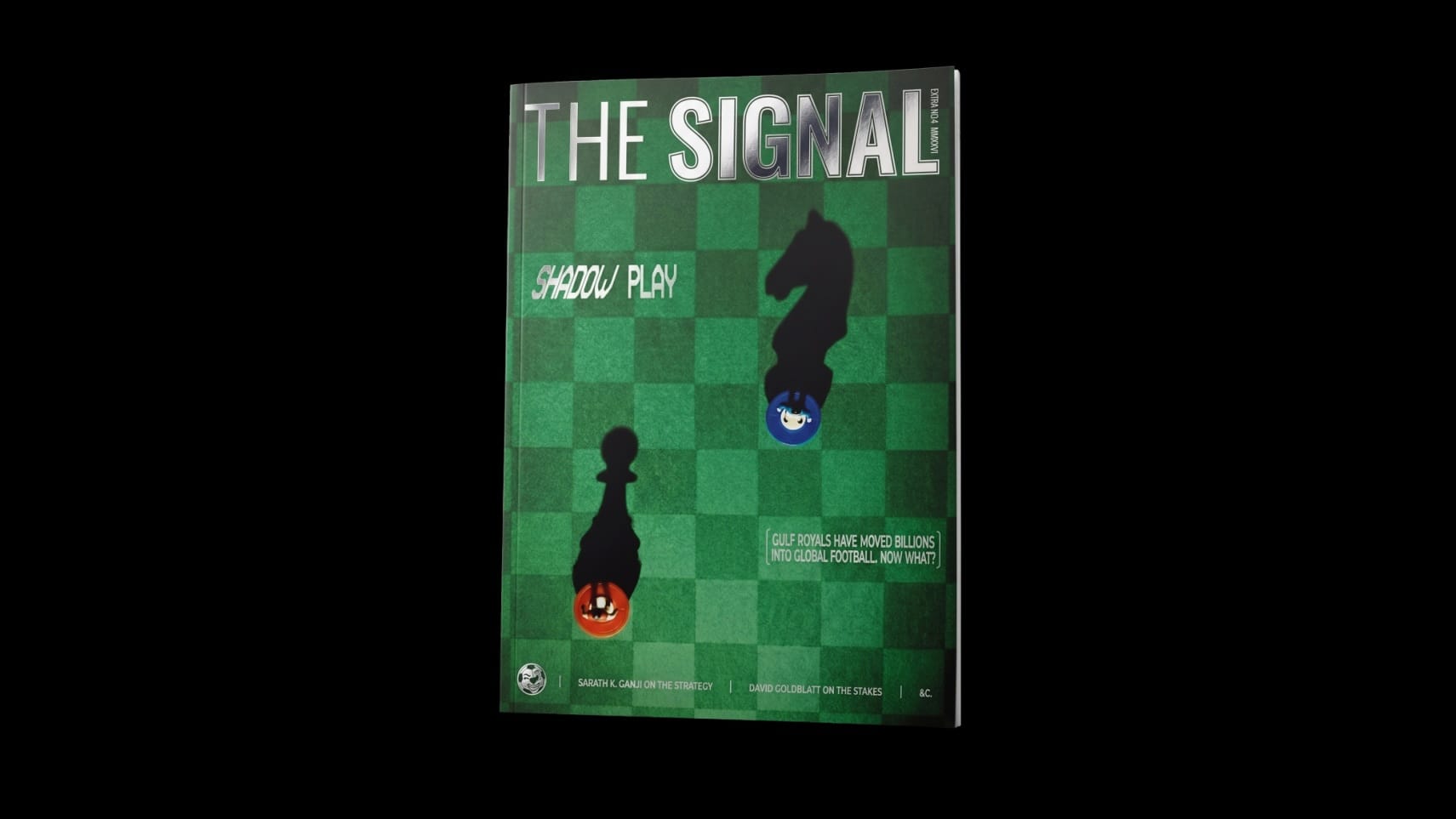
Read all about it in The Signal’s new print extra, Shadow Play—get your copy here. … See John Jamesen Gould’s intro here. … & Members can access two features from the magazine here …
Shadow Play
Total ownership
What do Middle Eastern states want with European football clubs? Sarath K. Ganji on autocratic governments’ ambitious move into the global game.
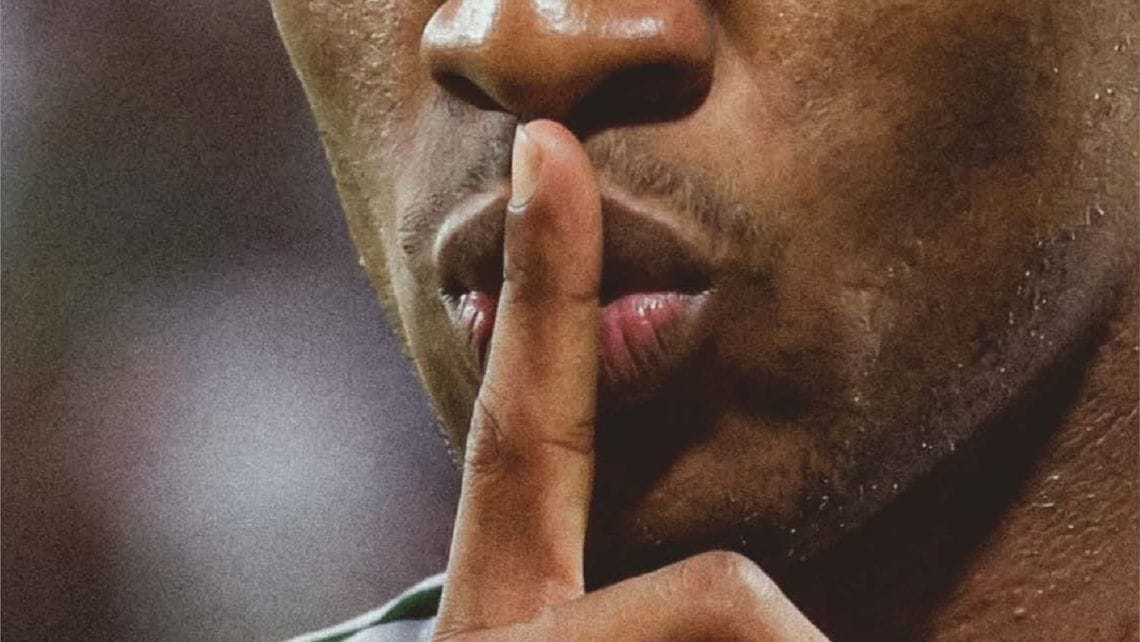
The 2026 Spanish Supercopa final—between Barcelona and Real Madrid—didn’t take place in Spain. It took place at the King Abdullah Sports City Stadium, 30 kilometers north of Jeddah, Saudi Arabia. Every Supercopa final has been held in Saudi since 2020—with one exception, when the Covid-19 pandemic forced the tournament back to Seville in 2021—as every one will be until at least 2029.
Meanwhile, the United Arab Emirates hosted the Asian Cup in 2019; Qatar did in 2024; Saudi Arabia will in 2027. That’s three Asian Cups in a row, in a corner of Asia that represents just over 7 percent of the continent’s total area—most of it desert—and 1 percent of its population.
Qatar held the World Cup in 2022; it’ll be Saudi in 2034.
The Gulf has poured money into football. Since 2008, its three wealthiest states have bought more than 20 clubs around the world—including three of the biggest in Europe: The United Arab Emirates owns Manchester City; Qatar, Paris Saint-Germain; and Saudi Arabia, Newcastle United.
We know this isn’t the first time ultra-wealthy interests have brought big money into the game—and transformed it. But these aren’t just ultra-wealthy interests. They’re ultra-wealthy governments. And they’re all dictatorships.
So what are they doing—and what do they want out of it?
Sarath K. Ganji is an analyst based in Washington, D.C., and the founding director of the Autocracy and Global Sports Initiative. Ganji notes that as the Gulf states have been buying their clubs, they’ve also been investing in sponsorship deals, media rights, and property developments—port infrastructure, too—all while the executives running these investments have taken positions inside football’s key governing bodies. And curious changes have followed—in what local politicians say, journalists write, even some artists end up doing …
Front lines
Why would football supporters cheer on dictators buying their clubs? David Goldblatt on identity, loyalty, and what all this money really pays for.
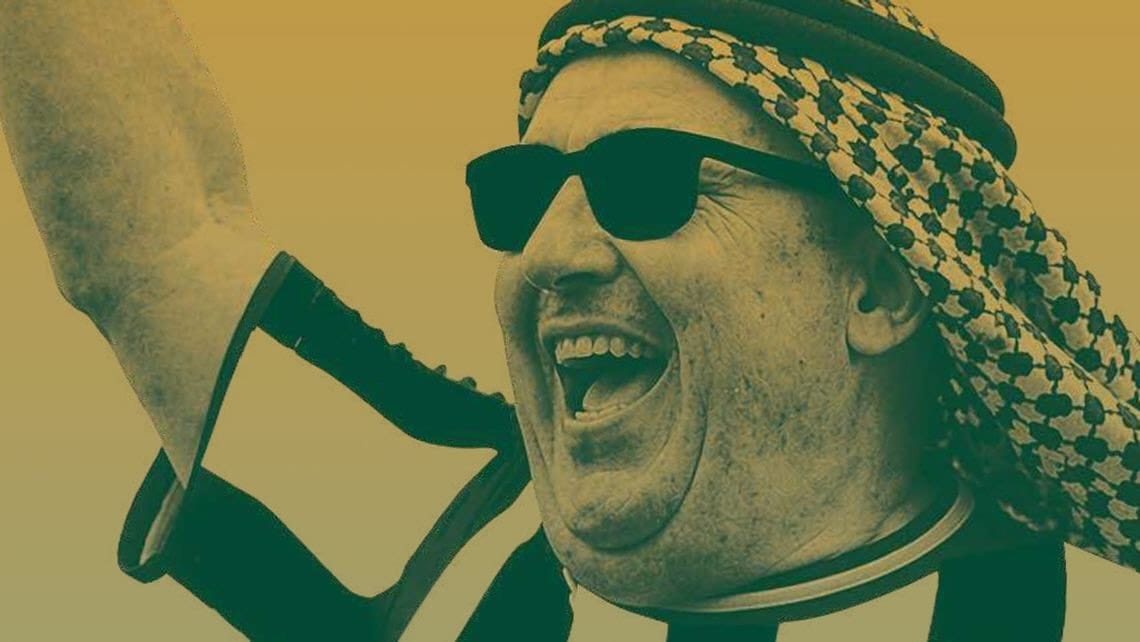
On the evening of October 7, 2021, thousands of Newcastle United supporters gathered outside St James’ Park, the club’s stadium in northeast England. The Premier League had just ratified the sale of the club to Saudi Arabia’s Public Investment Fund. Some supporters wore fake thobes—the long, ankle-length robe traditionally worn by men across the Arabian Peninsula. Others had wrapped tea towels around their heads with ribbon. A chant went up, aimed at Manchester City: We’re richer than you. Parents held their children up to witness what the local papers called a new dawn.
A van drove past the stadium, meanwhile, carrying a poster that read Justice for Jamal Khashoggi. Khashoggi was a Saudi journalist and dissident murdered and dismembered inside his country’s Istanbul consulate three years earlier—on the orders, a U.S. intelligence report later concluded, of PIF’s chairman, Crown Prince Mohammed bin Salman.
The supporters saw the van. They kept singing.
Why?
David Goldblatt is a British sports journalist and sociologist, and the author of The Ball Is Round, on football’s global history, and The Age of Football, on its entanglement with money and power over two decades. Goldblatt says scenes like this have been a long time in the making. A foreign government had just bought itself one of the oldest clubs in English football—130 years of history, rituals, songs, grievances, loyalties, the whole of it. No regulator had blocked the sale. No court had intervened. No ministers had so much as asked any particularly difficult questions. No one had, it seems—apart from the small minority of supporters pointing out that the chairman of their club's new ownership had apparently seen to a critic’s brutal assassination just three years earlier ...
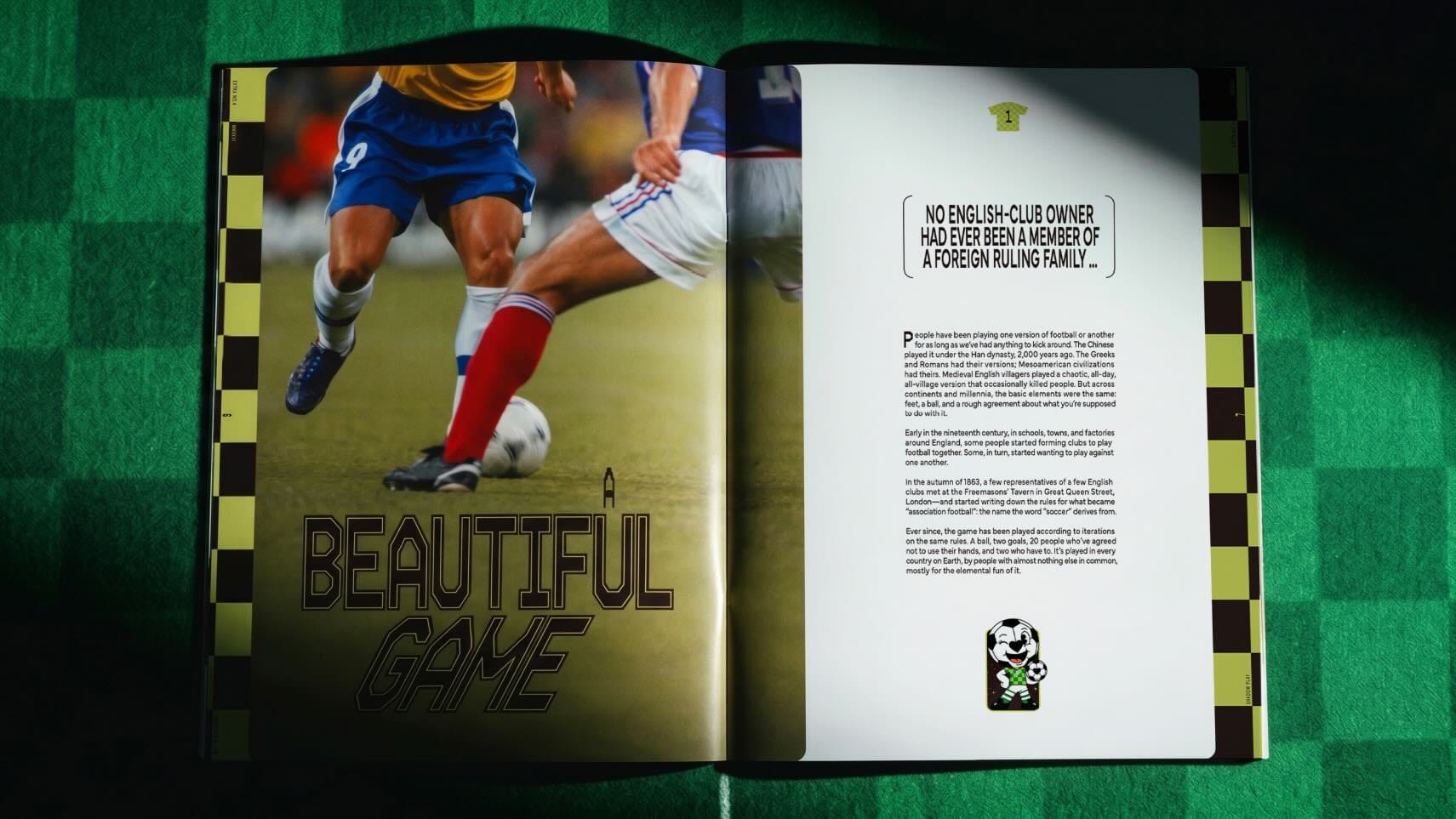
Read Shadow Play, a new, limited-run print magazine from The Signal—available in the U.S. and select markets globally.
Your loyal guide to a changing world.
Membership with The Signal means exclusive access to premium benefits:
* In-depth feature interviews with our network of contributors
* The despatch, our weekly current-affairs and cultural-intelligence briefing
* Early access to new products, including print extras
It also means vital support for a new, independent venture in current affairs.