‘A genuine threat’
Recently
- Why does everyone hate “the elites”? Hugo Drochon on how so many voters in the West came to feel shut out of power. (Open-access, in partnership with the Marlborough House Foundation.)
Today
- On Friday, emails signed with an infamous surname claimed responsibility. Spain calls it “hybrid aggression,” but investigators can’t yet say whose aggression—or what the point of it would be.
- What’s left for mathematicians after AI cracks a 90-year-old problem? Standpoints from Alex Kontorovich, Ankur Moitra, and Anders Hansen.
- Democrats won the U.S. midterms not least because of Trump’s war on Iran—now what? Andrew Preston on the powers Congress has ceded to the American presidency in the name of national security.
- + New music from Everything but the Girl.
First
- Exactly what could a Chinese spy learn from the man whose chips run the AI boom? According to one former counterintelligence official, only the chipmaker’s suppliers and partners—and how to get around U.S. sanctions …
‘Not too long ago’
About a year ago, The New York Times reports, officials told U.S. President Donald Trump that U.S. agencies believe Alice Huang—of Megaspeed, a Singapore data-center firm—was passing information to China’s Ministry of State Security. Nvidia’s CEO, Jensen Huang, acknowledged to its board that he’d had an affair with a business executive U.S. intelligence had linked to China. On Sunday, he wrote to his staff, “I was unfaithful to my wife”—though he didn’t say with whom. In December, Trump cleared Nvidia’s H200 chips for sale to China. In May, a source tells CNN, Secretary of State Marco Rubio briefed him on Air Force One, bound for China, before Jensen Huang boarded in Alaska—though the White House denies it. On Monday, Trump said he’d learned of it “not too long ago”: “It didn’t make much of an impact on me.”
Not a word
U.S. agencies never gave Jensen Huang a defensive briefing, the Times reports—the warning they sometimes give Americans that a foreign intelligence service is after them. The paper reports that they’d been watching her, but can’t say whether protecting that surveillance played a part; Trump, it says, has been wary of disrupting Nvidia’s sales. Nvidia’s spokesman, John Rizzo, says, “We trust that if we were the target of a genuine threat, the U.S. government would have notified us.” Holden Triplett, a former White House counterintelligence director, puts the real damage elsewhere: “It’s all the small details she was likely able to collect about partners, suppliers, how sanctions work in

‘Low to moderate’
Here in The Signal, in 2024, Chris Miller says the smuggling of advanced chips into China “seems to be low to moderate,” and finds the evidence in what China buys legally: “If China is buying chips that Nvidia is marketing as compliant with export controls, that means China isn’t able to get around the export controls in the ways it’d like.” Between June 2024 and February 2026, the Times reports, Megaspeed’s sister company in Malaysia bought at least US$4.8 billion of equipment carrying Nvidia’s chips, and Megaspeed sold its computing power to Alibaba and other Chinese companies. U.S. investigators suspect some of the chips themselves reached China illegally. Nvidia says it checked the smuggling claims and debunked them. Megaspeed has hired outside lawyers to look into the allegations. … See “Components of a conflict.”
A matter of security
On August 9, 1961, Britain’s cabinet secretary, Sir Norman Brook, warned John Profumo, the secretary of state for war, about the people he’d been meeting. That July, Profumo had met Christine Keeler, a model, at Cliveden, the Astor family’s estate west of London, and begun an affair with her. Keeler had also slept with Yevgeny Ivanov, the Soviet embassy’s assistant naval attaché. Brook, Prime Minister Harold Macmillan later told the House of Commons, passed on what MI5, Britain’s domestic security service, knew about the circle around Ivanov, and what it might mean for security. The same day, Profumo wrote to Keeler: “Darling … Alas something’s blown up tomorrow night and I can’t therefore make it.”
… Meanwhile
Russian and Ukrainian negotiators talk for nearly four hours in Abu Dhabi, their first U.S.-brokered meeting since February. … The U.S. House of Representatives turns aside Thomas Massie’s resolution to impeach the defense secretary, Pete Hegseth, over the war with Iran; Hegseth calls Massie’s effort “sabotage.” … At the UN, climate talks in Turkey, Brazil hands countries a road map off fossil fuels, and the U.S. stays away for a second year. … Australia plans a regulator for frontier AI companies, after an OpenAI agent broke into an Australian government health portal in June. … & Comets probably didn’t bring Earth the chemicals life started from, a Cambridge study suggests—because they nearly always hit too hard for their cargo to survive.

Something’s starting to open up in the culture of democracy—here in America and around the world. It’s early, and most people can’t see it yet.
You might.
From the despatch
Sixty minutes
On Friday, emails signed with an infamous surname claimed responsibility. Spain calls it “hybrid aggression,” but investigators can’t yet say whose aggression—or what the point of it would be.
At 7:21 a.m. on Thursday, an email in Italian reached the company that runs Rome’s airports. The message said “fighters of the Male State,” a Russian group that Moscow banned in 2021, had put explosives on two incoming flights as an attack against Italy’s “feminist regime”; that “the explosion will occur in 60 minutes”; and that “today, your skies will turn red.” The airport in the Bulgarian capital of Sofia got the same words about three Ryanair flights. There were, in fact, no bombs. The sending address, the BBC found, appears linked to the state health services in Bogotá, Colombia. On Friday, “Mikhail Andropov” claimed responsibility for the week’s threats in emails to broadcasters in Ireland and Bulgaria. The one to Ireland came from the account of a school in Lithuania.
Who’s doing this?
‘Four or five—who cares?’
What’s left for mathematicians after AI cracks a 90-year-old problem? Standpoints from Alex Kontorovich, Ankur Moitra, and Anders Hansen.
Engineers shape aircraft wings and forecast the weather with the math that describes how air and water move: the Navier-Stokes equations. Since the 1930s, mathematicians have tried to find out whether the equations can ever say a fluid is moving infinitely fast, something real air and water never do. In 2000, the Clay Mathematics Institute put a US$1 million prize on the answer. On September 5, OpenAI says, 10,000 AI programs it hasn’t released, working together, proved that the answer is yes. Another AI from the company translated the 166-page proof into Lean, a programming language that checks each step of an argument, and Lean accepted it. Clay says the problem has “apparently been settled,” and it hopes the work will set off “waves of new human understanding.” Javier Gómez-Serrano, a mathematician at Brown University who works on the problem, told the American public broadcaster NPR, “It’s not written for humans.”
Where does that leave mathematicians?
Standing orders
Democrats won the U.S. midterms not least from Trump’s war on Iran and tariffs—now what? Andrew Preston on the powers Congress has ceded to the American presidency in the name of national security.
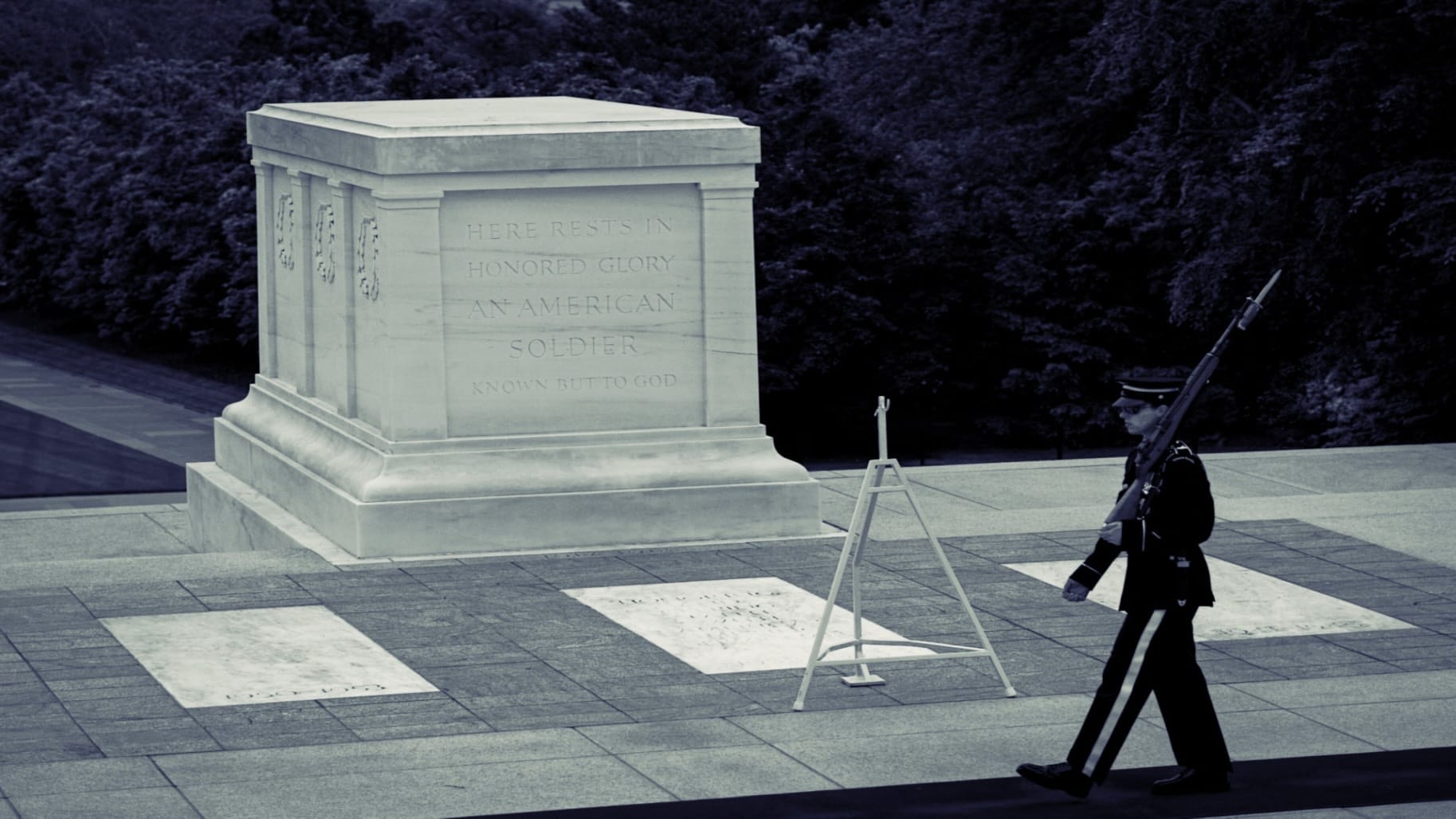
“I have total veto power,” U.S. President Donald Trump told The New York Times on Tuesday, as his party lost both houses of Congress, “so they have to come to us.” He’d gone to war with Iran in February without asking lawmakers. That same month, the U.S. Supreme Court threw out most of his tariffs, ruling 6–3 that the emergency law he’d used gave him no power to set them. Within days, he’d put a 10 percent tariff on nearly all imports, under a law that caps such tariffs at 150 days unless Congress extends them—which it didn’t. At 12:01 a.m. on July 24, the tariff expired, and in the same minute new ones took effect on 60 trading partners, under a power Congress had handed presidents in 1974. Through all of it, his tariffs on steel, aluminum, copper, and cars stayed in force. He’d set those under a 1962 law—in the name of national security.
So what difference will the new Congress make?
Strengthen The Signal.
Become a member, keep your bearings, navigate your world.
Thoughts or questions: concierge@thesgnl.com.
Music
‘Young and Dumb’
Everything but the Girl, the London duo of Ben Watt and Tracey Thorn, have a new album, Blue Reservoir, coming in February 2027 …