Alternative history
In 1970, West German Chancellor Willy Brandt got down on his knees in Poland at the memorial to the Warsaw Ghetto Uprising. The silent gesture expressed how many Germans felt about their country’s still-recent past in the Third Reich. As Brandt later said, “At the abyss of German history and under the weight of millions of murdered people, I did what humans do when speech fails them.”
In 2019, national sentiment remained much the same: When German President Frank-Walter Steinmeier traveled to Poland for the 80th anniversary of Nazi Germany’s invasion of the country, he said, “For us Germans, our responsibility also means this: Never again may nationalism resurge! Never again may Germans cry ’Deutschland, Deutschland, über alles!’”
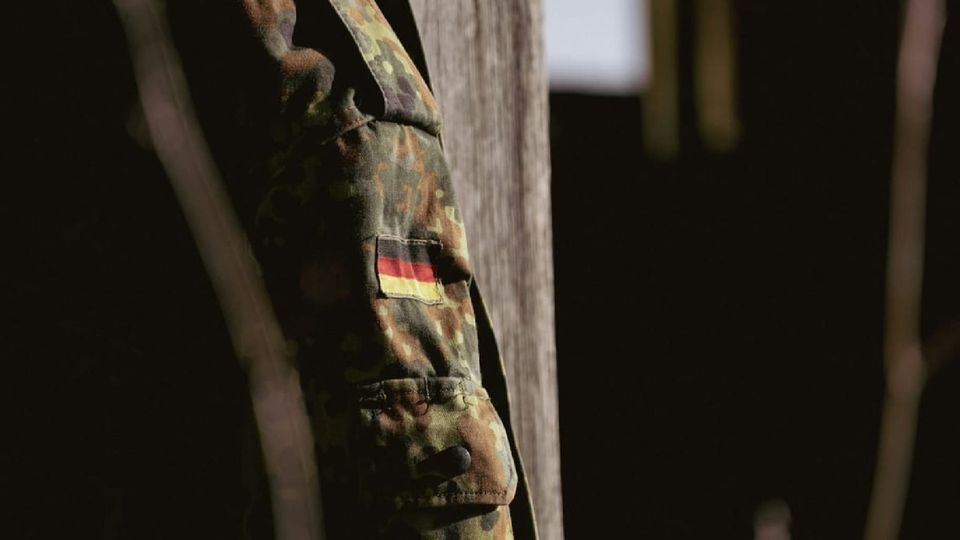
But now, with the war in Ukraine grinding on and the U.S. commitment to Europe wavering, Germany is serious about rearming. In 2022, Chancellor Olaf Scholz said Russia’s invasion represented a historic turning point—so Germany would respond with a historic shift in security policy. In March of this year, Berlin loosened its longstanding budget restrictions so it could raise defense spending by any amount. The government then committed €95 billion. It’s the world’s fourth-largest defense budget this year, with the goal of building the strongest conventional army on the Continent—for the first time since the 1940s.
How’s this playing in Europe?
Liana Fix is a fellow for Europe at the U.S. Council on Foreign Relations and the author of Germany’s Role in European Russia Policy. Fix says this is truly a new era for Europe: Its leaders welcome German rearmament—and even want to see Berlin as one of the powers directing NATO.
But inside Germany, it’s a different story. Many Germans are wary—of military power and of those who represent it: For decades, the country’s soldiers have been objects of scorn and disrespect—an enduring problem that’s making it hard to recruit new troops for the Bundeswehr.
So to build domestic support, Fix says, the country’s leaders are pitching the transformation as a form of deterrence, not militarism. They say they’re building up the military so it won’t have to fight Russia—again. The German people’s collective thinking might have been shaped by two world wars, but the message from Berlin is that they’re now entering a new Cold War—and need to be ready for it …
Allison Braden: How would you describe Germany’s military today?

Liana Fix: The heart of it is a land army born out of the Cold War, when Germany was divided into a democratic West and a Soviet-controlled East. A war between NATO and the Soviet Union would have taken place in German territory—tanks squaring off in forests and across vast areas in the former East Germany and West Germany. Germany has for decades been focused on land war, and tanks have played a major role.
But the country is taking part in missile defense now, too. The former chancellor Olaf Scholz initiated cooperation with other countries on the European Sky Shield Initiative, a joint air-defense program. Germany has no nuclear weapons, unlike the U.K., but it has a long-range, precision-strike weapon—the next best thing.
At the end of the Cold War, Germany was focused on territorial defense, especially after reunification. Since then, Germany has followed a similar trajectory to NATO. The army refocused on missions abroad: Afghanistan, Bosnia, and so on. Now, it’s turning back to the traditional task of the German army: territorial defense.
Allison Braden: What are Germany’s plans for its military?
Liana Fix: The goal is to become the strongest army in Europe—with its most important mission being the defense of Eastern Europe. The Bundeswehr—the army—has already stationed a brigade in Lithuania. It’s become Germany’s responsibility to defend it, all of the Baltic states, and Poland. Let’s say the United States were to back in Europe; it would fall to Germany to step up. And to do that, it needs to replenish tank stocks and invest in air defense, like new F-35 fighter jets.
It’s no longer a theoretical question. War has returned to the European horizon.
In 2022, Scholz declared that Germany would undergo a Zeitenwende, or a historic turning point. He set up a plan to invest in the Bundeswehr with a special fund. Shortly before the current chancellor, Friedrich Merz, came into office, Germany loosened the debt brake, the constitutional amendment from 2009 that forced the country to keep its budget almost perfectly balanced every year to prevent Germany from building up debt.
Now, there’s a big exception to that for defense. Everything that exceeds 1 percent of GDP for defense can be financed through loans. That gives Germany the fiscal flexibility to invest not only in its own army but also in the European defense industry.
Not a lot of other countries in Europe can do that, because they’re already deeply indebted or have big budget deficits. Increasing defense spending is a much bigger deal for them because they’d have to cut social spending. This means Germany has a critical role in revitalizing Europe’s defense industry and strengthening Europe’s conventional defenses.
But all this comes with political and industrial challenges. It’s hard to recruit new soldiers. Germany’s military is still around 185,000 of them—though the aim is 200,000. New equipment has been ordered but not yet delivered. Right now, the Bundeswehr doesn’t look much different than when Russia invaded Ukraine. But if you look at the ambitions, these would be huge changes.
Allison Braden: What are the industrial challenges?
Liana Fix: Germany’s big defense-industry players, like the firm Rheinmetall, aren’t as agile as the Ukrainians, who are just putting together whatever they need for the moment on the battlefield. The big players in Germany are always waiting for contracts before they scale up.
And Germany has a tradition of “gold-plating”: making everything to perfect specifications. They wouldn’t just buy a helicopter off the shelf—they’d add one feature that they need for a single, specific mission in a single, specific context. They end up trying to manufacture every product perfectly instead of settling for something off-the-shelf that fits 80 or 90 percent of what they need. That’s made German defense companies slow.
Procurement is a huge problem—in Germany and everywhere else. The Bundestag—the lower house of the German federal parliament—has a strong role in approving anything the Bundeswehr does. Budgets make the process incredibly slow. Most projects take more time than planned, and they get more expensive, which is hard to justify to the public—which is then a key political challenge. Procurement reforms are at the top of the agenda for almost every NATO country.
Allison Braden: Germany had conscription until 2011, but it’s struggled to recruit soldiers since. What’s the plan to attract new recruits?
Liana Fix: Talks of reintroducing conscription haven’t gone anywhere. Now, young German men get a letter from the army telling them they have the option to enlist. They get a sheet of information. That effort’s just not going to bump up enlistment.
There’s always been a myth of pacifism, but Germany hasn’t really been pacifist since 1945.
Germans wonder, What are the rewards of serving? The country is still working on recognizing and appreciating soldiers. For a long time, the country considered itself enlightened and pacifist, so most soldiers were seen as something to criticize. You’d have people insulting and spitting on soldiers in uniform on public transport.
And now with the Ukraine war, if you enlist, there’s a real chance that your life might be at risk. It’s no longer a theoretical question. War has returned to the European horizon.
Allison Braden: So how do Germans tend to feel about the broader militarization effort?
Liana Fix: They recognize that the government needs to invest in defense, but there’s no appetite for a military-leadership role in Europe. They’re still critical of militarization, in light of Germany’s history.
Politicians have to be very careful how they frame it. Germans feel comfortable returning to the Cold War concept of, Well, we need to be able to defend ourselves, so we don’t have to defend ourselves. They love the concept of deterrence and the idea that they won’t actually have to fight. That’s a Cold War mentality—and that’s what Germany is heading back to.
Allison Braden: And Defense Minister Boris Pistorius is Germany’s most popular politician.
Liana Fix: Which shows that there’s a need in Germany for some defense leadership. The left-wing populist party BSW, which is shrinking, is very much against militarization and increases in defense spending. The right-wing populist party Alternative für Deutschland, which finished second in the general elections in February, wants to see a stronger army—not for NATO or the EU but for Germany. Their idea is a militarized Germany in partnership with Russia. That, of course, is not a consensus view.
There is consensus, though, from all the other parties, including the Green Party, that Germany needs to hike defense spending. The question is how much. How much is just to please U.S. President Donald Trump, and how much is actually necessary?
Since 1945, there’s been a powerful tendency among Germans to say, Never again. That’s why casting back to the history of the Cold War is starting to work. Germans don’t want to see the militarization of their society. But the Cold War—they don't want to see a scenario like that, either. And the Cold War required strong capabilities. It required reinventing the Bundeswehr and joining NATO. The Cold War experience gives German politicians the opportunity to strike a note of, We don’t want to be militarized—but in a situation where we’re threatened, it’s better to be able to defend yourself. There’s always been a myth of pacifism, but Germany hasn’t really been pacifist since 1945.
Allison Braden: What do we know about how European allies are thinking about Germany rearming?
Liana Fix: There’s been a sea change, recognizing the threat from Russia. The whole discourse has moved in a hawkish direction—and for good reason. The problem is that countries like Spain or Italy don’t perceive the threat as acutely as Poland or the Baltic states do—and they don’t have much fiscal flexibility. How are they going to justify social-spending cuts for the sake of defense spending? They’re reluctant. But it’s not an overstatement to say that Poland and the Baltic states used to feel the same way 10 years ago.
Germans have lived on an island for a long time. They really thought Germany had transcended military power.
Germany will have to play a major role in investing in European defense. NATO members want to cooperate with Germany. They want collaborative leadership among the U.K., France, Germany, and Poland. But none of them wants to be strong-armed by anyone. They don’t particularly want Germany telling them what to do. But Germany will be a pillar of the NATO alliance, especially if the United States sees a more limited role for itself.
Allison Braden: What’s the American stance?
Liana Fix: The U.S. welcomes the change. It’s bashed Germany for free-riding on defense and for having one of the world’s biggest trade surpluses with the U.S.
Germany is in the most difficult position in Europe when it comes to relations with the U.S. Other European countries have their own traditional, national identities. France and the U.K. have been basically European great powers for all of modern history—and it’s an identity they can go back to if the United States or NATO don’t have the same leadership role they’ve had. Poland and the Baltic states have long traditions of resistance against Russia.
But Germany’s identity depends on the concept of a West led by the United States. That was Germany’s special identity after 1945—and it’s Germany’s greatest strategic dependence.
But what if the U.S.-led West isn’t there anymore? That’s a much more difficult question for Germany than it is for other European partners. Germany before 1945 is certainly not something anyone would want to revive.
Allison Braden: What do you see as the main effects of German militarization?
Liana Fix: The advantage of releasing the debt brake is that Germany won’t have to make sacrifices in social spending. It can finance defense spending via debt. That’s a very privileged position.
The center in Germany is holding—despite the increasing popularity of the AfD—but I’m not sure foreign policy or defense plays a major role in that. Other topics, like migration and economics, matter a lot more. Defense is a topic populists can exploit, though, and some fringes find that appealing. But military restraint and civilian control of the armed forces have been hugely popular in the past 20 years. Despite AfD’s hopes, I don’t see Germany flipping to extreme militarism.
Germans have lived on an island for a long time. They really thought Germany had transcended military power. Their country was now the future—investing in global governance and civilian crisis prevention. They saw themselves as an enlightened power, on the right side of history by rejecting military means. It will be tough to get Germans to embrace the idea of taking on a dominant military role in Europe. They’re just not willing to become military adventurers. The lessons that have come to them from history run too deep.