Vanishings in the strait
Recently: How did Washington get so corrupt? Andrew Cockburn’s new book, Washington Is Burning: Corruption and Lies in the Age of Trump.
Today: Iran says it can seize ships in the Gulf, which is happening—though no one’s copping to it. … The Chinese and American presidents dine in Beijing. … &c.
For members: Why have the world’s shipping lanes become war zones? Arnaud Orain on the return of the armed merchant fleet.
+ New music from Slippers …
‘Always … our property’
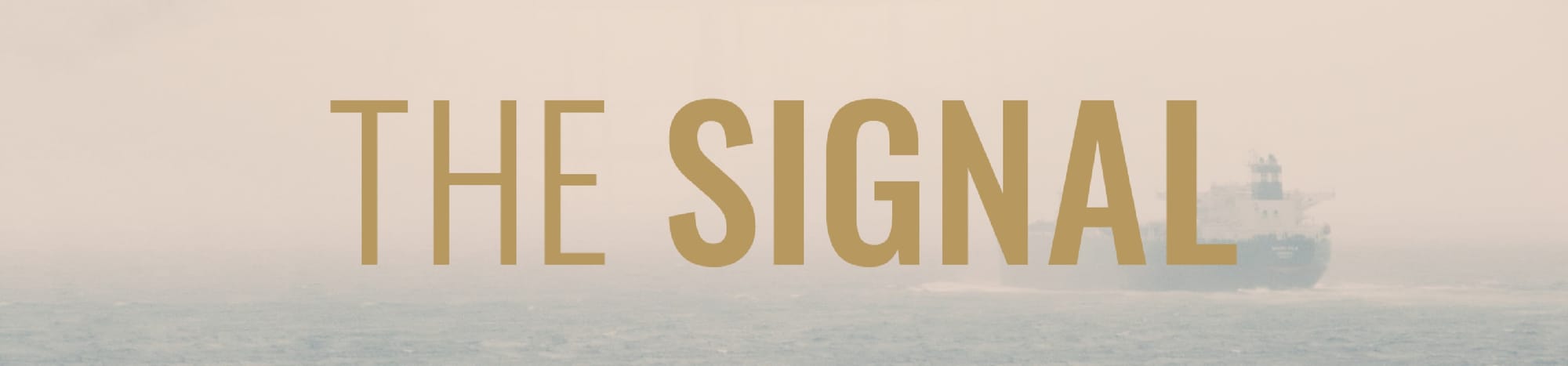
A livestock carrier called the Haji Ali left Berbera, on the Somali coast, on May 5, carrying around 4,000 sheep and goats and 14 Indian crew toward Sharjah. Early Wednesday, near Limah on Oman’s northern shore, something struck it. Fire moved through the pens, the crew went over the side into lifeboats, and the ship was gone before Oman’s coast guard reached the 14 men in the water. India’s foreign ministry called the attack “unacceptable,” without naming suspects.
A day later, on Thursday, a British maritime monitor flagged an incident with a second ship off Fujairah: Someone had apparently boarded it at anchor and was now steering it toward Iranian waters. The monitor didn’t say who, only calling them “unauthorized personnel,” or name the vessel.
That same day, without mentioning the ship taken that morning, Iran’s judiciary spokesman, Asghar Jahangir, told a state newspaper that Iran holds the legal right to seize tankers in the strait tied to the United States. Iran’s senior vice president, Mohammadreza Aref, said the strait “has always been our property.”
All of this is happening despite the U.S.–Iran ceasefire that took effect on April 8. Which is to say, none of it should be happening. But it is—without any attribution or accountability. Nothing’s conclusive, but one thing’s emphatic: Iran is claiming the right to seize U.S.-linked ships, while the ships vanish without anyone claiming to have seized them.

Meanwhile
- ‘Where we need vision.’ Britain’s prime minister is winning every head count and losing the room. On Thursday, Wes Streeting resigned as health secretary, telling Keir Starmer, “Where we need vision, we have a vacuum”—but declined to mount a formal challenge. Andy Burnham, the Manchester mayor, is gambling a safe Labour seat on a by-election that could carry him back to Parliament and a run at the top job. No one has the 81 MPs needed to force a contest.
- The most important issue. At a state banquet in Beijing on Thursday, China’s President Xi Jinping told U.S. President Donald Trump that Taiwan is “the most important issue” between their countries, and that mishandling it would risk “collision or conflict.” The warning closed the U.S. president’s first day of talks in the Chinese capital. Secretary of State Marco Rubio, traveling with the delegation, said afterward that U.S. policy on Taiwan was “unchanged,” noting that Beijing raises the subject every time Chinese and American officials meet.
- A third ancestor. Russia fires 1,560 drones and missiles at Ukraine over two days, killing 24 in a Kyiv apartment block. … In New Delhi, Iran’s foreign minister, Abbas Araghchi, accuses the United Arab Emirates of joining the war against the Islamic Republic. … A senator wanted by the International Criminal Court slips out of the Philippine Senate before dawn, after gunfire that police suspect was staged to cover him. (See “On the run inside parliament.”) … The UN is airlifting food into Akobo, South Sudan, as months of fighting continue to isolate the town. … A study of thousands of genomes finds three ancestral roots among Japanese people, while geneticists long assumed two.

Can’t hear yourself think?
The David Lynch Foundation helps bring calm to veterans, students, and communities in need.
Feature
Imperial silos
Why have the world’s shipping lanes become war zones? Arnaud Orain on the return of the armed merchant fleet.
On February 28, the United States and Israel struck Iran with several missile barrages, killing Grand Ayatollah Ali Khamenei along with several senior members of Iran’s leadership. By early March, they had crippled much of Iran’s offensive capabilities—but not enough to stop Iran from retaliating forcefully.
Iran responded by closing the Strait of Hormuz, which normally carries roughly 25 percent of the world’s seaborne oil. U.S. President Donald Trump has promised to open the strait, threatening Iran with severe reprisals. “Open the Fuckin’ Strait, you crazy bastards, or you’ll be living in Hell—JUST WATCH! Praise be to Allah.” And yet, Hormuz remains closed.
The U.S. concluded a ceasefire with the Houthis of Yemen only last May. The Houthis had been targeting ships through the Bab-el-Mandeb since the Hamas-led attack on Israel in October 2023. They have now threatened to close the strait again—choking off one of Saudi Arabia’s most important remaining oil-export routes—should the situation call for it.
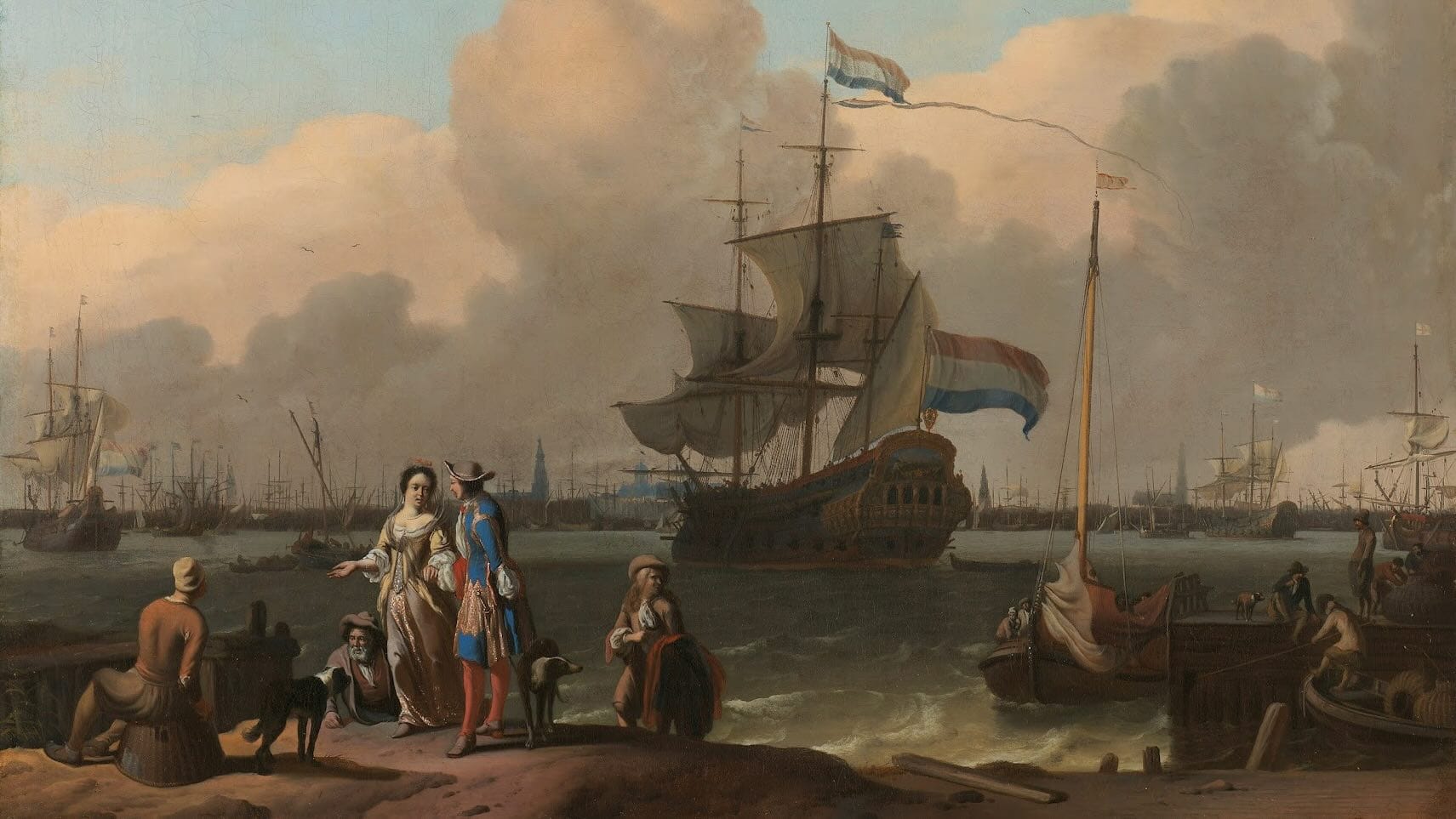
How have the world’s maritime trade routes become theaters of war?
Arnaud Orain is the director of studies at the École des hautes études en sciences sociales in Paris. He’s the author of Le Monde confisqué: Essai sur le capitalisme de la finitude (XVIe-XXIe siècle). Orain says the Houthis and Hormuz have shown that the U.S. Navy can no longer guarantee freedom of navigation. Without a dominant naval power, the oceans have once again become scenes of conflict. A range of countries are now building out their navies—and non-state forces are using cheap military technologies to threaten maritime trade routes.
The U.S. Navy isn’t the only fleet feeling the strain. France’s Marine nationale is stretched thin; so is Britain’s Royal Navy, and most others besides. If navies can’t protect merchant vessels, the merchant vessels will have to protect themselves. That, Orain says, is why merchant and naval fleets are now cooperating more closely. Before long, cargo ships may once again bear arms …
Your loyal guide to a changing world.
Membership with The Signal means exclusive access to premium benefits:
* In-depth feature interviews with our network of contributors
* The despatch, our weekly current-affairs and cultural-intelligence briefing
* Early access to new products, including print extras
It also means vital support for a new, independent venture in current affairs.
New music
‘Fool in Your Room’
Over to Los Angeles for some jangly indie guitar music that could have come out in 1986—but is new, from Slippers. Their singer, Madeline Babuka Black, can't find her wallet or keys, but she's found a great melody.