The banks of the Danube
Recently: Why is Pakistan in “open war” with the Taliban? Anatol Lieven on how Afghanistan became a battleground again. ... & The Iran war: What on Earth is going on?
Today: Eighty percent of the population voted, ending a 16-year era in Hungary. … Five hundred thousand undocumented workers, a 75-day window, and a royal decree in Spain. ... &c.
For members: What has the Iran war done to the global economy? Martin Wolf on what can happen when you shock a system defined by uncertainty. ... & Tropical Storm Sinlaku heads toward Guam.
+ New music from Fantastic Cat ...
The insider’s mandate
On Sunday, nearly 80 percent of Hungarian voters—the highest turnout in the country’s post-Communist history—handed Péter Magyar’s center-right Tisza party 138 of 199 parliamentary seats. Viktor Orbán, who’d held power for 16 years, conceded within hours. The margin wasn’t close enough to contest or explain away: Tisza took 53.6 percent to Fidesz’s 37.8. It’s a supermajority—giving Magyar the authority to rewrite the legal architecture Orbán spent 16 years constructing. Now what?
Magyar is a former Orbán insider who broke with Fidesz in 2024 and built Tisza into a broad anti-corruption coalition in two years. Orbán used his own supermajorities to overhaul the constitution, pack courts, capture media regulators, weaken judicial independence, and rewrite election rules. European and international democracy monitors had stopped calling Hungary a full democracy. Now, Magyar holds the constitutional tools Orbán sharpened—and a mandate from voters who explicitly demanded the system’s reversal.
But Poland’s experience after unseating Law and Justice in 2023 suggests that dismantling institutional capture is slower and messier than building it—the judiciary is stacked, state media is Fidesz infrastructure. Magyar has pledged to restore judicial independence, rejoin the European mainstream, and unblock a €90 billion EU loan to Ukraine that Orbán had vetoed. Brussels is celebrating; Moscow called Hungary “an unfriendly country.” So far, the Trump administration, which sent Vice President J.D. Vance to Budapest days before the vote to rally for Orbán, hasn’t said anything … See “The end of Law and Justice.”

Meanwhile
- Blockade and back channels. The U.S. naval blockade of Iranian ports through the Strait of Hormuz took effect on Monday—more than 10,000 American service members, 12 Navy ships—after weekend peace talks in Islamabad collapsed. Washington proposed a 20-year suspension of all Iranian nuclear activity; Tehran offered five. U.S. President Donald Trump told the New York Post on Tuesday that new talks could happen within two days. The ceasefire expires on April 21. … See “‘Good luck’.”
- Half a million out of the shadows. Spain’s government on Tuesday finalized a migrant amnesty—the country’s seventh since 1986, and its largest—that could grant legal residency and work permits to roughly 500,000 undocumented people. Prime Minister Pedro Sánchez bypassed parliament with a royal decree. Applications open on April 20 and close on June 30. The move runs sharply against the prevailing European drift on migration; the government frames it as an economic necessity in one of the EU’s fastest-growing economies.
- A son of Augustine at Hippo. Canada’s Prime Minister Mark Carney clinched a parliamentary majority after his Liberals swept three by-elections on Monday. … Israel and Lebanon held their first direct talks in decades in Washington on Tuesday; Israel refused to commit to a ceasefire. … Benin’s Romuald Wadagni, handpicked by outgoing president Patrice Talon, won his country’s presidency over the weekend. … U.S. Immigration and Customs Enforcement detained Brazil’s former intelligence chief Alexandre Ramagem in Florida; he fled a 16-year coup-plot sentence and now seeks U.S. asylum. … Pope Leo XIV visited the ruins of ancient Hippo in eastern Algeria on Tuesday—where St. Augustine, one of Christianity's foundational minds, lived, wrote, and died—on the first papal visit to the country in history.
Dictatorships don’t collapse by accident. We dismantle them together.
From the files
‘Abruptly darkened’
What has the Iran war done to the global economy? Martin Wolf on what can happen when you shock a system defined by uncertainty.
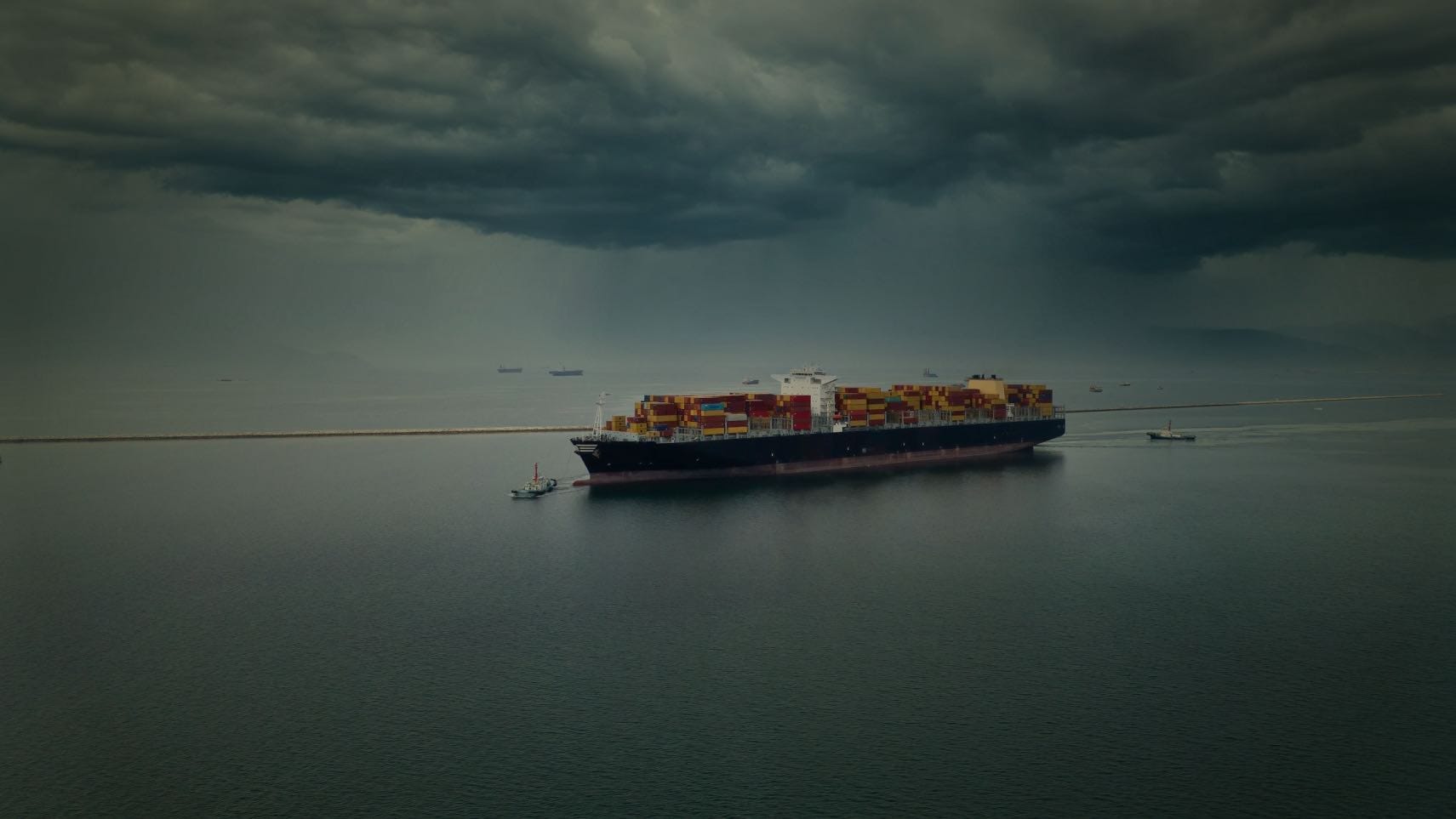
On Tuesday, the International Monetary Fund released its spring World Economic Outlook—which it turns out is rather bleak. The fund slashed its global growth projections. Oil has climbed above $100 a barrel. If the disruptions continue into next year, the IMF says, the odds of a recession will spike. Per the fund’s chief economist, Pierre-Olivier Gourinchas: “The global outlook has abruptly darkened …. The war interrupted what had been a steady growth trajectory.”
The immediate cause is the Iran conflict—and the closure of the Strait of Hormuz, which 20 percent of the world’s seaborne oil normally passes through. But the shock has hit an economy that was already fragile, already fragmenting, already adjusting to a world in which the United States has taken to using economic leverage as a weapon. Why so?
In January 2024, Martin Wolf argued here in The Signal that the world had entered an era of global trade defined not by the outcomes of any particular policy but by unpredictability as such. The U.S. had abandoned the system it built. Washington was willing to upend supply chains, impose tariffs, sanction competitors, and kill the World Trade Organization’s dispute-settlement process when the rules it wrote no longer served its interests. “We’ve moved into a new world,” Wolf says. “The defining characteristic of this world, given the personalities involved and the forces unleashed, is uncertainty.”
From January 2024, Wolf, on the new era of global trade—why it’s so fragile …
Weather report
Look out, Guam
13.5637° N, 144.9240° E
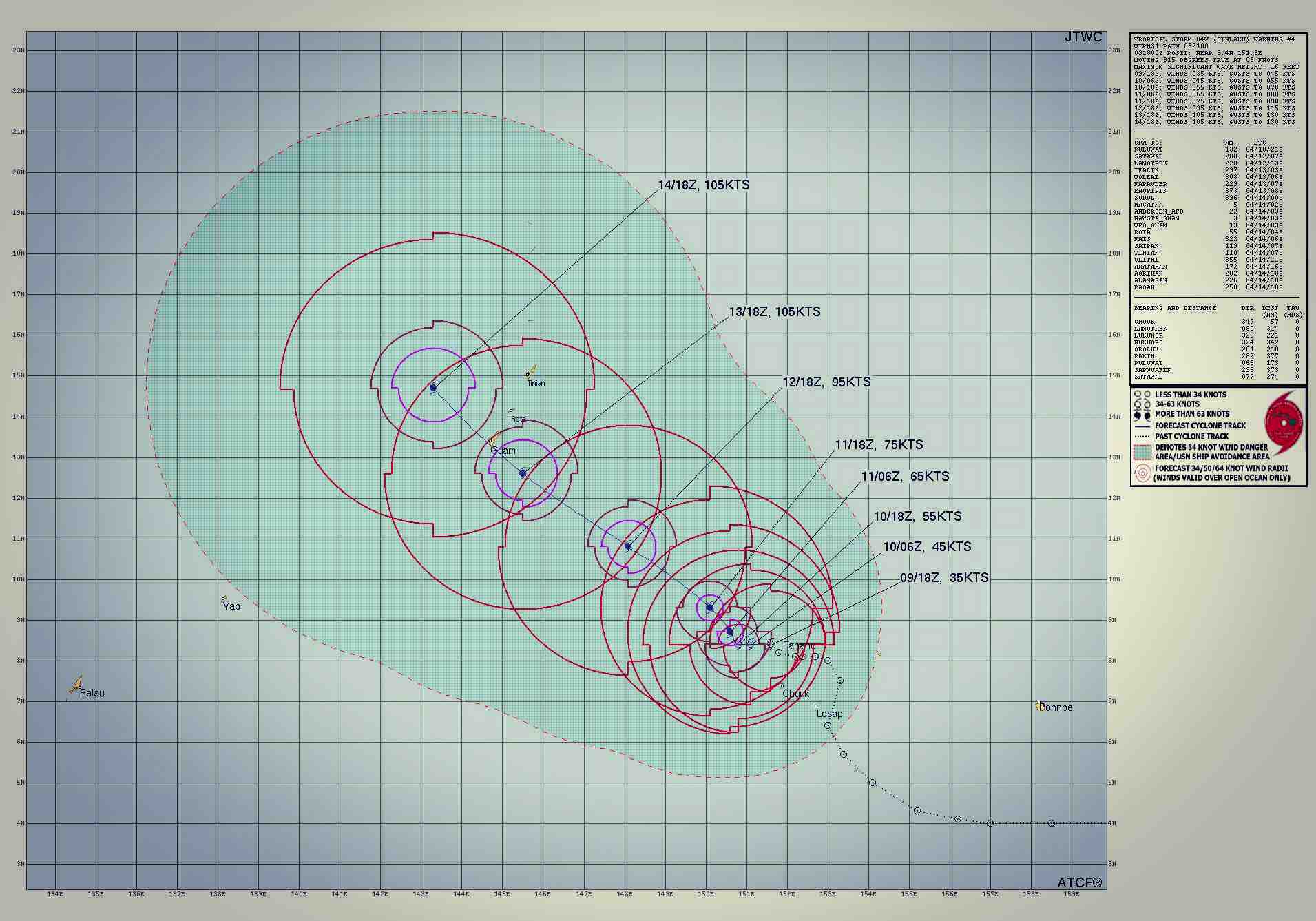
The Joint Typhoon Warning Center, the U.S. military's tropical-cyclone tracking operation in the Pacific, is tracking a storm that began on Thursday as Tropical Depression 4 but has since been upgraded to Tropical Storm 4 (Sinlaku). And it’s apt only to get more intense …
Your loyal guide to a changing world.
Membership with The Signal means exclusive access to premium benefits:
* In-depth feature interviews with our network of contributors
* The despatch, our weekly current-affairs and cultural-intelligence briefing
* Early access to new products, including print extras
It also means vital support for a new, independent venture in current affairs.
New music
‘Don’t Let Go’
The four guys in the New York City band Fantastic Cat are all singer-songwriters—catchy, melodic, with strong harmonies. Brian Dunne sings lead on this track, which builds as it goes—from their upcoming album, Cat Out of Hell.