
Cars before drones
“This is about spending more, spending better,” Mark Rutte, secretary-general of the North Atlantic Treaty Organization, said last year. Europe is certainly spending more. World military expenditure reached US$2.9 trillion in 2025, according to the Stockholm International Peace Research Institute, with European spending up by 14 percent. The surge isn’t Europe’s alone: China’s military budget grew by 7.4 percent, Japan’s by 9.7, and Africa’s total by 8.5.
In the United States, the idea that military spending could stimulate the rest of the economy—“military Keynesianism”—caught on with Jake Sullivan, the former U.S. national security adviser, who argued that defense spending would feed a “modern American industrial strategy.” Perhaps Europe’s rearmament could do its part. The Trump White House says it is working to make sure that money helps “reindustrialize America.”
Europe’s own industry, meanwhile, is reeling. As Adam Dixon says here in The Signal:
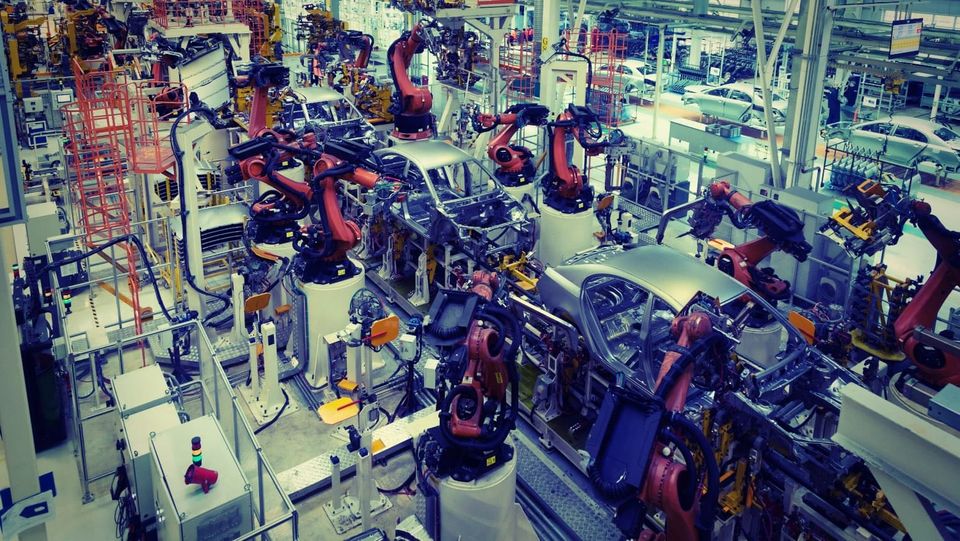
What’s saving some of Europe’s industrial capacity, though, is the rearmament of European militaries—because governments tend to favor local suppliers on both economic-security and national-security grounds. … The Dutch industrial conglomerate VDL Groep owns a factory in Limburg, in the south of the Netherlands, that long held a contract with BMW. When BMW didn’t renew the contract in 2024, they laid off some 2,000 workers. The factory has now reopened—on a new contract with the Dutch military.
That’s one factory, on one contract. How far can rearmament carry the rest?
Sander Tordoir is the chief economist of the Centre for European Reform in London. Tordoir says Europe’s rearmament won’t rescue its industry. What Europe is mounting is not one rearmament program but dozens of national ones, small-scale and barely coordinated—expensive and inefficient. A car plant here and there can pivot to weapons; that won’t move the wider economy much. The White House, though, may be onto something: Poland is ramping up its spending fast, and it keeps buying American.
There is hope, Tordoir says, though it runs the other way around. Governments in Europe and America are coming to see that military orders alone will never sustain a battery supply chain China can’t squeeze—that takes a civilian market too. Which may mean Europe can’t build the weapons it wants until it saves the car plants it is losing …
Gustav Jönsson: Why would anyone think military spending could rescue European industry?
Sander Tordoir: Because there’s a triple helix of shocks hitting European industry.
The first is the pressure from China’s export glut, and the growing overlap between China’s export basket and the eurozone’s—especially Germany’s: cars, machinery, chemicals. Chinese pressure on European aircraft manufacturing isn’t far behind. The second shock is U.S. tariffs. That one hurts less in purely economic terms, but it’s still a drag: Whether U.S. consumers or European exporters pay for them, they cut demand for European industrial goods. The third is energy—Europe can’t count on a supply that’s both reliable and affordable.