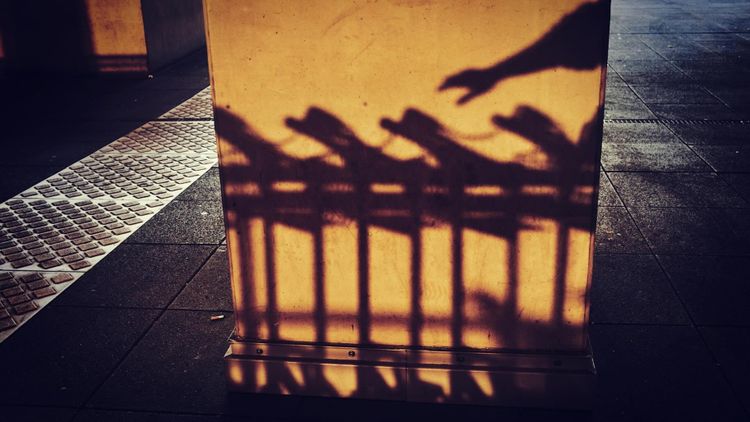
Party balloons over El Paso
Recently: Why is the White House calling its political opponents “national security” threats? Andrew Preston on the 86-year history of a curious rationale.
Today: New York City publishes 170,000 pages of records it swore it didn’t have. … The U.S. federal government’s figures for data-center water use turn out to include dam water evaporating in the sun. … &c.
For members: The U.S. government has signed up private firms to hack criminal networks abroad. But how do you really know whose systems you’re breaking into?
+ New music from Hana Stretton …
U.S. & North America
The motor-vehicle annex
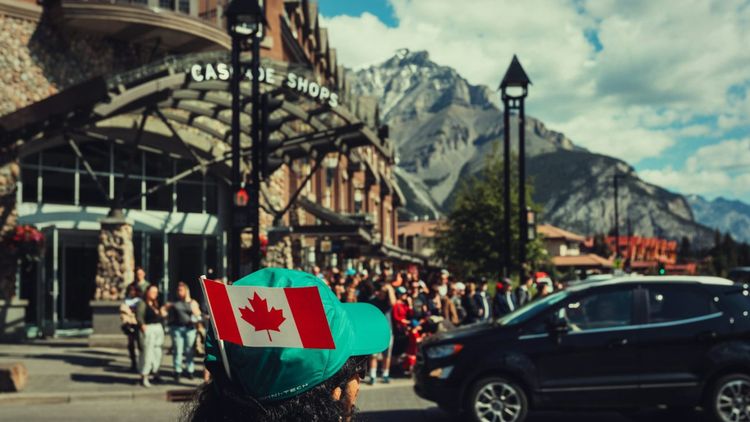
Canada began taxing C$27.6 billion of American goods on Tuesday, answering the 50 percent tariff U.S. President Donald Trump put on Canadian goods in July under Section 338 of the Tariff Act of 1930. One of Trump’s orders says Canada taxes American cars and lets other countries’ in for free—and comes with a list of Canadian goods to be taxed in response. So what’s on that list? Ana Elena Sancho and Fiama Angeles of Global Trade Alert went through it—and nothing on it is a car. The order on alcohol—that one taxes hockey equipment. Trump says Canada’s rules cost American carmakers US$5.6 billion in lost sales. The order he signed over it will collect about US$10 billion a year from unrelated commerce.
A credible threat
Since July, a rule from the U.S. Justice and Homeland Security departments has let American state and local police shoot aircraft down, once an officer qualifies at a school in Alabama run by the Federal Bureau of Investigation. An officer judges for himself whether an apparent drone is a real threat. U.S. troops on the Texas border have been making that call since February with an Army laser, and twice got it wrong—striking party balloons near El Paso, as well as an actual U.S. Customs and Border Protection drone. How is a police officer supposed to know what to shoot down? Seems like a tough question. The Congressional Research Service can note only what the police rule forbids: He or she may not treat a protest as any part of the reason for shooting a drone down. Any police force or prison in the country can get this power, not just authorities at the border.

Just down the hall
When the advocacy group 9/11 Health Watch asked for New York City’s records of the air in lower Manhattan after the September 11, 2001 attacks, the city said it had none, and swore to it in court. It rejected the group’s appeal too. On Tuesday, it published 170,000 pages. What’s all that about? The New York judge James Clynes ordered the official who rejected that appeal to testify. Russell Pecunies, the appeals officer at New York City’s Department of Environmental Protection, said he’d spent less than an hour on it and had never asked anyone to look again. So the records were in Pecunies’s own department the whole time.
‘These AI things suck water’
U.S. Commerce Secretary Howard Lutnick told CNBC this month that data centers don’t use water. On Fox News last year, he said the opposite. So how much do data centers use? It’s a controversial question. The U.S. Energy Department’s Lawrence Berkeley National Laboratory says it was 66 billion liters across the country in 2023—and the power plants supplying them, 800 billion more. Brian Potter, an engineer who writes the newsletter Construction Physics, found that the second figure counts water evaporating off dam reservoirs, charging hydroelectric-powered data centers nearly 40 times as much per kilowatt-hour as gas-powered ones. Discount the dams and the renewable power the big operators buy, Potter says, and the 800 billion drops by about two-thirds.
Meanwhile
Mexico’s president, Claudia Sheinbaum, sent Congress a bill barring dual nationals from the presidency and state governorships. … At a county fair in Ohio, a man carrying two pistols shoved through a crowd toward Amy Acton, the Democratic candidate for governor. … Fourteen Virginia counties and towns are shutting down their Flock license-plate cameras. … Washington is ending the protected status that’s let Haitians work in the United States—where 58,000 home-care aides were born in Haiti. … & Sapporo says it now plans to brew its non-alcoholic beer for Americans in the United States rather than Canada, on account of that 50 percent tariff.
Thoughts? concierge@thesgnl.com.
From the despatch
Under contract
The U.S. government has signed up private firms to hack criminal networks abroad. But how do you really know whose systems you’re breaking into?
In compounds across Cambodia and Burma, hundreds of thousands of people work at keyboards they aren’t allowed to leave, running romance and investment frauds on strangers overseas. Traffickers brought most of them there on the promise of a job. The United Nations counted around 100,000 in Cambodia in 2023, and put Burma above 130,000. By the FBI’s count, Americans reported US$20.9 billion in losses to cyber-enabled crime last year alone.
In August, U.S. President Donald Trump signed a memorandum hiring American companies to go after the syndicates that run the compounds. A firm that passes vetting signs a contract with the Justice or Homeland Security department, puts $1 million in escrow, and takes each proposed operation to two federal officials, who approve it in writing—as long as it’s not likely to kill or badly hurt anyone.
The firm may then watch: getting into a computer without the owner’s permission and staying unseen. Or it may wreck: effecting the “manipulation, disruption, denial, degradation, or destruction” of a machine and everything on it. When anyone else—who hasn’t passed vetting and signed a contract with the Justice or Homeland Security department—does either, that is a federal crime.
The memorandum covers mistakes, too. If a firm finds it has broken into a machine it wasn’t cleared for, it has to stop, keep as little of what it took as it can, and tell Washington. But a mistake means only accessing one or more of three kinds of machine: one that is in the United States of America, one that belongs to an American, or one that an American runs.
So who are they going to hack?

Wary of fast fashion?
Shop Congo Clothing Company and
make a difference—in style.
Music
‘Night Swimming’
The Australian singer and sound-collagist Hana Stretton spent four years living alone near the ocean, swimming at twilight, and the album that came out of it, Tiarn, arrived on August 7 …