‘Not so much on Ukraine’
Recently: Is dictatorship winning? Adam Przeworski on the puzzle of the world’s richer, angrier voters. (Open-access, in partnership with the Marlborough House Foundation—see our editor’s note here.)
Today: The American president says Ukraine should find a new negotiator. A day later, the Ukrainians bring the White House envoy to the table in Norway. … &c.
For members—from the weekend despatch: Nearly 6,000 teenagers have been through French police custody in three weeks, and the revolt keeps spreading. Who’s really behind it? … Was blowing up Nord Stream a war crime? Standpoints from Dariusz Łubowski, Alexander Lott, and Przemysław Roguski. … & With his main challenger already in jail, why is Turkey’s president now seizing a news channel? Ezgi Başaran on Erdoğan’s fight for his political survival.
+ New music from Jess Williamson …
U.K. & Europe
By invitation
On Tuesday in Oslo, Ukraine’s President Volodymyr Zelenskyy met Steve Witkoff, U.S. President Donald Trump’s special envoy, with Norway’s prime minister, Jonas Gahr Støre, and Finland’s president, Alexander Stubb. The Ukrainians had asked the Americans to come, Støre says. Jared Kushner, Trump’s son-in-law and his other envoy, who has the flu, joined by video. On Monday, as he left the White House for a rally in Kansas, Trump told reporters, “Maybe it’s time for Zelenskyy to get somebody else to negotiate.” From Oslo, Witkoff plans to go on to Russia, hoping to meet President Vladimir Putin and bring him ideas the Americans have worked out with the Ukrainians and the Europeans.
On the agenda
Putin has been pitching a three-way summit with Trump and China’s leader, Xi Jinping, and raised it with Trump by phone last week. Trump says he’d go, “not so much on Ukraine because Russia, frankly, has been fine on Ukraine, they haven’t been doing much.” What does Trump want from Putin and Xi? To talk about “denuclearization,” he says. Daryl Kimball, who runs the Arms Control Association in Washington, says “there are no agreed limits on the arsenals of the world’s major nuclear-armed states.” He’d start with a freeze: The five official nuclear powers would stop deploying new long-range launchers. And “talks on ending Russia’s war on Ukraine,” he says, “must involve Ukraine.”

‘The last traffic light’
Here in The Signal, Serhii Plokhy looks at the world after New START, the last treaty limiting the American and Russian nuclear arsenals, expired in February. “You can think about the treaties on nuclear weapons as traffic lights,” Plokhy says. “We’re now in a situation where the last traffic light in the intersection has been removed, and there are these huge trucks—Russia and America—moving toward the intersection without lights or even rules.” The war in Ukraine, he says, has shown Europe it can’t count on the United States: “If Europe is to survive in this looming post-American world, it must have its own nuclear deterrent.” … See “‘The Chernobyl parameter.’”
Security assurances
On December 5, 1994, at a summit in Budapest, Ukraine’s president, Leonid Kuchma, signed a memorandum with U.S. President Bill Clinton, Russia’s President Boris Yeltsin, and Britain’s prime minister, John Major. Ukraine had come out of the Soviet Union with about 1,900 strategic nuclear warheads, the world’s third-largest arsenal, and agreed to give them up. In return, the Americans, the Russians, and the British promised to respect Ukraine’s borders and to refrain from threatening or using force against it. China gave its own assurances in a separate statement, the day before. Ukraine sent its last nuclear weapons to Russia in June 1996.
Meanwhile
A drone strike on a fuel market in Abyei, a region Sudan and South Sudan both claim, kills at least 153, says the area’s information minister, Yohana Akol Ngor, who blames Sudan’s army. … Yemen’s Iran-aligned Houthis fire missiles at a government training camp in Shabwa, killing at least 58, says the governor, Awad al-Wazir. … About 76 percent of Alberta’s voters choose to stay in Canada (see “‘So they can own us’”). … France’s prime minister, Sébastien Lecornu, says targeted curfews in Paris and other cities kept the peace overnight (see “The usual suspects,” below). … & Euclid, the European Space Agency’s telescope for studying distant galaxies, finds a comet that takes thousands of years to go around the sun.
Thoughts? concierge@thesgnl.com.

Wary of fast fashion?
Shop Congo Clothing Company and
make a difference—in style.
From the despatch
Allons enfants
Nearly 6,000 teenagers have been through French police custody in three weeks, and the revolt keeps spreading. Who’s really behind it?
On September 17, teachers at the Lycée Saint-Exupéry, a high school in Créteil, southeast of Paris, walked out over missing staff, and the next day their students blocked the gates. Three weeks later, police had taken 6,877 people into custody, 5,890 of them children. Prime Minister Sébastien Lecornu’s office has an explanation: it calls the protests a “maneuver organized” by France Unbowed, the hard-left party, and “its ultra-left proxies,” and a source close to him tells Reuters the intelligence services agree, though the office has kept their findings to itself. The party says it only backs the teenagers, yet the high-school students’ union that called the first national day of blockades is led by a 19-year-old who ran for a town council this year on its list. And France’s Foreign Ministry has summoned Iran’s ambassador over what it calls “a disinformation campaign” about the protests.
What’s going on?
The Andromeda
On Wednesday, in a Hamburg courtroom, Serhii Kuznietsov, a former officer in a Ukrainian special-forces unit, saluted his supporters, and they raised three fingers back, for the trident on Ukraine’s coat of arms. Prosecutors say he led the crew that sailed a rented yacht, the Andromeda, out of Rostock, in northern Germany, in September 2022 and blew up the Nord Stream gas pipelines from Russia under the Baltic. He denies it, and so does Ukraine’s government. Italy, where police arrested him last year, sent him to Germany to face a charge of sabotage, and German prosecutors have since added a war crime: an attack on civilian property. His lawyer, Nicola Canestrini, told the court the pipeline was “a Russian weapon”—and so arguably a lawful target.
Which is it?
A trustee in the newsroom
With his main challenger already in jail, why is Turkey’s president now seizing a news channel? Ezgi Başaran on Erdoğan’s fight for his political survival.
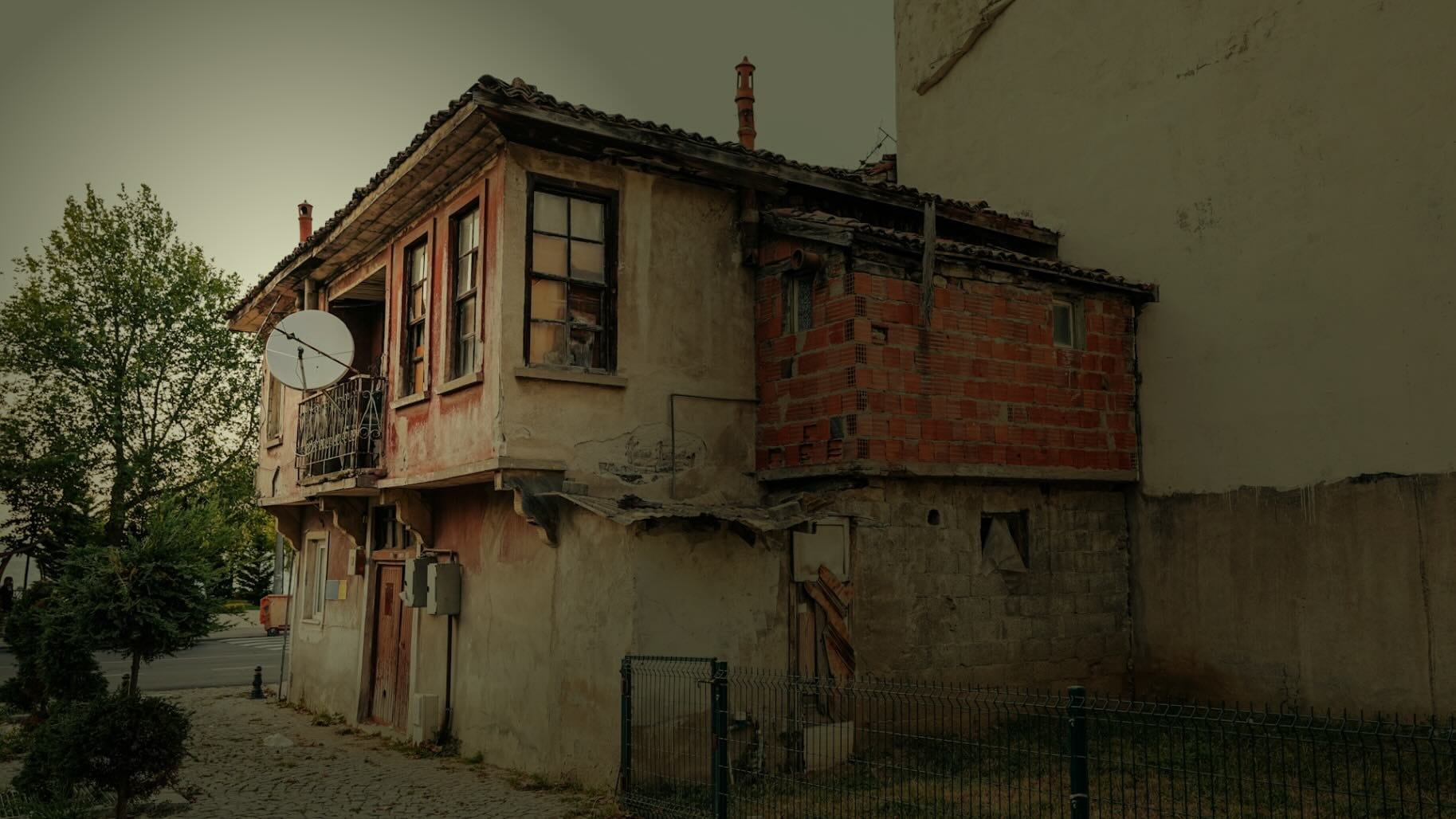
Early on Wednesday, Istanbul prosecutors had police raid Halk TV, a pro-opposition broadcaster. Officers detained 11 people, the station went off the air, and the state put a trustee in charge. Prosecutors say it’s a bribery case against the station’s chairman, Cafer Mahiroğlu, who lives abroad and calls the charges baseless. Hours later, in a courtroom inside Silivri prison, Istanbul’s jailed mayor, Ekrem İmamoğlu, opened his defense in a corruption trial where prosecutors are asking for a sentence of more than 2,000 years. In May, a court removed Özgür Özel as leader of what was then the main opposition, the Republican People’s Party, or CHP; in July, Özel walked out with 90 lawmakers and founded a new party. President Recep Tayyip Erdoğan has held power in Turkey since 2003, and İmamoğlu, his strongest rival, has been in a cell since March 2025.
Why take the station too?
Strengthen The Signal.
Become a member, keep your bearings, navigate your world.
Music
‘Goodbye to All That’
Jess Williamson, a Dallas native, splits her time these days between Los Angeles and Marfa, Texas …