One hour of sun

Recently: Why does America cut Moscow slack while threatening France and Germany? Nicholas Mulder on how Washington can still pressure its allies but no longer its rivals.
Today: With two Salvadoran ministers at her side, Costa Rica’s president opens her new cellblocks. … &c.
Feature: Is dictatorship winning? Adam Przeworski on the puzzle of the world’s richer, angrier voters. (Open-access, in partnership with the Marlborough House Foundation—see our editor’s note here.)
& For members: What’s the U.S. Federal Reserve really up to? Will Bateman’s new book, The Fiscal Fed: How the US Central Bank Funds Government.
+ New music from The Womack Sisters …
Developments
‘A before and an after’
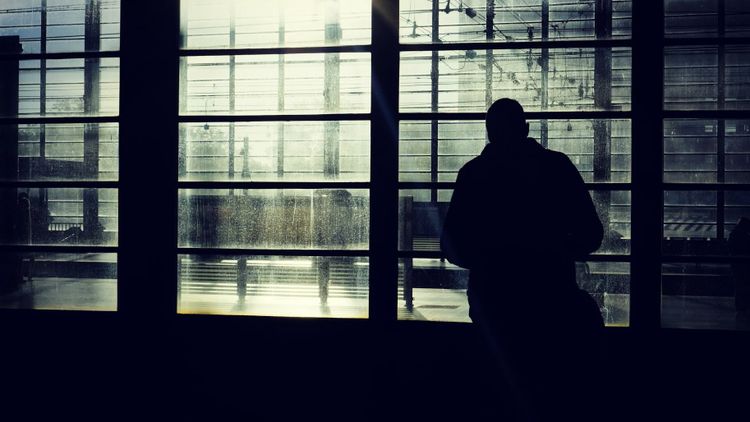
On Wednesday, outside San José, President Laura Fernández stood in a corridor between two rows of cells. The building has 85 of them, each for 60 men, who’ll wear orange, keep no belongings, and get one hour of sun a day. Fernández says it marks “a before and an after” for Costa Rica’s security. El Salvador’s ministers of security and defense, Gustavo Villatoro and René Merino, came for the ceremony. The first prisoners arrive at the end of the month. On Friday, she flies to El Salvador to tour the Terrorism Confinement Center, the mega-prison her new one copies.
A gift of blueprints
El Salvador’s President Nayib Bukele gave Costa Rica the design and laid the first stone in January, weeks before Fernández won the presidency on a hard-line crime platform. The state, he said, must be the only one with “the monopoly of violence.” Why would Costa Rica want a prison like his? The country counted a record 907 homicides in 2023, and 873 last year. Vanda Felbab-Brown, an organized-crime researcher at the Brookings Institution, says the rivalry between Mexico’s two biggest cartels “pushed local proxies to fight with each other and then drove homicides up.” She thinks arrests on El Salvador’s scale could prove “politically unpopular” in Costa Rica.

‘The other guys are worse’
Here in The Signal, Steven Levitsky has looked at why voters stick with elected authoritarians. Pair “a talented populist” with “a really discredited elite,” he said in 2021, and “they can turn that into political capital for a long time. You may be kind of tired of me, but the other guys are worse.” In 2024, he counted Bukele among the “true threats to democracy.” By this April, four years into Bukele’s emergency rule, his government had detained roughly 91,650 people—more than 1 percent of Salvadorans—and his approval still ran above 80 percent. … See “Same as the old boss.”
Keys to the barracks
On December 1, 1948, at the Bellavista barracks in San José, José Figueres, who’d won Costa Rica’s civil war that spring, took a sledgehammer to one of the battlements. It had been loosened beforehand. That day his junta abolished the army, and his security minister, Edgar Cardona, handed the building’s keys to the education minister, Uladislao Gámez. Four months later, Cardona led a coup attempt against Figueres. It failed, and the National Museum moved into the barracks. It’s still there.
Meanwhile
Ukraine’s fastest drones lose their satellite link above a new speed cap, and Elon Musk says it’s ultimately the U.S. president’s call. … Federal investigators seize the phone of Ilhan Omar, a Somali-born member of Congress, and officials tell the Wall Street Journal they want her citizenship revoked. … Drones hit two more ships, this time inside Romanian waters, says the country’s president, Nicușor Dan, and eight sailors are missing. (See “Flags of convenience.”) … Ethiopian troops enter Zalambessa, on the Eritrean border, and Eritrea calls Ethiopia’s invasion charge a “declaration of war.” … & Off southern Turkey, archaeologists find what may be the oldest known shipwreck, from around the time Egyptians built the Great Pyramid.
Thoughts? concierge@thesgnl.com.

AI will eliminate millions of jobs in the next five years. Yours doesn’t have to be one of them.
Here’s how to future-proof your career: Join the Superhuman AI newsletter, read by 1M+ professionals throughout leading tech companies and across sectors. Learn critical AI skills in just three minutes a day—and become the AI expert on your team.
Feature
‘Keeping up appearances’
Is dictatorship winning? Adam Przeworski on the puzzle of the world’s richer, angrier voters.

“Democracy is undergoing a global recession,” according to a warning from the European Union’s own foresight network last November. U.S. President Joe Biden said much the same at his inauguration in 2021: “This is our historic moment of crisis and challenge.” He kept saying so for the rest of his term.
The trouble isn’t only American. “India has a democratic form, emptied of democratic content,” Omair Ahmad says here in The Signal. “It looks like a democracy, but it works in opposition to democracy.”
The German sociologist Steffen Mau put it plainly: “Reports, academic studies, and the available indicators all point in the same direction: democracy is not in particularly good shape.” Things are bad enough, he writes, that “even established democracies can be said to be in crisis.”
Is that right?
From the despatch
‘Monetizing the debt’
What’s the U.S. Federal Reserve really up to? Will Bateman’s new book, The Fiscal Fed: How the US Central Bank Funds Government.

In August, the yield on long-term U.S. government bonds hit a 19-year high. U.S. Treasury Secretary Scott Bessent responded by saying the Treasury would double its bond buybacks. The Wall Street Journal warned: “Pushed far enough, it risks blurring the line between the central bank and the administration. The Fed sets policy to manage inflation and employment, not to make it easier for the government to fund itself.”
Is that true?
… courtesy of the Marlborough House Foundation.
Strengthen The Signal.
Become a member, keep your bearings, navigate your world.
Music
‘I Just Don’t Want You (to Say Goodbye)’
From The Womack Sisters out of Los Angeles, a self-titled debut album. The name may sound familiar …