Those aren’t stars

Recently: A stalled front over central Japan drops more water on Nagoya in 60 minutes than the city has seen in 136 years of measuring—and twice as much as its storm drains were built for.
Today: Canada’s prime minister goes to Strasbourg to ask the European Union for “a unique alliance.” … The U.S. Air Force confirms that the Space Force has weapons circling the Earth. … &c.
For members: Is September 11 still an open case? Standpoints from Terry Strada, Dan Christensen, and Gerald Posner. … & Why does the U.S. government keep so many secrets from the American people? Matthew Connelly on how official classification has gone out of control.
+ New music from Djrum …
Developments / U.S. & North America
An updated itinerary
On Sunday, Canada’s prime minister, Mark Carney, flies to Saint-Pierre, a French island 19 kilometers off Newfoundland, to meet France’s president, Emmanuel Macron. Last week, U.S. President Donald Trump posted a map with the island colored in as American. On September 29, the United States stops letting Canadian liquor in. Before Saint-Pierre, Carney goes to Strasbourg to address the European Parliament. Canada’s own Parliament doesn’t sit until September 21, and his office has declined to call it back early. So what’s Carney asking Europe for?
Terms not disclosed
Canadians first read about it in The Wall Street Journal, a notably American publication: Carney wants Canada made an “associate member” of the European Union. On a red carpet at the Toronto International Film Festival, he said Canada isn’t looking to join the EU and wants “a unique alliance.” The EU has no associate membership. Its treaties let only a “European State” apply, and in 1987 the European Community turned down Morocco on those grounds. Canada’s trade deal with the EU has been provisionally in effect since 2017; as of last year, 10 of the 27 member states hadn’t ratified it, France among them. Canada and the EU haven’t said publicly what “a unique alliance” would contain.

Elsewhere
Carney has looked for other partners this year. In January, in Beijing, he announced a “new strategic partnership” and called China “more predictable” than Washington. As we noted at the time, allies with somewhere else to go were going there. In May, the Pentagon suspended the Permanent Joint Board on Defense, which Canada and the United States had run since 1940, citing a speech Carney gave at the World Economic Forum in Davos, Switzerland. Now he’s trying Europe. … See “Options.”
Armed overhead
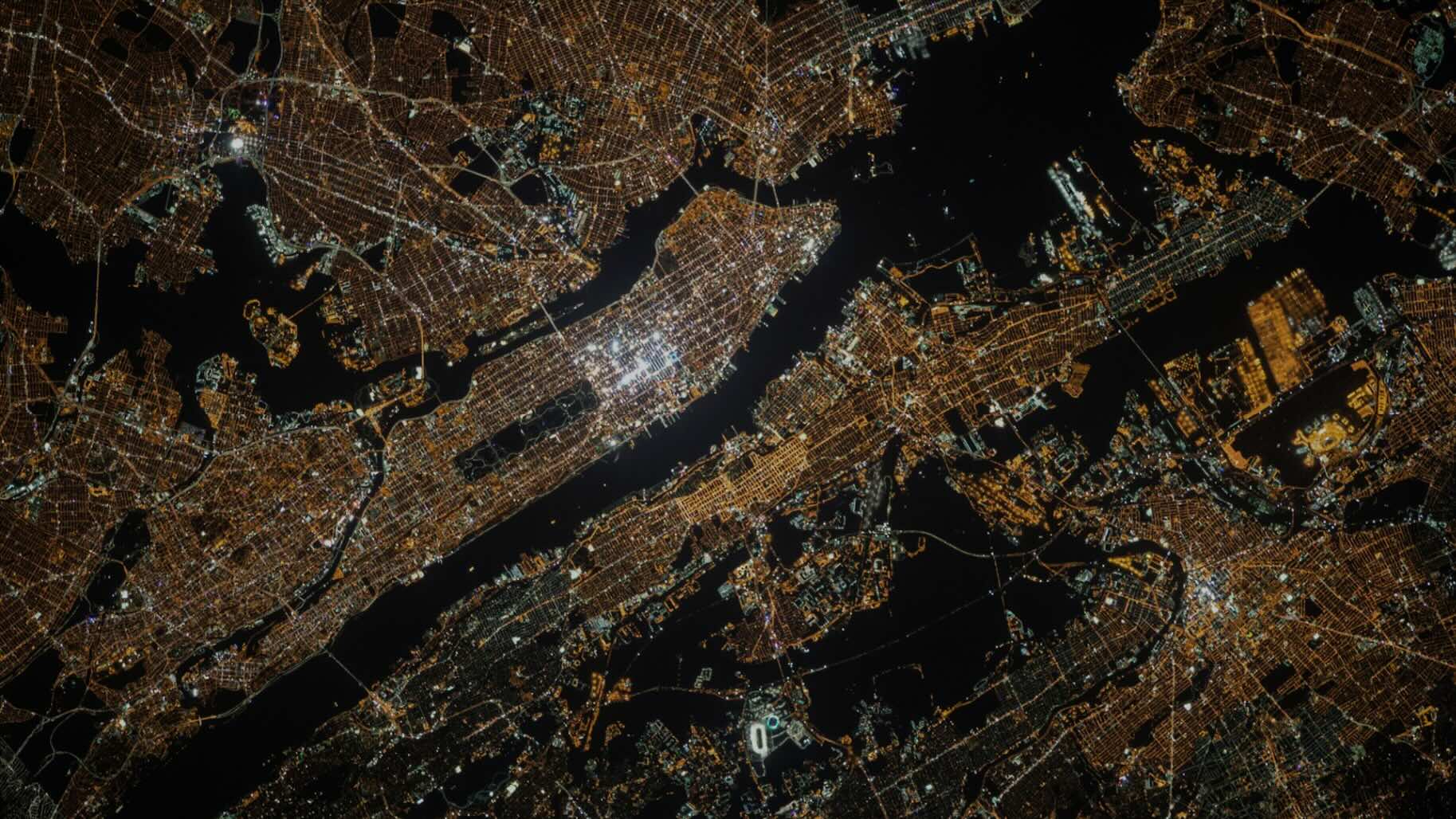
On a clear night, anyone looking up can see satellites as small lights moving across the sky. On Monday, the U.S. Air Force secretary, Troy Meink, said the Space Force now has “on-orbit space control weapons.” It’s the first time the Pentagon has confirmed putting weapons in orbit. What the weapons do, and whether anyone has tested them, Meink won’t say. The phrasing, he says, is “very well thought out.” China’s foreign ministry says the United States is “preparing for war in outer space.” The people who know which satellites are weapons aren’t saying.
Meanwhile
The U.S. Supreme Court keeps Trump’s mail-ballot limits out of this year’s midterms. … A whistleblower says the U.S. Department of Homeland Security has staff vetting about 40 voters a day for fraud, some 12 minutes a person. … With diesel at a record US$6.06 a gallon, markets expect the U.S. Federal Reserve to raise interest rates for the first time since 2023. … Mexico’s president, Claudia Sheinbaum, proposes barring dual citizens from Mexico’s presidency: “A Mexican president is Mexican.” … & A man in Concord, New Hampshire, returns a library magazine 132 years overdue, with crayon on the pages; he has, he says, no idea where he got it.
Thoughts? concierge@thesgnl.com.

The world makes more sense in its own terms.
You follow current events—and know the most important developments play out across borders and cultures. So you know things always get lost in translation—intent, nuance, meaning.
Learn a new language with Babbel. Built by 200+ experts, Babbel guides you from theory to real conversations with just 5 minutes of learning a day.
Start Babbel now and save 55% on a 12-month subscription.
In the air
The suspects still in Riyadh
Is September 11 still an open case? Standpoints from Terry Strada, Dan Christensen, and Gerald Posner.
On Friday morning in New York, at the memorial where the World Trade Center stood, relatives read out the names of the 2,977 people killed on September 11, 2001—for the 25th time. Four former U.S. presidents and Vice President J.D. Vance were there. When Terry Strada’s turn came, she said her husband’s name—and then she had something to say about Saudi Arabia.
Fifteen of the 19 hijackers were Saudi citizens. The official 9/11 Commission found “no evidence that the Saudi government as an institution or senior Saudi officials individually funded” al-Qaeda, and the kingdom denies any role. But in August 2025, a federal judge in Manhattan, George Daniels, found “a high probability” that two Saudis in California had roles in the hijackers’ plans. One, Omar al-Bayoumi, had long worked for the Saudi civil-aviation agency; the other, Fahad al-Thumairy, was an imam and a Saudi diplomat in Los Angeles. The finding extended to “the related role of their employer”: the Saudi government.
Saudi Arabia’s appeal of Daniels’s finding comes before the federal appeals court in New York on October 7. The families’ lawyers have repeatedly asked American authorities for Bayoumi’s phone records and still haven’t got them.
What does the U.S. government actually know?
Music
‘I Wander (II)’
After last year’s dreamy and magnificent Under Tangled Silence, the British DJ and producer Felix Manuel, who records as Djrum, is back with a frantic, percussive new EP, I Wander …