Spoilers
Recently
- Democrats won the U.S. midterms not least because of Trump’s war on Iran—now what? Andrew Preston on the powers Congress has ceded to the American presidency in the name of national security.
Today
- Why does Russia keep meddling in Western politics? Vlad Vexler on how all the partisan bickering that reliably follows is the point. (Open-access, in partnership with the Marlborough House Foundation.)
- Is tech coming for your job? Paul Osterman’s new book, Disposable Workers: The Transformation of Employment.
- + New music from Michael Kiwanuka.
First
- Paris claims to know exactly who hit its supermarkets in October. Does it matter …?
The charge sheet
On the night of October 11, hackers broke into the computers that run the fridges and freezers at about 700 French food businesses, from supermarkets to butchers. They set the freezers to defrost without end and switched off the alarms, the Paris prosecutor says. By morning, some freezers were at 50 degrees Celsius, and at least 15 fires had broken out. On Monday, France blamed Shahid Kaveh, a hacking unit of Iran’s Revolutionary Guard, and its spy and cyber agencies listed three men: Hamid Reza Lashgarian, Mahdi Lashgarian, and Reza Salarvand. Iran calls the charge “baseless,” and says French authorities “are apparently unable even to control the temperature of refrigerators.”
The second night
On the evening of November 1, hackers turned up the heat in the cold rooms where France’s blood service keeps plasma for transfusions; alarms caught it in time. The same night, shops in Belgium, Sweden, Ireland, and Estonia found their freezers warm. France doesn’t blame Iran for that night, and Belgium’s cybersecurity agency says who was behind it “may never be determined.” Vincent Strubel, who runs ANSSI, France’s cybersecurity agency, had already told French senators that the October hackers got in through equipment exposed directly to the internet, “weak passwords, that sort of thing.” He warned that pharmacies keep vaccines in the same kind of equipment.

Repeat offenders
In late 2023, crews tied to the Revolutionary Guard took over Israeli-made equipment at American water plants; in Aliquippa, Pennsylvania, workers had to run a pump station by hand. The U.S. Federal Bureau of Investigation and its partners said the hackers had probably entered through devices left online with their factory passwords. In February 2024, the U.S. Treasury sanctioned six officials of the Guard’s cyber command, Hamid Reza and Mahdi Lashgarian among them. “We do not have a cyber problem—we have a Russia, China, Iran, and North Korea problem,” Dmitri Alperovitch says here in The Signal. Washington treated Aliquippa as an Iran problem. By France’s account, two of those men came back the same way, through equipment on the open internet. … See “The Russians are here.”
An act of war
Since March 2023, every standalone cyber policy written at Lloyd’s, the London insurance market, has had to exclude state-backed cyberattacks. Days after the attack, a cyber underwriter said that if a state were behind it, the claims could get complicated, since cyber policies “typically do not cover acts of war.” Spoiled stock often falls outside cyber cover anyway, brokers say, and Intermarché, one of the chains hit, says it isn’t covered. Lawyers at Zelle, a firm that represents insurers, wrote that if the attack were pinned on a state, insurers “may invoke war or state-backed cyberattack exclusions.” On Monday, France pinned it on Iran’s Revolutionary Guard. As of Wednesday, no insurer had publicly done so.
Meanwhile
Trump’s envoys, Jared Kushner and Steve Witkoff, meet Vladimir Putin in the Kremlin, then fly to Dublin to brief Volodymyr Zelensky. … Hungary detains Áron Orbán, brother of the former prime minister, in a people-smuggling inquiry. … Sweden writes the right to abortion into its constitution, from January 1. … The “Mikhail Andropov” emails behind last week’s hoax bomb warnings on European flights now warn of bombs in hundreds of schools in Italy, Ireland, and Britain—and Italian Prime Minister Giorgia Meloni’s car (see “A ‘message to the West’”). … & Next Wednesday, Voyager 1, launched in 1977, becomes the first human-made object a full light-day from Earth.

Wary of fast fashion?
Shop Congo Clothing Company and
make a difference—in style.
Feature
Assets and enemies
Why does Russia keep meddling in Western politics? Vlad Vexler on how all the partisan bickering that reliably follows is the point.

The Russian Federation interfered in the 2016 American presidential election, in part through social-media “troll farms” in St. Petersburg that tried, with uncertain success, to inflame America’s fiercest political fights. The U.S. Justice Department appointed Robert Mueller, who’d run the Federal Bureau of Investigation for 12 years, as a special counsel to investigate the business—along with alleged links between Russia and Donald Trump’s campaign. Over the next two years, Mueller charged 25 Russians over the interference. He also charged a number of Trump’s campaign aides with other crimes, like lying to investigators and fraud—but didn’t find enough evidence to show that anyone on the campaign had conspired with Russia. Americans have continued accusing Russia of interfering in their politics ever since.
Europe has its own cases. In 2014, Marine Le Pen’s French hard-right party, now the National Rally, borrowed €9.4 million from a Czech-Russian bank. A Moscow aircraft-parts firm later took over the debt. In 2023, ahead of the elections to the European Parliament, the party paid off the last €6.1 million, hoping to shake off accusations that it was too close to the Kremlin. In October, Britain’s prime minister, Andy Burnham, said it was “clear” Russia had meddled in the 2016 “Brexit” referendum on the U.K. leaving the European Union. His Foreign Office minister, Stephen Doughty, went on the BBC and said Russia was spending £1.5 billion this year alone on disinformation and propaganda. In the same interview, Doughty conceded there was no evidence that Russia had swayed the result. Nigel Farage, who’d campaigned for Brexit, called Burnham a “liar.”
What’s in any of this for the Kremlin?
… courtesy of the Marlborough House Foundation.
From the despatch
‘Convenient to blame’
Is tech coming for your job? Paul Osterman’s new book, Disposable Workers: The Transformation of Employment.
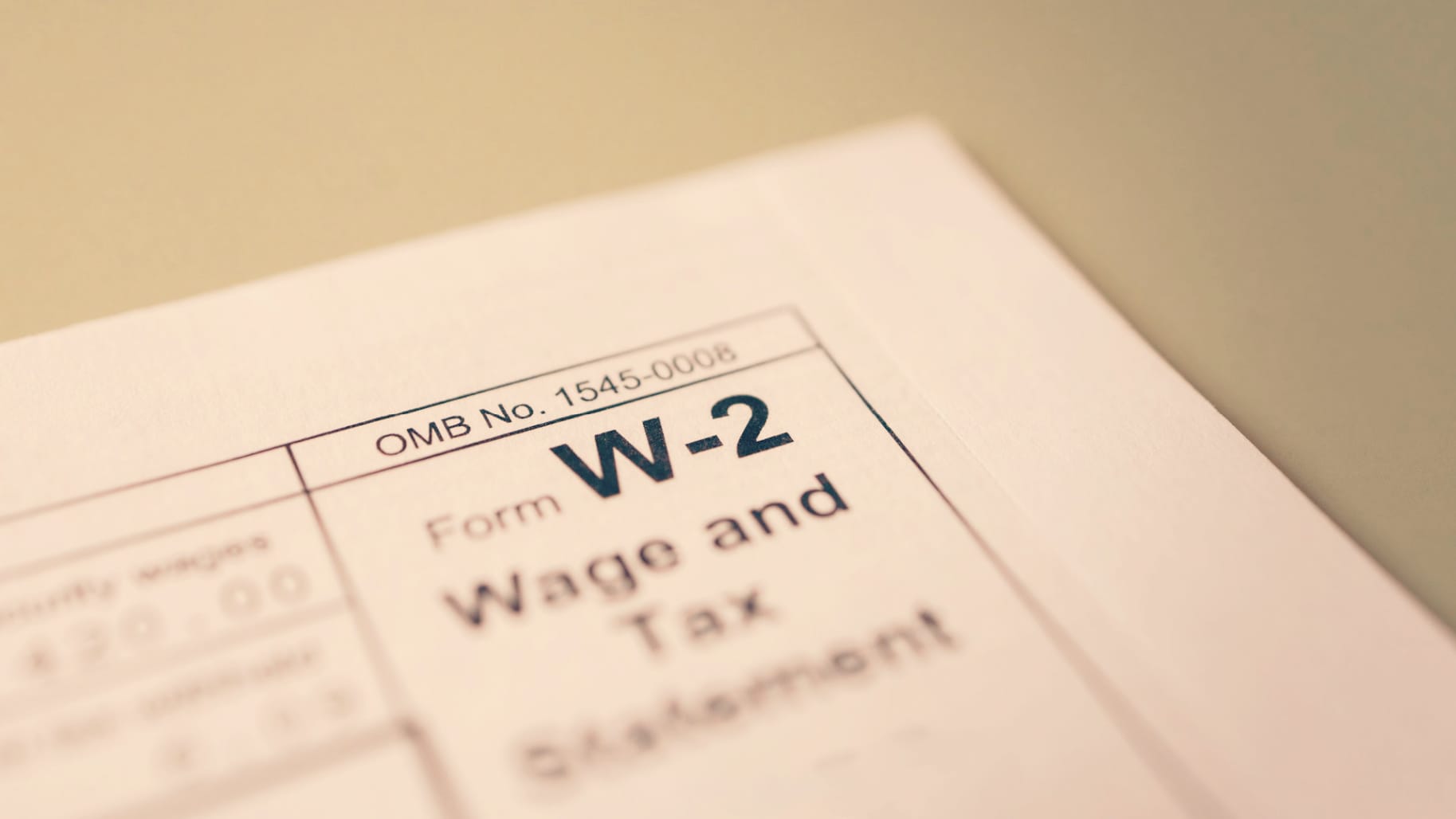
The headlines carry two worries about technology and work. One is the “gig” economy—precarious work paid per assignment, the kind food couriers do. “The rise of gig workers is changing the face of the U.S. economy,” per CNN. The other is that AI will put people out of work altogether. Dario Amodei, the chief executive of the AI company Anthropic, said in May 2025 that AI could get rid of half of all entry-level white-collar jobs.
What’s going on?
Strengthen The Signal.
Become a member, get your bearings, navigate your world.
Thoughts or questions: concierge@thesgnl.com.
Music
‘Just Another Moment’
The English singer-songwriter Michael Kiwanuka had to push back the release of his album Fudge by almost a year …