Don’t mention the bomb
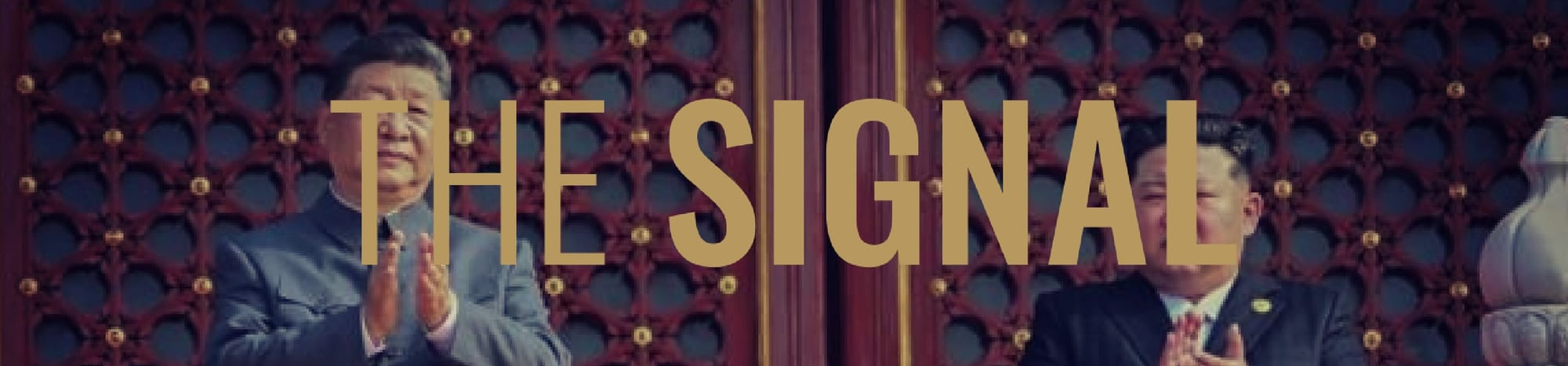
Recently: Why would football supporters cheer on dictators buying their clubs? David Goldblatt on identity, loyalty, and what all this money really pays for.
Today: China’s Xi Jinping visits North Korea—and for once, for some reason, doesn’t seem to care about Kim Jong-un’s nuclear program. … The Iran-Israel truce is back on, depending on what happens in Lebanon. … &c.
For members: Why do so many people hate the idea of capitalism? Justin Callais on a shifting mood—and the enduring popular support for the reality of the free market.
+ New music from Ed O’Brien …
Seven years away
Xi Jinping doesn’t travel much anymore. He averaged about 14 foreign trips a year before the pandemic; now it’s closer to six. He hosted dozens of leaders in Beijing this year—Russia’s President Vladimir Putin, U.S. President Donald Trump—never leaving China for them.
On Monday, however, he flew to Pyongyang, his first foreign trip of 2026, to a capital no Chinese leader had visited in seven years. North Korea’s supreme leader, Kim Jong-un, met Xi on the tarmac—Kim’s wife beside him, along with children bearing flowers—calling him “the greatest state guest,” as the two men pledged “strategic coordination.” The welcome was warm, but the timing was strange. Days before Xi arrived, Kim had toured a plant producing weapons-grade nuclear material and promised to expand it "at an exponential rate." Denuclearization, the main thing Beijing has wanted from Pyongyang, never made the official agenda.
So why this trip, and why now?
Part of the answer may be in what Xi published in North Korea’s Workers’ Party paper the morning he landed. He’d done the same before his 2019 visit. This one, according to Hong Min of the Korea Institute for National Unification in Seoul, focuses on “a community with a shared future” and “opposition to hegemony.”
Hong sees a major policy reversal here: China no longer brokering Kim’s disarmament, but drawing a nuclear North Korea into Beijing’s longer contest with Washington. South Korea’s unification ministry urges caution, saying one article can’t tell you where policy is heading—surely true as far as it goes. But the shift is hard to miss: In 2019, Xi’s article pressed for talks on the North’s weapons; this one leaves them out entirely.

Meanwhile
- Named and barred. The Pentagon added Alibaba, China’s biggest online retailer, the search engine Baidu, and the electric-car maker BYD to its roster of firms it says serve China’s military, barring them from U.S. defense contracts within weeks. All three companies claim their inclusion is baseless. The list now names 188 Chinese entities, up from about 134 a year ago. Less than a month ago, Trump and Xi shook hands on a trade truce in Beijing.
- The Lebanon clause. Iran and Israel stood down on Monday after their first direct strikes since April’s truce. Trump called for the firing to stop; hours later, Iran announced a halt. Benjamin Netanyahu said Israel had ceased its attacks too but stopped short of calling it a ceasefire, and Iran warned it would resume if Israel keeps striking southern Lebanon.
- Trouble under still water. NASA names the four astronauts for next year’s Artemis III lunar mission. … The agency meanwhile reported a worsening air leak aboard the International Space Station. … Students protest across Iran over new university-entrance rules. … A magnitude-7.8 earthquake off the southern Philippines kills at least 37. … Hours later, a magnitude-6.1 tremor struck off Cuba, the strongest recorded in the Gulf of Mexico since 1950—oddly, mid-plate, nowhere near a known fault.
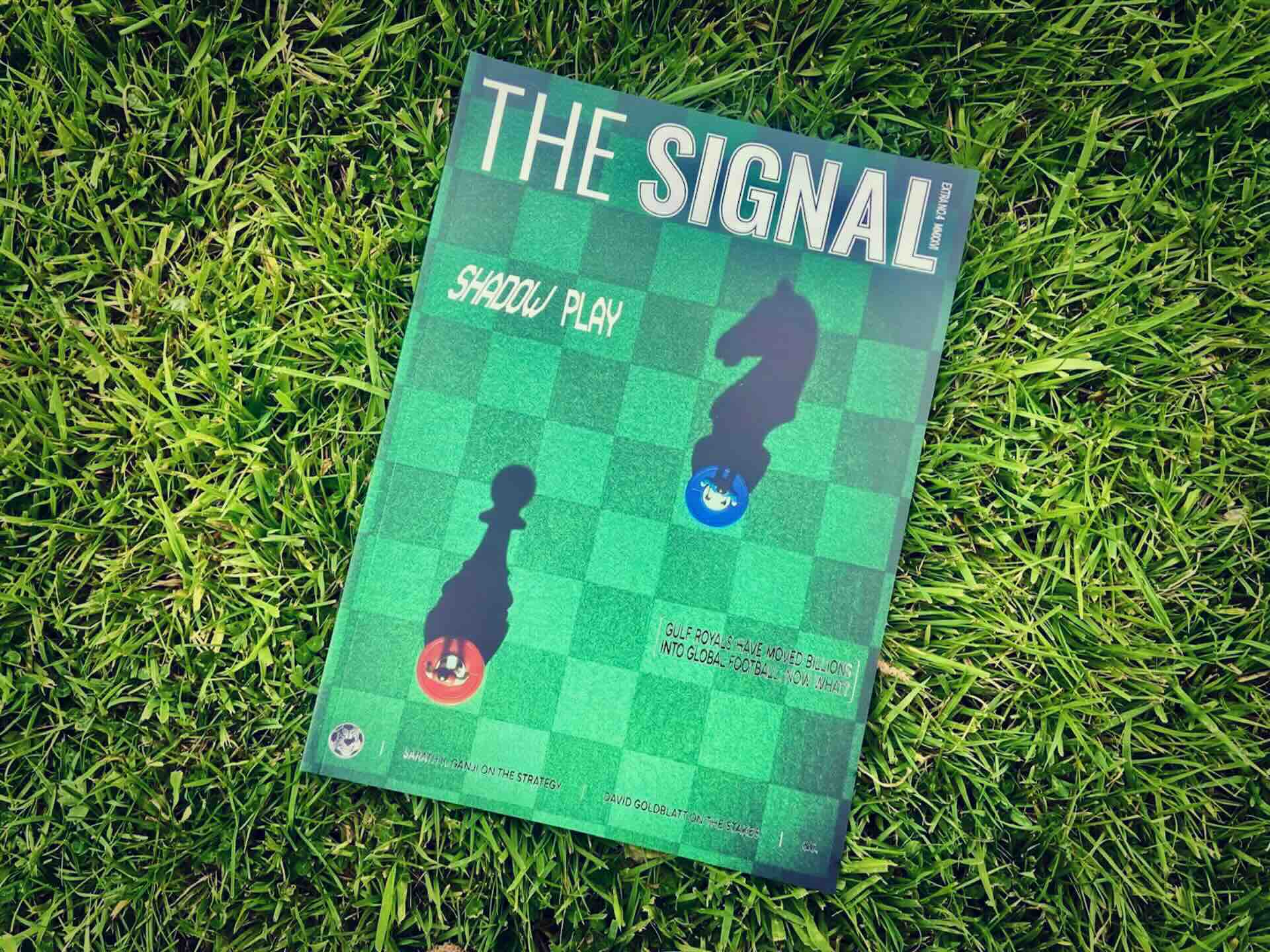
Gulf royals have moved billions into global football. Now what?
Read Shadow Play, a new, limited-run print magazine from The Signal.
On sale now in the U.S. and select markets globally.
Feature
By any other name
Why do so many people hate the idea of capitalism? Justin Callais on a shifting mood—and the enduring popular support for the reality of the free market.

This January, New York City elected Zohran Mamdani—a man who sees himself as a “democratic socialist”—as mayor of one of the world’s great financial centers. Of course, one election doesn’t make a country. But more and more Americans are now suggesting they might see themselves as democratic socialists, too. Might.
Gallup’s polling from 2010 to 2025 shows the split. Among Republicans, the numbers have barely moved: Favorable views of capitalism have stayed above 70 percent, socialism mostly below 20. Among Democrats, both have shifted. Favorable views of capitalism fell from 51 to 42 percent; socialism climbed from 50 to 66.
So a lot of Americans now say they’re against capitalism. Why?
Justin Callais is the economics editor for The Signal and the chief economist at the Archbridge Institute. Callais says many people—especially those who came of age after the Great Recession—have good reason to view capitalism dimly. The U.S. government bailed out the banks and left homeowners largely on their own, which is fair to resent. So when they hear “capitalism,” they’re picturing the American economy as it is now, one they feel hasn’t served them—or most Americans—the way an American economy should.
But even those reacting negatively to the word “capitalism” still tend to back free-market economics. Some polling shows they’d almost always prefer free competition among private companies over government planning. Altogether, it’s hard to interpret, Callais says—but there are reasons to think it’s not so much capitalism that’s losing favor as the idea of it …
Your loyal guide to a changing world.
Membership with The Signal means exclusive access to premium benefits:
* In-depth feature interviews with our network of contributors
* The despatch, our weekly current-affairs and cultural-intelligence briefing
* Early access to new products, including print extras
It also means vital support for a new, independent venture in current affairs.
New music
‘Blue Morpho’
Ed O’Brien—of Radiohead—has a new solo record, Blue Morpho, named for a species of butterfly. The album blends folk and electronic music, with finesse, detail, and warmth throughout. But it surprises you, too.