All in favor

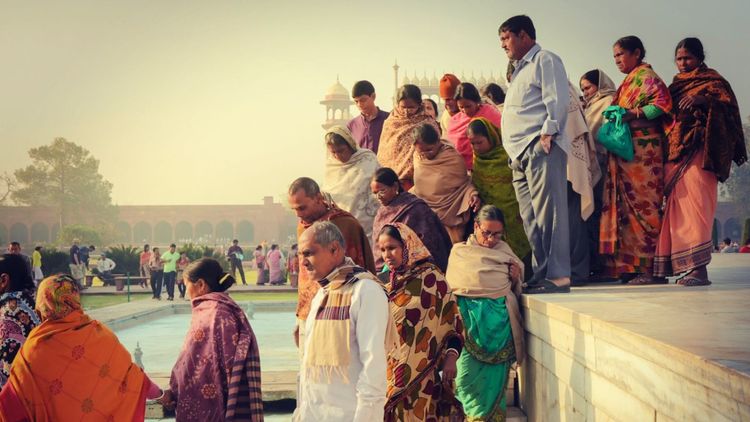
Recently: More and more countries are banning kids from social media. Will it work?
Today: Talks on voting in Venezuela open without its Nobel Peace laureate. … Britain goes after the money arming Sudan’s militia—but not the Gulf state supplying it. … &c.
For members: Why have buildings gotten so ugly? Samuel Hughes on a status game that’s been playing out in contemporary architecture—and how elite taste may be starting to turn. … & … What happened to higher education? Chad Wellmon’s new book, After the University.
+ New music from Beck …
Stuck with it
In January, American forces flew into Caracas in the dark and carried Nicolás Maduro off to a jail cell in New York, leaving his vice-president, Delcy Rodríguez, to run Venezuela; within weeks, the U.S. had cut an oil deal with her government. Which it did over the heads of the people who’d actually won: In the 2024 election, Edmundo González beat Maduro, but the regime’s electoral council declared Maduro the winner anyway. The opposition’s real leader, María Corina Machado, has been in exile, a Nobel Peace laureate the regime has said it would jail if she were to come home. On August 1, the two sides will meet to arrange a new election—but the Americans have picked the exile Dinorah Figuera over Machado to speak for the opposition.
What happens now?
For the regime, that election would seem an obvious danger. It could, as elections do, take back everything the Americans handed Rodríguez—the presidential palace, the oil deal, the lifted sanctions—and give it over to the side that won in 2024. Rodríguez has no apparent intention of letting it, and the U.S., content with the ally it has in Caracas, is likely in no more hurry for a real vote than she is.
But they’ve promised one all the same, and a promise like that is hard to take back. And anywhere an unelected government tries to hold on to power, even an election that government can control tends to have repercussions it can’t. Meaning it’s formally obliged to hold a vote it doesn’t want to hold—yet can’t openly drop. The law gave the regime until July 3 to set a date for the vote; the regime let that deadline pass; and it’s scheduled nothing since. … See “Get back.”

Meanwhile
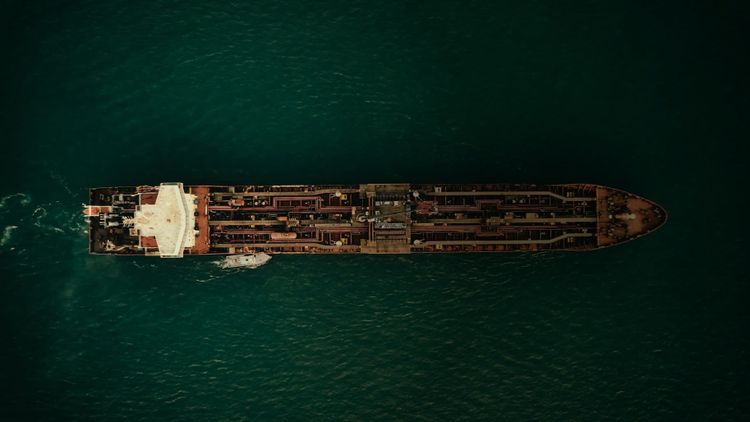
- The war reaches the water. A Russian missile hit a seven-story apartment block in Odesa before dawn on July 15, killing three; Moscow said it had also struck the ports of Odesa and Chornomorsk. Overnight, Ukrainian drones hit some 20 Russian vessels across the Black Sea, forcing Moscow to throttle the Sea of Azov, which carries about a quarter of its grain exports. Each side is now hunting the other’s way out to sea.
- Following the gold to Dubai. Britain sanctioned 11 people and firms on July 16 for turning Sudan’s gold into money for the Rapid Support Forces, the militia fighting the army—among them a financier and three Sudanese companies in Dubai. Foreign Secretary Yvette Cooper’s department warned that El Obeid, ringed by the RSF, could become “the scene of another mass atrocity.” The United Arab Emirates—accused of arming the RSF, home to the named firms—wasn’t on the list.
- The name in the numbers. The U.S. sets 25 percent tariffs on Brazilian goods from July 22; Lula calls it election-year pressure. … Iran tells the Houthis to be ready to close the Red Sea if the U.S. strikes its power grid. … Uganda’s jailed opposition leader Kizza Besigye refuses state-picked lawyers at his treason trial. … Nicaragua cuts ties with Italy rather than surrender a Red Brigades fugitive from the 1978 murder of Italy’s Aldo Moro. … & In Guatemala, archaeologists read the first known Maya astronomer’s name off his own 1,200-year-old star tables.
Your reading list for a changing world
Browse The Signal’s bookshop—organized into collections that track key themes in our investigations of current affairs: what’s driving the information wars, why societies are fracturing, how power keeps reinventing itself. Contributors’ titles alongside books we've featured in our coverage.
Feature
The language of beauty
Why have buildings gotten so ugly? Samuel Hughes on a status game that’s been playing out in contemporary architecture—and how elite taste may be starting to turn.
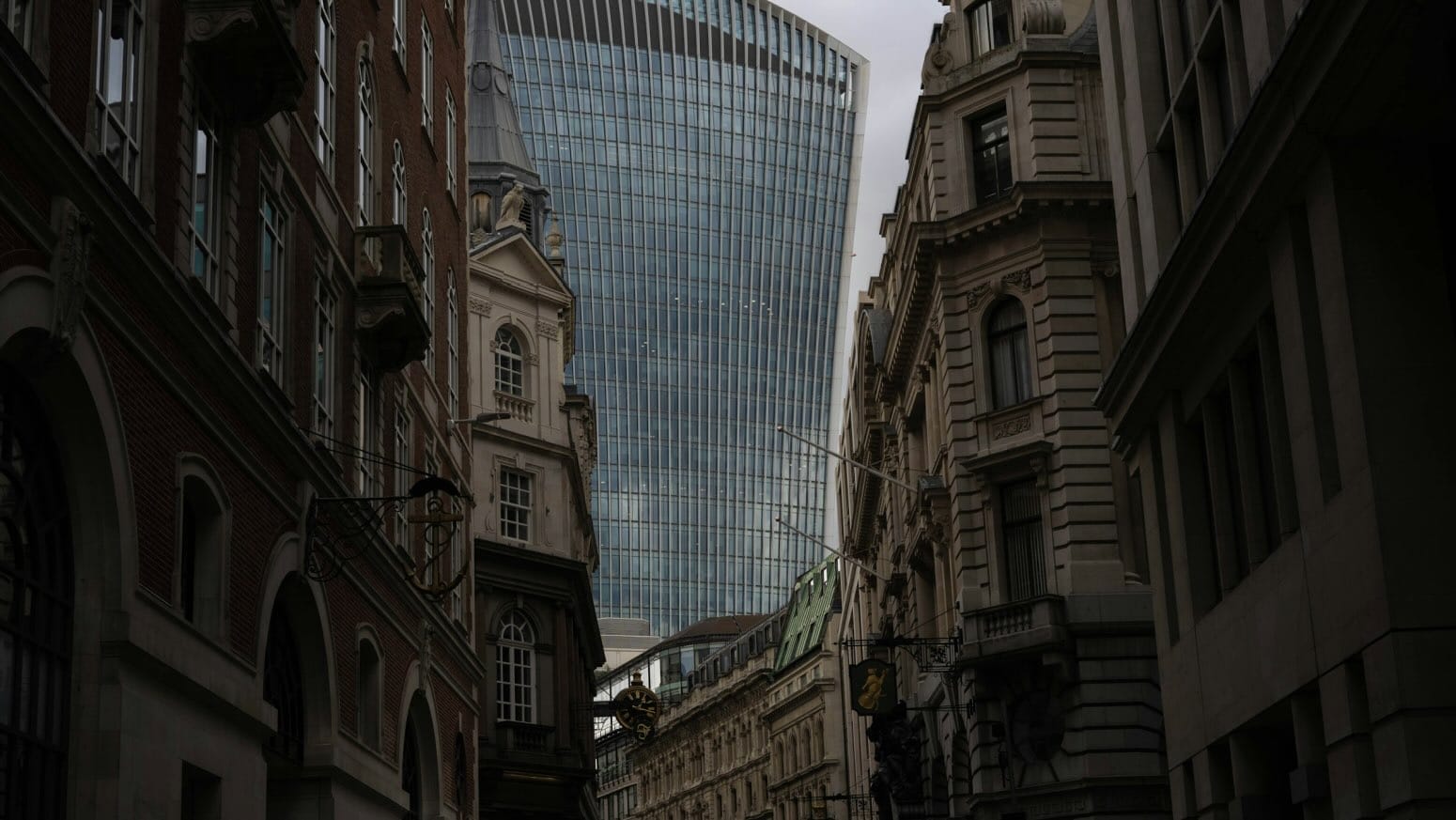
In August 2025, U.S. President Donald Trump signed an executive order, “Making Federal Architecture Beautiful Again,” making traditional and classical styles the federal government’s default for new buildings. It also directs the Administrator of General Services—the official who oversees federal buildings—to refer any planned building in the brutalist or deconstructivist styles to the White House before the government sinks real money into it. Those are the two styles the order is out to stop: Brutalism is the heavy, raw-concrete look of the mid-20th century; deconstructivism, the fragmented, deliberately off-kilter forms that came after.
At the same time, the president is remodeling at his own current address: Over the winter, Trump had the entire East Wing torn down, without review by the National Capital Planning Commission, to make room for a new White House ballroom—a project whose projected cost has since climbed to a reported US$600 million, roughly half of it public money.
Whatever you might make of those moves, Trump is tapping a broad and deeply held feeling in American life: that new buildings just aren’t as beautiful as old ones. Tourists in Cambridge, England, stop to photograph the old colleges; no one poses in front of the corporate blocks by the railway station—the ones you could drop into San Francisco or Stockholm and no one would notice.
Are new buildings really less beautiful than old ones?
Samuel Hughes is a research fellow at the Centre for Policy Studies, a London think tank. Hughes says new buildings draw a familiar complaint—that they all look the same, boxes of glass, steel, and concrete. There’s something to that, especially for offices. But it isn’t really true that new housing looks identical from one city or country to the next. When people say new buildings are too boxy, Hughes says, what they mean is that they’re not beautiful enough—because plenty of old buildings that people are perfectly happy to live with were boxier still.
There’s solid evidence, he says, that most people really do find contemporary buildings less beautiful than older ones. The reasons are many, but one of the more important, in Hughes’s telling, is the rise of an anti-democratic strand of elite taste in the 20th century—one that, given who today’s elites are and how loosely information now travels, may be on its way out …
Books
‘The kind of citizens our country needs’
What happened to higher education? Chad Wellmon, After the University.
On July 1, a new rule from the U.S. Department of Education took effect that will judge American colleges by a single measure: how much their graduates earn. Programs whose graduates fail to out-earn workers who never enrolled stand to lose access to federal student loans, and schools where such programs dominate could lose their federal aid altogether.
It’s a blunt answer to a question universities have long preferred to leave open—what a degree is for—and it lands as public faith in them is collapsing. About 70 percent of Americans now think higher education is headed the wrong way; a decade ago, 57 percent expressed a great deal or quite a lot of confidence in it, and by 2024 that had fallen to 36 percent, a historic low.
Here in The Signal, the Yale sociologist Julia Adams and the legal scholar Sarath Sanga trace the collapse to the university’s own drift. The top three reasons, Sanga says, are “cost, cost, and cost”—tuition on a runaway train while the worth of a degree slides. But under the grievances lies something harder to fix: universities have taken on so much—Adams points to an “explosion of student-run extracurricular organizations,” a secondary curriculum crowding out the first—that they’ve lost their grip on what they’re for. No one chose the runaway train, Sanga says; the university just “didn’t have a governance structure that stopped it.”
Your loyal guide to a changing world.
Membership with The Signal means exclusive access to premium benefits:
* In-depth feature interviews with our network of contributors
* The despatch, our weekly current-affairs and cultural-intelligence briefing
* Early access to new products, including print extras
It also means vital support for a new, independent venture in current affairs.
New music
‘Ride Lonesome’
Out of L.A., Beck is back—and back in mourning, in the register of Sea Change (2002) and Morning Phase (2014). This new single is the title track of an album due out on September 8, reuniting him with the band and producer from both earlier records.