‘The Kingdom … does not seek escalation’

Recently: Why can’t the Pentagon make what Ukraine makes? Matthew Ford on the oldest rule in war.
Today: In Kuwait, Iranian fire kills a worker at a company belonging to Iran’s best oil customer. … Cuba’s communist government opens whole sectors of its economy to private business. … &c.
For members: Can Europe’s booming defense industry save its dying factories? Sander Tordoir on the problem with the story Germany’s manufacturers are telling themselves. … & … What is conservatism anymore? Emily Jones’s new book, The Disraeli Myth: The Making of a Conservative Tradition.
+ New music from Chelsea Wolfe …
Everyone else’s war
Saudi and American fighter jets flew together over eastern Iraq this week, striking what U.S. Central Command—CENTCOM—describes as logistics and weapons sites belonging to Iran’s Revolutionary Guard Corps and the militias it directs. CENTCOM, which runs American military operations across the Middle East, says the strikes were answering more than 30 drone attacks the IRGC had directed over the previous 72 hours. It was the Saudis’ first combat role in the American war with Iran. Their defense ministry says Saudi Arabia “does not seek escalation but will respond to any aggression it faces.” The defense minister himself, Prince Khalid bin Salman, went to the White House and asked U.S. President Donald Trump and Vice President J.D. Vance to wind the war down.
What are the Saudis doing?
According to CENTCOM, American defenses have intercepted every missile Iran fired at U.S. forces this week. At the same time, the Saudis have been fending off one Iranian drone after another. Jordan’s air defenses apparently shot down five of them on Thursday. Hours later, an Iranian strike reportedly hit a Chinese company’s building in northern Kuwait, killing an employee. In Washington, the Saudis said they did not intend the strikes in Iraq as a move toward a bigger war, and they would rather the Americans talked to the Iranians than bombed them. Israel’s Prime Minister Benjamin Netanyahu was in the same building this week arguing it the other way. The Saudis have also opened their own channel to Yemen’s Houthis—the militia that was attacking their tankers in the Red Sea last week—while asking the Americans to stay out of it.

Meanwhile
- Missent. Russia fired 74 missiles, many of them ballistic, and hundreds of drones at western Ukraine early on Thursday. One of them crossed into Poland and blew a 10-meter crater in a field in Lublin province, about 100 kilometers from the Ukrainian border. Poland’s prime minister, Donald Tusk, said Russian missiles had violated Polish airspace; Ukraine’s acting foreign minister, Andrii Sybiha, identified this one as a Kh-101 cruise missile. … See “Second thoughts.”
- Everything but the cigars—and the media. On Wednesday, Cuba lifted 46 of its 125 prohibitions on private business, letting private companies run pharmacies, import and resell medicine, bring in electric vehicles, and extract oil. Tobacco, the internet, newspapers, and radio stay with the state. President Miguel Díaz-Canel said the country “simply cannot continue on its current course.” The oil blockade the U.S. imposed in January has deepened blackouts and shortages of food and medicine.
- ‘There’s something magical about these pieces.’ American commanders in Jordan tell troops their phone videos are showing Iran where its missiles land. … Washington weighs blocking France’s next ambassador after French diplomats said the U.S. is no longer a human-rights beacon. … Burma agrees to take back 5,000 Rohingya from Malaysia, nine years after driving them out. … Ebola passes 3,200 cases in the Democratic Republic of the Congo, where hunger is breaking the quarantine. … & In southwestern Germany, archaeologists find two thumbnail-sized birds carved from mammoth ivory 40,000 years ago—some of the oldest artworks ever discovered.

Can’t hear yourself think?
The David Lynch Foundation helps bring calm to veterans, students, and communities in need.
Feature
Cars before drones
Can Europe’s booming defense industry save its dying factories? Sander Tordoir on the problem with the story Germany’s manufacturers are telling themselves.
“This is about spending more, spending better,” Mark Rutte, secretary-general of the North Atlantic Treaty Organization, said last year. Europe is certainly spending more. World military expenditure reached US$2.9 trillion in 2025, according to the Stockholm International Peace Research Institute, with European spending up by 14 percent. The surge isn’t Europe’s alone: China’s military budget grew by 7.4 percent, Japan’s by 9.7, and Africa’s total by 8.5.
In the United States, the idea that military spending could stimulate the rest of the economy—“military Keynesianism”—caught on with Jake Sullivan, the former U.S. national security adviser, who argued that defense spending would feed a “modern American industrial strategy.” Perhaps Europe’s rearmament could do its part. The Trump White House says it is working to make sure that money helps “reindustrialize America.”
Europe’s own industry, meanwhile, is reeling. As Adam Dixon says here in The Signal:
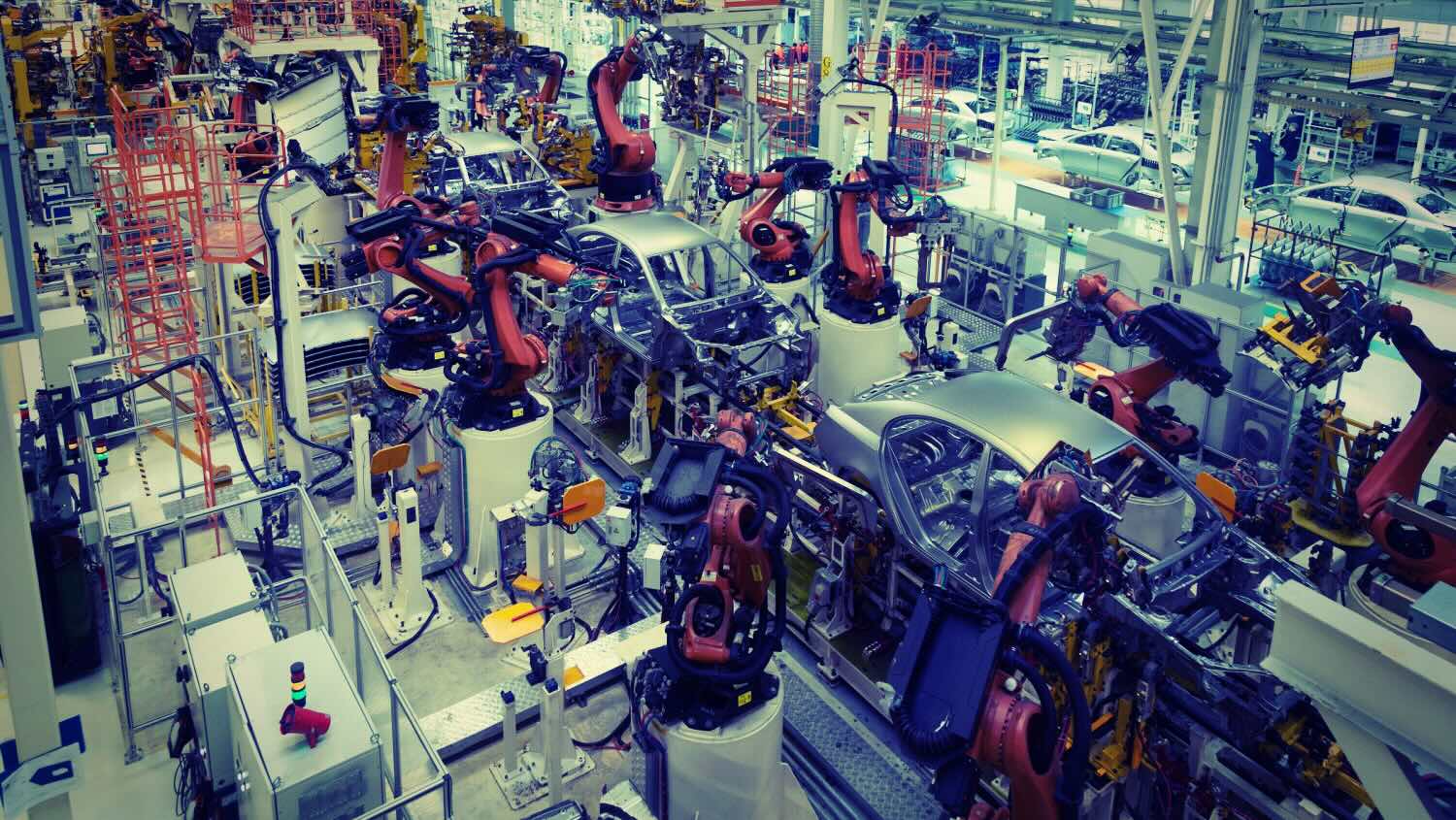
What’s saving some of Europe’s industrial capacity, though, is the rearmament of European militaries—because governments tend to favor local suppliers on both economic-security and national-security grounds. … The Dutch industrial conglomerate VDL Groep owns a factory in Limburg, in the south of the Netherlands, that long held a contract with BMW. When BMW didn’t renew the contract in 2024, they laid off some 2,000 workers. The factory has now reopened—on a new contract with the Dutch military.
That’s one factory, on one contract. How far can rearmament carry the rest?
Sander Tordoir is the chief economist of the Centre for European Reform in London. Tordoir says Europe’s rearmament won’t rescue its industry. What Europe is mounting is not one rearmament program but dozens of national ones, small-scale and barely coordinated—expensive and inefficient. A car plant here and there can pivot to weapons; that won’t move the wider economy much. The White House, though, may be onto something: Poland is ramping up its spending fast, and it keeps buying American.
There is hope, Tordoir says, though it runs the other way around. Governments in Europe and America are coming to see that military orders alone will never sustain a battery supply chain China can’t squeeze—that takes a civilian market too. Which may mean Europe can’t build the weapons it wants until it saves the car plants it is losing …
Books
‘Different zones’
What is conservatism anymore? Emily Jones, The Disraeli Myth: The Making of a Conservative Tradition.

This month, the former British prime minister Liz Truss convened the inaugural London edition of the American Conservative Political Action Conference (CPAC). Its headliner was Nigel Farage, leader of Reform UK, the insurgent party to the right of the British Conservative Party—whose own leader, Kemi Badenoch, was nowhere on the scene. The Conservatives are one of the most electorally successful parties in the world, yet they’re under mounting pressure from Reform—who could quite possibly wipe them out in the next election.
Conservatism is fracturing, not only in Britain: It’s become unsettled across Europe and around the world, as its relationship to the political right becomes more ambiguous. To some, it’s started to seem more a holdover term from a waning age than a living tradition.
Is it?
Your loyal guide to a changing world.
Membership with The Signal means exclusive access to premium benefits:
* In-depth feature interviews with our network of contributors
* The despatch, our weekly current-affairs and cultural-intelligence briefing
* Early access to new products, including print extras
It also means vital support for a new, independent venture in current affairs.
New music
‘Cold’
Off to the misty Sierra Nevada in Northern California, for gothic folk—and a piano-led track from Chelsea Wolfe. It’s out of season—chilly and autumnal—without the heavy guitars of Abyss (2015) or Hiss Spun (2017). Her new record, The Dark, comes out on August 21.