Just passing through
Recently: Can Europe’s booming defense industry save its dying factories? Sander Tordoir on the problem with the story Germany’s manufacturers are telling themselves. … & Two AI models broke out of a sealed test and hacked the company that held the answers. Eight days later, the people who built them asked Washington to figure out how to hold their industry back. Now what?
Today: In Ceuta, a crowd bigger than half the city crosses from Morocco but turns around within 48 hours. … On a Russian beach, a drone kills seven people, but the video points at Russia’s own air defenses. … &c.
For members: What could disarming Hezbollah actually settle? Vali Nasr on the last time Israel occupied Lebanon. … & In France and Spain, the fires are making their own weather.
+ New music from Danny L. Harle x Doss …
‘A reliable partner’
On Wednesday of last week, men began swimming from Morocco around the end of the breakwater at Tarajal, where the barrier runs into the sea. By Friday, Spanish officials counted 60,000 of them inside Ceuta, a Spanish city of 84,000 on the African coast. Authorities in Spain estimate the dead at 72; Morocco’s interior ministry, 11.
In 2021, some 10,000 crossed here in two days. At the time, Brahim Ghali, the leader of the Polisario Front—which fights against Morocco in Western Sahara—was in treatment in a Spanish hospital. Morocco holds most of Western Sahara and claims all of it; the Polisario wants it to be a country of its own. Back in 1991, the United Nations promised a referendum to settle the question; ever since, Morocco and the Polisario have argued over who should get to vote in it. As Western Sahara’s former colonial overlord, Spain had backed that vote for decades. Within months of the crossings, Spain stopped backing it and endorsed Morocco’s claim instead. Algeria, the Front’s backer, cut Spain off over that, and Spain’s prime minister, Pedro Sánchez, went to Algiers on July 20 to make up. Nine days later the crossings began—and Spain’s interior minister, Fernando Grande-Marlaska, says cooperation with Morocco let his government reverse them inside 24 hours.
What is Morocco after?
Its authorities in Rabat deny using migration against Spain and blame criminal gangs; Sánchez uses the same language. Myriam Cherti, a migration researcher at Oxford University, says social media carried crossing instructions for days beforehand. Both can be true. A government that wants people crossing its border doesn’t have to send them—it only has to take its police off the line. Morocco needs Spain to keep backing its claim to Western Sahara, and Sánchez’s trip to Algiers suggested Spain might stop. Morocco has never accepted Ceuta and Melilla as Spanish either—and still wants them back. Italy suspended passport-free travel with Spain for a month, and 22 governments met on Tuesday to warn against “the instrumentalization of migration,” before blaming Spain’s own migrant amnesty for it. Grande-Marlaska says Morocco is no threat to Ceuta or to Spain, and calls it a reliable partner. At Tarajal, Spain has laid a 500-meter floating boom around the end the swimmers came past.

Meanwhile
- Who gets the inbound lane. Qatar says mediators are making progress toward ending the U.S.–Iran war, and the price of oil has fallen more than four percent. Iran denies negotiating with Washington, saying its talks with Oman cover only safe lanes in and out of the Strait of Hormuz. A senior Iranian source said Tehran wants full control of everything sailing in. On Tuesday, an unidentified projectile hit another ship in the strait. The crew abandoned ship. One seafarer is missing.
- Under the sun loungers. On Monday, a drone hit a crowded beach on Russia’s Black Sea coast, killing seven people, three of them children. Veniamin Kondratyev, the Krasnodar governor, called it a deliberate Ukrainian strike on civilians—a war crime, if he is right. But video records gunfire a second before the explosion, suggesting Russian air defenses brought down the drone onto the crowd. “We covered ourselves with sun loungers,” said one of them. Ukraine has said nothing.
- Face-down in a Roman street. Israel refuses to start withdrawing from Gaza, and the UN-backed board there agrees Israeli troops should stay until Hamas disarms. … The Ugandan opposition leader Kizza Besigye collapses at his own treason trial, as prosecutors ask to try him in absentia. … The general who seized power in Burma in 2021, now its president, disowns the peace deal he signed with his neighbors. … EU law now requires chatbots to tell you they’re not human. … & In western Turkey, archaeologists find a now-2,500-year-old statue that Roman builders laid face-down in a road, preserving its face intact for 1,800 years.

Wary of fast fashion?
Shop Congo Clothing Company and
make a difference—in style.
From the files
The war after the war
What could disarming Hezbollah actually settle? Vali Nasr on the last time Israel occupied Lebanon.
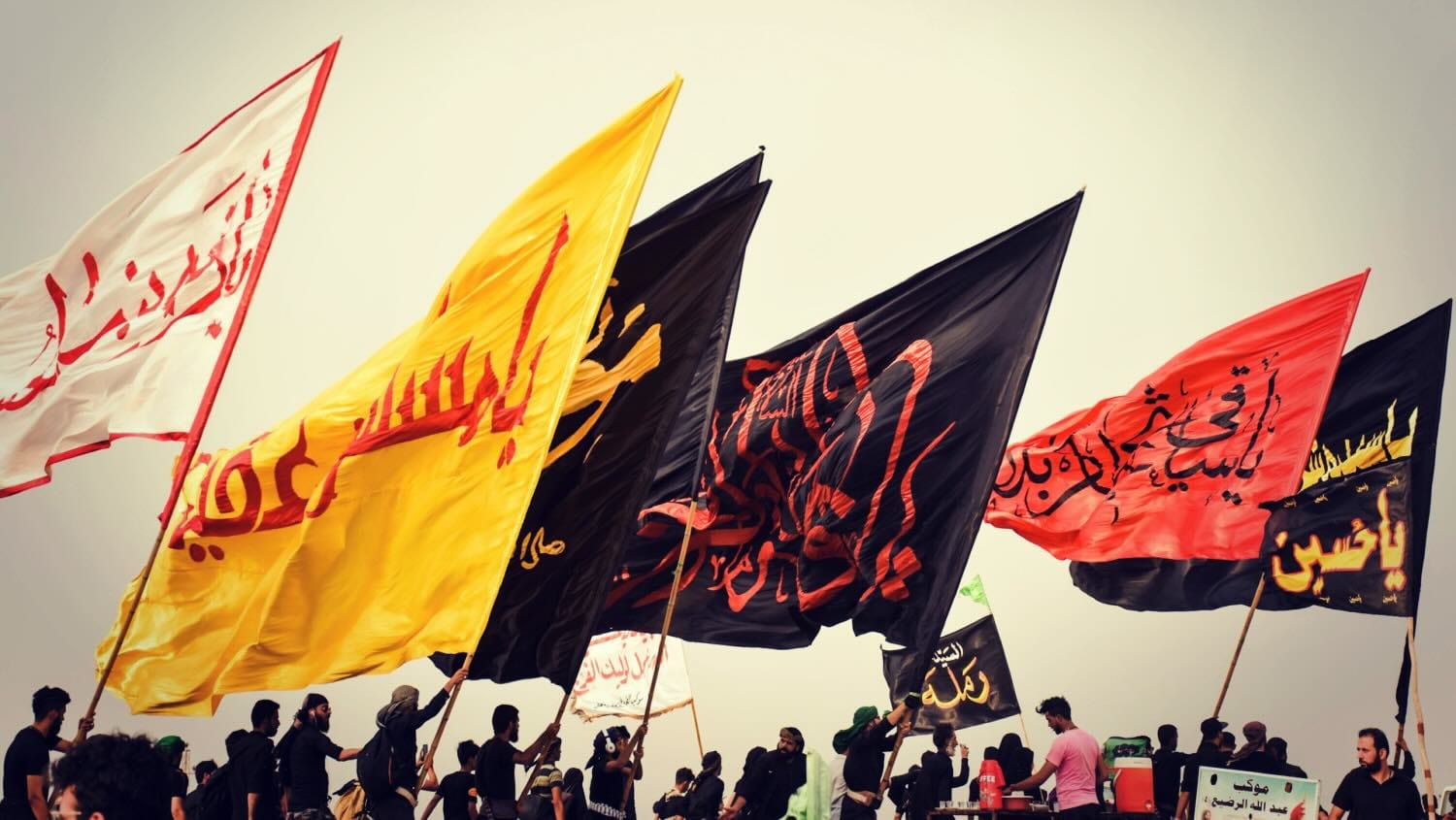
In Rome on Tuesday, Lebanese and Israeli teams sat down for the seventh time to arrange something the two governments were supposed to have settled two years ago: disarming the longstanding militia Hezbollah—the “Party of God.” A framework the two sides signed in June already commits Lebanon to it, alongside a phased Israeli withdrawal from the south. Perhaps unsurprisingly, Hezbollah’s leader, Naim Qassem, called the talks a road to “shame, humiliation, and successive compromises.” The group still refuses to give up its weapons. Israel’s campaign has killed more than 4,300 people since March, according to the Lebanese government—and Hezbollah’s big patron in Tehran, Ali Khamenei, has been dead since February. Israel has broken the Iran-sponsored “Axis of Resistance” that once ran from Beirut to Sanaa as a fighting force. Still, Hezbollah won’t disarm.
Why not?
Vali Nasr took the question up in The Signal a year before the current Iran war started. Knock out Iran’s allies, Vali says, and you change the region’s military composition without changing the dynamics that drive its conflicts. Why? Because those dynamics don’t depend mainly on Iran; they depend mainly on the Palestinian question and on an array of broken states, none of which can exactly surrender or come to a negotiating table. Vali’s case is historical: In 1982, Israel invaded Lebanon, destroyed the Palestine Liberation Organization—then the main force of Palestinian nationalism, in exile, operating out of Beirut—and occupied the country’s south. Hezbollah formed in that context, to fight the occupation, and by 2000 it had driven Israeli forces out. Win the war, Vali says, and you can be left with the same country, the same grievance, and the same fight under a new name.
Which appears now to be the bind in Rome: The Lebanese government has committed to disarming a group it has no power to disarm, and seven sessions in, that group hasn’t handed over a thing.
From January 2025, Vali Nasr on what the fall of the Axis solved—and everything it left standing …
Weather report
Too hot to fight
44.833° N, -0.667° W
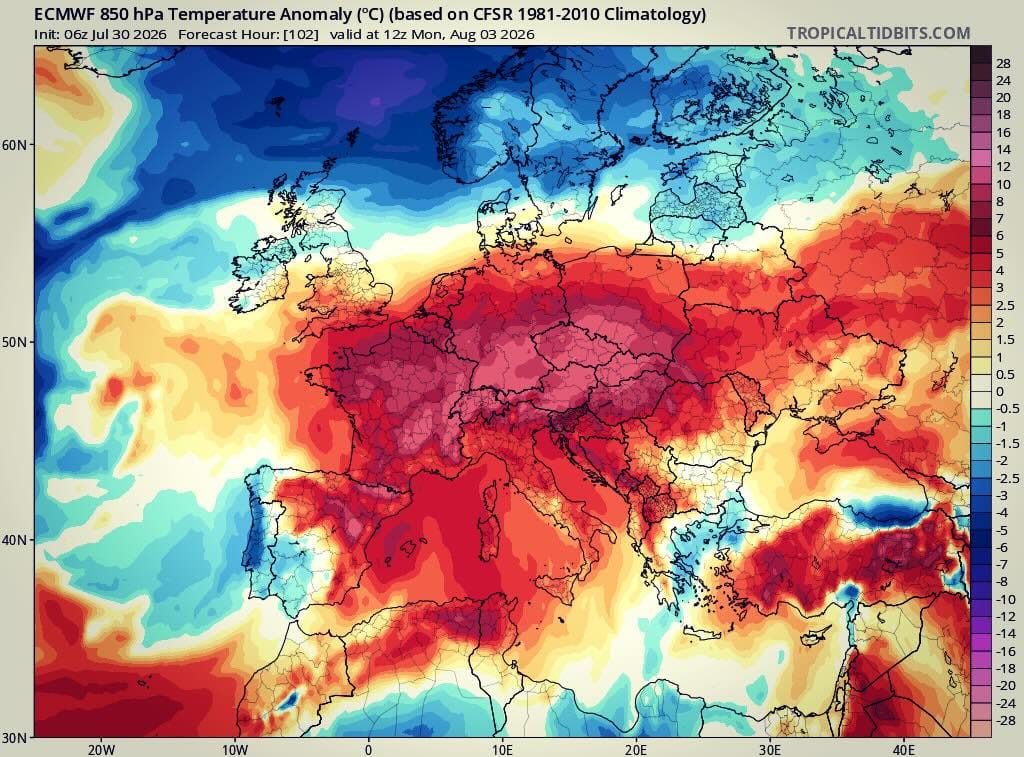
Western and Central Europe are into their fourth heatwave of the season, and the wildfires burning in France and Spain—and Greece, and Canada—are proving tough to fight in weather like this …
Your loyal guide to a changing world.
Membership with The Signal means exclusive access to premium benefits:
* In-depth feature interviews with our network of contributors
* The despatch, our weekly current-affairs and cultural-intelligence briefing
* Early access to new products, including print extras
It also means vital support for a new, independent venture in current affairs.
New music
‘Scramble’
Sound that feels sheer to the point of transparency from Danny L. Harle and Doss, with the French singer Oklou on vocals. It runs only 1:31, closing Side A of the new EP, Crystallise Divergence, which Harle and Doss have mixed like a club set of snippets rather than full tracks.