Dead air in Rio

Recently: Why does Europe run on American tech? Filippo Blancato on a bargain that seemed to make sense at the time.
Today: The Brazilian president says no, his rival pulls out, and the network calls the whole thing off. … In 1989, the same network aired its own edit of a presidential debate, and the candidate who lost now runs the country. … &c.
For members—from the weekend despatch: Why would the owners of Manchester City Football Club risk everything to cheat for years “on an industrial scale”? Standpoints from Sarath K. Ganji, Justin Callais, and Miranda Patrucić. … &c.
+ New music from Gash …
Developments / global
A programming note
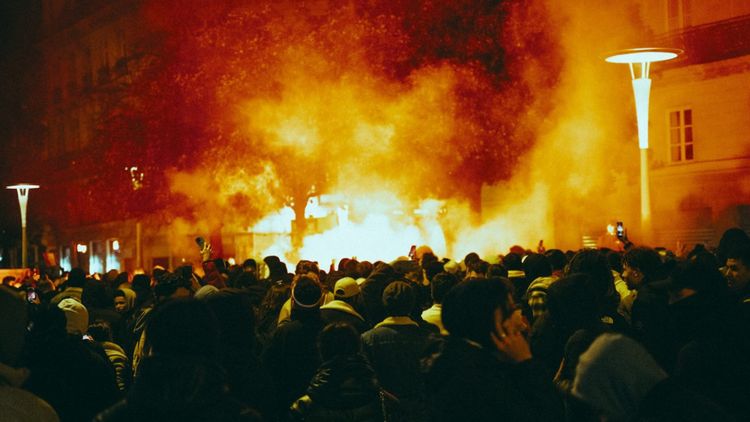
At 8:55 p.m. on Thursday, Brazil’s president, Luiz Inácio Lula da Silva, sat down for an interview with Flow, one of Brazil’s most-watched podcasts on YouTube. He’d turned down an invitation from TV Globo, the country’s biggest network, to the last debate before Sunday’s election, due to start at 9:30 p.m. in Rio de Janeiro. “You can’t bring a candidate who has 49 percent to debate one who has 1 percent,” he told Flow’s hosts. Hours earlier, a judge on Brazil’s electoral court had barred Globo from showing his empty chair, and a Supreme Court justice had ordered it to add a fifth candidate. Lula’s main rival, Senator Flávio Bolsonaro, whose father, the former president Jair Bolsonaro, is serving 27 years for plotting a coup, pulled out over “censorship” and went live on YouTube. Globo canceled the debate.
Excused absence
The electoral judge, Estela Aranha, says the repeated shot of an empty chair “may produce effects that go beyond simply informing the electorate.” The justice, Gilmar Mendes, says Globo’s own rules gave Renan Santos, who polls 3 percent, a place. Globo calls the rulings “undue interference,” and the newspaper Folha de S.Paulo calls them a “desperate scramble to favor the incumbent.” What are Brazil’s judges up to? Raquel Malenchini, an electoral-law professor in Fortaleza, says the shot would embarrass the absent candidate so much that the freedom to stay away would become “a duty to show up.” Bruno Andrade, an electoral lawyer in Brasília, disagrees: “If the absence gets used rhetorically, that’s part of political debate.”

The grilling
Here in The Signal, Lucan Way looked at election denial after Jair Bolsonaro’s supporters stormed Brazil’s Congress, presidential palace, and Supreme Court on January 8, 2023. Bolsonaro’s claim that his opponents stole the 2022 election got less traction than U.S. President Donald Trump’s, Way says, because so many of Bolsonaro’s own allies wouldn’t back it. Democracies tend to govern better than dictatorships, he says, as much as anything simply because in democracies, the people in power have to answer questions. Way mentions a friend high up in Canada’s Liberal government, relaying that whenever her colleagues prepare a decision, they imagine Question Period, when opposition members grill ministers in the House of Commons. “If they can’t answer the questions, most of the time,” Way says, “they’ll make a different decision.” … See “Import-export.”
‘Not balanced’
On Thursday, December 14, 1989, Lula, then a 44-year-old former union leader, met Fernando Collor de Mello, a 40-year-old governor from the northeast, for the last debate before the runoff in Brazil’s first direct presidential election since 1960. The next night, Globo’s evening news, Jornal Nacional, aired its own edited version of it. Globo later conceded the edit “was not balanced,” and said it had cut the debate like a football match, choosing each team’s best moments. In 2011, José Bonifácio de Oliveira Sobrinho, a former Globo vice president, said the network’s founder, Roberto Marinho, had ordered a montage in Collor’s favor. Collor won on December 17, with 53 percent.
Meanwhile
Eritrea cuts diplomatic ties with Ethiopia, which had thrown out Eritrea’s diplomats. … Pakistani air strikes hit two Afghan provinces; the Taliban say they killed nine people, and Pakistan says 22 “terrorists.” … Algeria’s parliament votes to put forest arsonists to death, though its last execution was in 1993. … Guinea-Bissau’s junta bars the president it overthrew, Umaro Sissoco Embaló, from coming home from Morocco before December’s election. … Trump calls new strikes on Iran after November’s U.S. midterm elections “possible”: “We have a lot of weapons.” … & Scientists in Cambridge and Berlin find magnetic fossils in 97-million-year-old North Atlantic seabed mud, the oldest sign yet of an animal steering by Earth’s magnetic field—possibly an eel.
Thoughts? concierge@thesgnl.com.

Gulf royals have moved billions into global football. Now what?
Read Shadow Play, a new, limited-run print magazine from The Signal.
On sale now in the U.S. and select markets globally.
The weekend despatch
The sheikh don’t like it
In the air
- Why would the owners of Manchester City Football Club risk everything to cheat for years “on an industrial scale”? Standpoints from Sarath K. Ganji, Justin Callais, and Miranda Patrucić.
From the files
- What do Middle Eastern states want with European football clubs? Ganji on autocratic governments’ ambitious move into the global game.
- What exactly is the problem here? Callais on the ambiguities of corruption.
- Why do dictators keep disrupting so many other countries? Patrucić on what China and Russia are doing in neighboring nations, developing states, and the world’s most powerful democracies.
Feature
- Why does Europe run on American tech? Filippo Blancato on a bargain that seemed to make sense at the time.
Books
- Who cares about rising temperatures? Alexander F. Gazmararian and Helen V. Milner, Climate Fault Lines: The New Political Economy of a Warming World.
Music
- What’s happening in Eau Claire, Wisconsin?
- & New tracks from Gash, Spacemoth, Justin Strauss, Gilla Band, & Queens of the Stone Age.
+ Weather report
- A mass of warm water the size of a small country reaches California this week, keeping the ocean a foot higher until spring …
Strengthen The Signal.
Become a member, get your bearings, navigate your world.
Music
‘Data Master’
Gash play swirling, slightly psychedelic indie rock. They are a five-piece out of Eau Claire, Wisconsin, a town of 70,000 with a music scene out of all proportion to it. “Data Master” runs on electronic flourishes and processed vocals, and it changes direction every time you think it has settled.
What’s going on in Eau Claire?