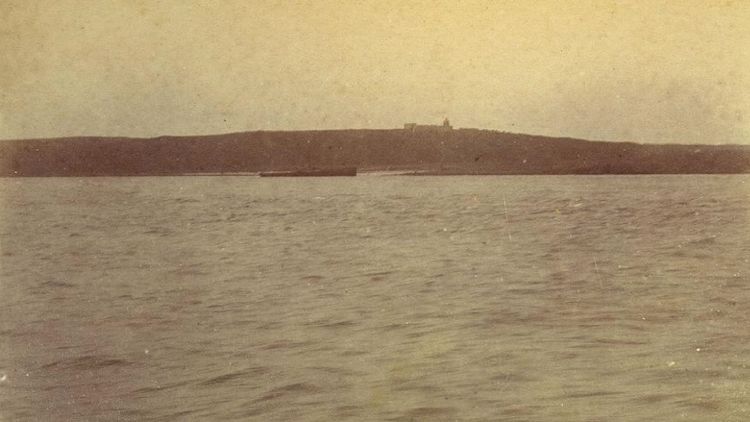
Barricades at the gate
Recently: Why did Beijing break its promise to Hong Kong so early? Minxin Pei on how it became just another Chinese city.
Today: A blockade over missing teachers spreads from one suburban high school to hundreds in 10 days. … In 1990, when students marched on Paris, the president received their delegation at the Élysée. … &c.
Feature: Why does Europe run on American tech? Filippo Blancato on a bargain that seemed to make sense at the time.
From the despatch: How strong is the Chinese-Russian “friendship,” really? Sören Urbansky and Martin Wagner’s new book, Entangled Empires: Four Centuries of China-Russia Relations.
+ New music from Chvrches …
Developments / U.K. & Europe
Thirty-five to a room
In Marseille on Thursday, attackers doused the principal of the Victor-Hugo high school and a deputy head with petrol, and across the city a crowd of students drove off a fire crew and burned its truck. In Nantes, arsonists set fire to the entrance of the Nelson Mandela high school. By the end of the day, police had detained 1,949 people, most of them teenagers. Students started the blockades on September 21 at one high school in Créteil, outside Paris, over missing teachers, and within 10 days the protests had spread to more than 300 schools. “There are 35 of us per classroom,” says Raphael, a 17-year-old in Strasbourg. “With 35 degrees in summer it’s unbearable.”
‘Stop the momentum’
On Thursday, Prime Minister Sébastien Lecornu’s government presented a 2027 budget that cuts 836 teaching posts in public secondary schools. The ministry points to 180,000 fewer pupils, and the education minister, Édouard Geffray, says the priority on education is “objectively preserved.” Lecornu has set up a crisis cell and blames France Unbowed, Jean-Luc Mélenchon’s hard-left party, which says it shares the students’ demands. Their own union, the Union syndicale lycéenne, has called a national march for October 6, and Geffray offers pupils an online consultation. Valérie Becquet, a sociologist of youth at CY Cergy Paris University, says governments mostly want “to stop the momentum” of a student movement, with arrests that frighten people. If the fight between government and party drowns out the students, “the movement will grow.”

Masters of the art
In the spring of 2023, as President Emmanuel Macron raised the retirement age without a parliamentary vote and protesters burned government buildings, the French journalist Marc Weitzmann saw “a deep crisis of authority and power.” The French “invented modern populism in the Revolution of 1789,” he says. “We’re the masters of the art.” Rebellion in France, he says, comes with a hunger for authority: “Deep down, we desire a strong power to rebel against.” The far left yelled and chanted at ministers in the National Assembly, he says, while the far-right National Rally said little, looked responsible on television, and then came first in a poll that spring. … See “Paris calling.”
Emergency plan
Back on October 15, 1990, about a thousand high-school students from the Paris suburbs marched to the Education Ministry over violence in their schools, from extortion to assault. Within a month, they were marching over crumbling buildings and missing teachers and supervisors too. On November 12, some 100,000 marched in Paris and 200,000 in other cities. Rioters looted shops, police blocked the bridges over the Seine, and officers made 91 arrests. That day, President François Mitterrand received a delegation of the students at the Élysée Palace, and his education minister, Lionel Jospin, announced an emergency plan for the high schools. Two days later, the government released 4.5 billion francs to pay for it.
Meanwhile
Russian drones hit Kyiv’s Southern Bridge twice in one day, the first Russian drone strike on one of the capital’s bridges. … Denmark’s army admits soldiers fired 43 rounds at a suspected drone last year as a Norwegian airliner passed overhead. … Greece asks its EU partners to let governments suspend asylum claims during migration emergencies. … Washington reportedly tells France and Germany to release emergency diesel stocks or face a U.S. export ban, to ease American fuel prices. … Britain’s 30-year borrowing costs top 6 percent for the first time since 1998. … & Archaeologists diving in Germany’s Lake Arendsee bring up timbers that hunter-gatherers cut 10,500 years ago, around 3,000 years before the region’s first farms.
Thoughts? concierge@thesgnl.com.

Don’t just see what you weigh …
Hume Body Pod 2.0 gives you 45 body-composition metrics in one 60-second scan, so you can see what’s changing.
Start learning your body, one scan at a time.
Feature
‘Weaponized interdependence’
Why does Europe run on American tech? Filippo Blancato on a bargain that seemed to make sense at the time.
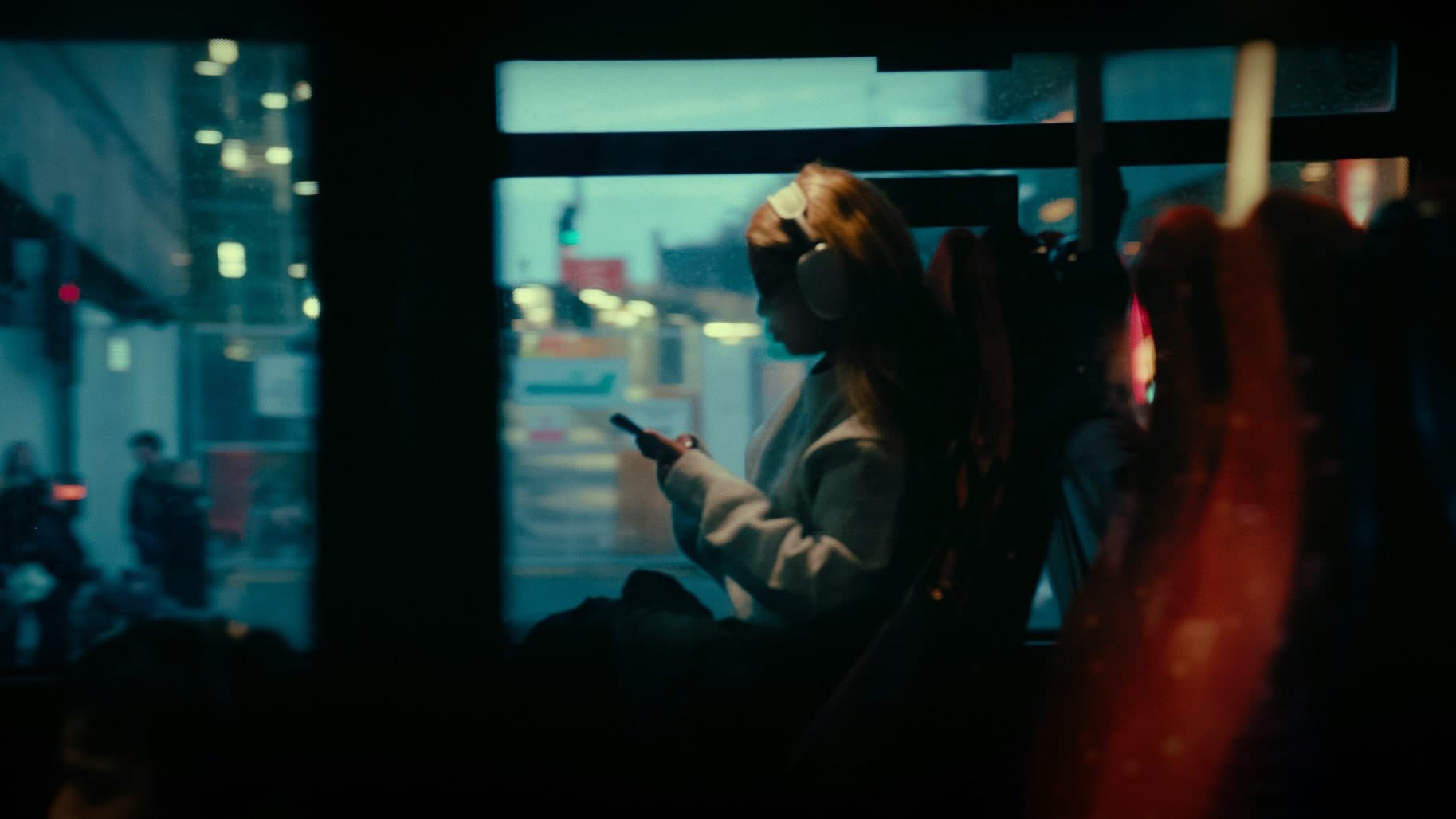
Last November, Germany and France hosted the Summit on European Digital Sovereignty in Berlin. Germany’s Chancellor Friedrich Merz said it marked “an important milestone on the path towards a more sovereign, secure and competitive digital Europe.” France’s President Emmanuel Macron said it sent “a clear signal: Europe has what it takes to lead the digital age.”
So far, though, Europe’s digital age is mostly American. Europeans’ phones, search engines, social networks, cloud servers, chips, and chatbots come from Apple, Google, Meta, Amazon, Microsoft, Nvidia, OpenAI, Anthropic—the list goes on.
As Anu Bradford said here in The Signal in February, American tech companies used to fight European regulators on their own. Then they “realized they can’t push back on European regulations alone,” so they “enlisted the White House.” In July, the European Commission, the EU’s executive, fined Google €890 million for favoring its own services over its rivals’. U.S. President Donald Trump answered by threatening tariffs and ordering a trade investigation into the EU.
Now Europe wants to make itself “technologically sovereign.” In June, the Commission published what it calls the Tech Sovereignty Package, a set of proposals to build up the EU’s own chips, cloud, and AI, and to break foreign suppliers’ hold on all three. But how did Europe get so reliant on non-European tech in the first place?
From the despatch
‘On all fronts’
How strong is the Chinese-Russian “friendship,” really? Sören Urbansky and Martin Wagner’s new book, Entangled Empires: Four Centuries of China-Russia Relations.
At the Shanghai Cooperation Organisation summit in Bishkek, Kyrgyzstan, at the start of September, Russian President Vladimir Putin met Chinese President Xi Jinping. Xi told Putin there were “even brighter” prospects for mutually beneficial exchanges with Russia, while Putin said that “cooperation is successfully developing on all fronts.” This kind of bonhomie echoes the joint statement the two signed weeks before Russia’s full-scale invasion of Ukraine, declaring a friendship with “no limits.”
Strengthen The Signal.
Become a member, get your bearings, navigate your world.
Music
‘Roses’
Over to Glasgow, where after five years, Chvrches are back …