Flags of convenience
Recently: Is the West cracking up? Georgios Varouxakis on why a feud over who speaks for democratic civilization shows its staying power. (Open-access, in partnership with the Marlborough House Foundation—see our editor’s note here.)
Today: Drones hit two cargo ships before dawn, and Bulgaria’s prime minister doesn’t seem to know where they came from. … &c.
For members: What happened inside a Siberian plague lab? Standpoints from Svetlana Shipilova, Andrew Weber, and Filippa Lentzos. … & Why does America cut Moscow slack while threatening France and Germany? Nicholas Mulder on how Washington can still pressure its allies but no longer its rivals.
+ New music from Boundary …
Developments
‘A martyr of the sea’
Raed was the cook on the Alfa Watan, a cargo ship bound for Romania under the flag of Togo. He was 26. On October 6, drones hit the ship about 70 nautical miles off Bulgaria, and it went down within minutes. Nine Syrians and an Egyptian had been aboard. Bulgarian rescuers found life rafts and an overturned lifeboat floating in the water, but none of the men. Raed’s aunt has posted his pictures. Another of the crew, Tarek, already has an obituary. It calls him “a martyr of the sea.” A week later, early on Tuesday, drones hit two more ships. The HS Dignity, under the flag of Guinea-Bissau, sank 17 nautical miles off Krapets, a Bulgarian village on the Black Sea. Passing ships picked up five of its 16 crew, and 11 are missing.
No clear evidence
Who’s sinking these ships? Mahmoud Adam, who manages the company that runs the HS Dignity, says it carried no cargo at all. Bulgaria’s prime minister, Rumen Radev, says, “We do not have clear evidence to accuse any of the parties.” But the outcome, he says, “benefits the Russian Federation.” His office points to the other ship hit on Tuesday, the Ukrainian-owned Chelsea 3, which stayed afloat: “There’s no logic in Ukraine destroying its own ships.” Russia’s ambassador, Eleonora Mitrofanova, says she has no information from Moscow’s defense ministry; Radev’s government says she doesn’t rule out a provocation by a third country. Ukraine’s own drones have hit ships carrying Russian grain, Reuters reports. Bulgaria has asked NATO and the EU to help trace the drones.

‘Back to the 17th century’
Here in The Signal, Arnaud Orain looks at why the world’s shipping lanes have turned into war zones. Navies can’t guarantee freedom of the seas anymore, he says, and cheap weapons let states—along with armed groups like Yemen’s Houthis—threaten merchant traffic. Orain doesn’t care for the word “pirates” in all this, because “everyone is a pirate to someone else.” “We’re back to the 17th century,” he says. “The world’s navies are going back to what they were originally built for: protecting merchant ships, and destroying them.” … See “Imperial silos.”
Stars and Stripes
In December 1986, Kuwait asked the U.S. Navy to protect its tankers. Iranian forces had been attacking them in the Persian Gulf since 1984, during the Iran–Iraq war. The Americans would escort only American ships, so Kuwait re-registered tankers under the U.S. flag, and the supertanker al-Rekkah became the Bridgeton. On July 24, 1987, on the first escorted run, the Bridgeton hit a mine. It sailed on to Kuwait under its own power, and the U.S. warships sent to guard it followed in its wake, to stay clear of mines.
Meanwhile
Hackers heat the fridges of hundreds of French supermarkets, to as much as 80 degrees Celsius at one Normandy Intermarché. … Britain’s PM Andy Burnham tells Parliament that Iran’s Revolutionary Guard “almost certainly” directed a suspected plot against RAF Fairford. … An OpenAI engineer, Abdulrahman Alfozan, appears in federal court in San Francisco, accused of hiding a recording device behind a TV in the company’s executive conference room. … Pakistan’s president suspends the government of Khyber Pakhtunkhwa, a province run by the party of the jailed former prime minister Imran Khan; the party calls it a “disguised coup.” … & In northeastern Spain, archaeologists find imprints that Neanderthals’ wooden spears and bark bowls left in stone at least 40,000 years ago.
Thoughts? concierge@thesgnl.com.

Can’t hear yourself think?
The David Lynch Foundation helps bring calm to veterans, students, and communities in need.
From the despatch
‘They simply let my daughter die’
What happened inside a Siberian plague lab? Standpoints from Svetlana Shipilova, Andrew Weber, and Filippa Lentzos.

On the night of October 2, workers in gas masks and orange suits sprayed the entrances of an apartment building in Irkutsk, in eastern Siberia, where Darya Shipilova had lived. Shipilova worked at the city’s anti-plague institute, one of several Russia runs to watch the wild rodents and fleas that still carry plague. Her illness had started at work, like a cold. She spent three days in a hospital outside the city and died there on the night of October 1, at 28. Rospotrebnadzor, the Russian agency in charge of public health, says she had “pneumonia of unknown origin,” caused by none of the pathogens she worked with. Officials isolated about 200 people who’d been near her all the same. In Washington, U.S. President Donald Trump said he’d take the case up with Russia’s President Vladimir Putin.
What killed Darya Shipilova?
From the files
Full price for friends
Why does America cut Moscow slack while threatening France and Germany? Nicholas Mulder on how Washington can still pressure its allies but no longer its rivals.
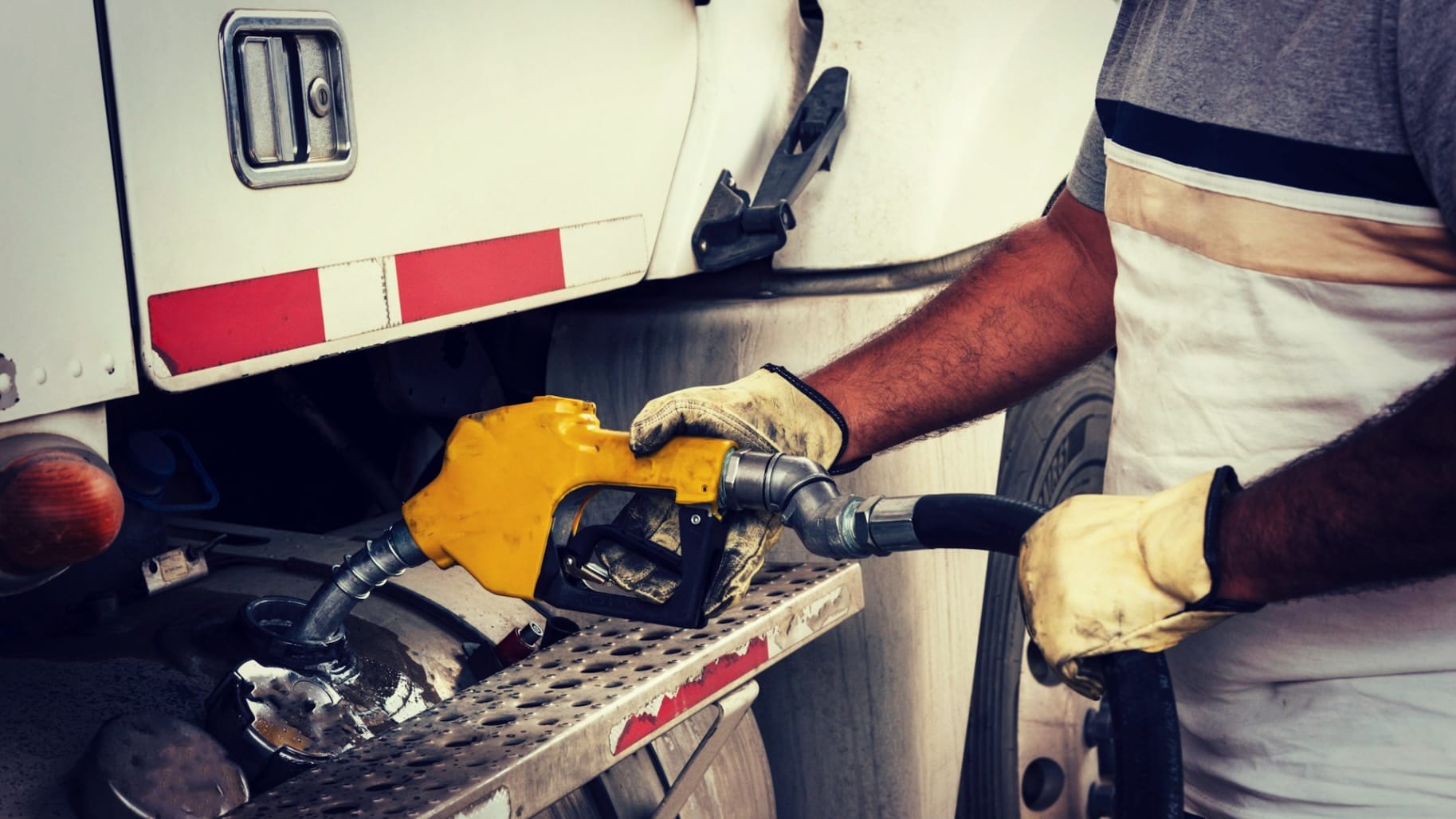
When Donald Trump got off the phone with Vladimir Putin on Friday, he announced that Russia would supply the U.S. with more than 300,000 tonnes of diesel at once, and millions more to follow. The U.S. Treasury then exempted Russian diesel already loaded on tankers from American sanctions until April 2027, a month after Trump signed a law meant to cut Russia’s oil and gas revenue. Ukraine’s President Volodymyr Zelenskyy called it “a weak decision by strong partners.” At the start of the month, Washington told France and Germany, which have relied on American fuel since Europe stopped buying Russia’s, to release their emergency diesel reserves or face a U.S. ban on diesel exports. The next day, Trump announced that Europe had agreed. Moscow got a waiver; Paris and Berlin got an ultimatum.
Why squeeze the Europeans like that?
Strengthen The Signal.
Become a member, keep your bearings, navigate your world.
Music
‘Eclipse V’
Boundary is a Dominican producer in Santo Domingo. If you listen to the London internet stations NTS and Rinse FM, you may have heard him there …