‘The culture of power’

Recently: Why have Americans lost faith in higher education? Julia Adams and Sarath Sanga on what’s gone wrong—and what universities can do about it. ... & What’s it taken for U.S. Senate Republicans to start breaking with the president?
Today: A new pontiff’s first move on AI. … Ninety missiles and 600 drones, in a single night. … &c.
For members: What would it take to build AI that serves human beings? Daron Acemoglu on the hype and reality of a potentially transformative technology. … & Europe gets a June preview, while the Gulf gets August in May.
+ New music from Daniel Lanois …
When you come from San Francisco
In the Vatican’s Synod Hall on Monday, Pope Leo XIV stood beside three cardinals, two theologians, and one man who develops artificial intelligence for a living. Most of those who spoke at the presentation of Magnifica Humanitas—Leo’s first encyclical, on safeguarding the human person in the age of AI—were exactly who anyone might expect: the prefects of two Vatican dicasteries, a British professor of Catholic social thought, an American Jesuit theologian. The outlier was Chris Olah, a cofounder of Anthropic, the American AI company currently in a legal battle with the U.S. administration over the use of its software for military and surveillance purposes. Leo presented the encyclical himself—the first pope ever to do so. And as he did, of all the people the Vatican might have chosen to put there with him, one was a lone tech-industry figure. Why invite Olah?
A senior Vatican source, before the event, told the National Catholic Reporter: “We haven’t usually invited someone from the outside.” Olah leads Anthropic’s interpretability research—the work of trying to understand what’s happening inside AI systems whose behavior, in his own words at the presentation, researchers find “mysterious, even unsettling.” The encyclical itself runs to 42,000 words. It calls for the “disarming” of AI. It warns against entrusting lethal decisions to machines. It challenges the “culture of power” that includes military profiteers. Anthropic is the AI company that has refused to let the U.S. Department of Defense use its software for lethal applications—a refusal that has put it in legal conflict with the Trump administration.
The obvious answer is that Olah was invited because his company’s stated commitments resemble the encyclical’s. The less obvious thing—and the part that drew, in one observer’s phrase, a “scattering of unease” inside the Vatican itself in the days before the event—is that while the Church calls for a new ethics partnership with the tech industry, it appears already to have chosen a specific partner from inside this industry.

Meanwhile
- Negotiating with one hand. Hours after U.S. President Donald Trump told negotiators not to rush an Iran deal, saying “time is on our side,” the American military announced new strikes on Iranian positions. On Saturday, Trump had called the agreement to reopen the Strait of Hormuz “largely negotiated.” On Monday, he posted that countries including Saudi Arabia, Qatar, and Pakistan should sign the Abraham Accords with Israel as part of any settlement. Tehran has called normalization with Israel “wishful thinking.”
- All of Kyiv. Russian forces launched 90 missiles and 600 drones at Ukraine overnight on Sunday, hitting government buildings, schools, and residential blocks across every district of the capital. The Kyiv City Military Administration called it the largest attack on Kyiv since the invasion. One of the missiles in the attack was an Oreshnik, a nuclear-capable hypersonic the Russian military has now used three times. Four were killed and around 100 injured.
- Solar radio. Cambodia’s Kem Sokha, convicted of treason in 2023, has been pardoned by Senate president Hun Sen—who’d previously jailed him as prime minister. … China launches Shenzhou-23 to its Tiangong station; one astronaut will spend a year in orbit, a Chinese first. … Around 25 have been hospitalized in Tokyo after a man sprayed a substance at the Ginza Six shopping complex. … In South Africa, vigilantes—some fronted by men in traditional Zulu dress—have threatened to drive out undocumented African migrants by June 30. … NASA confirms a radio signal from the sun broadcast for 19 days straight before fading—the longest such burst on record, with no confirmed cause.
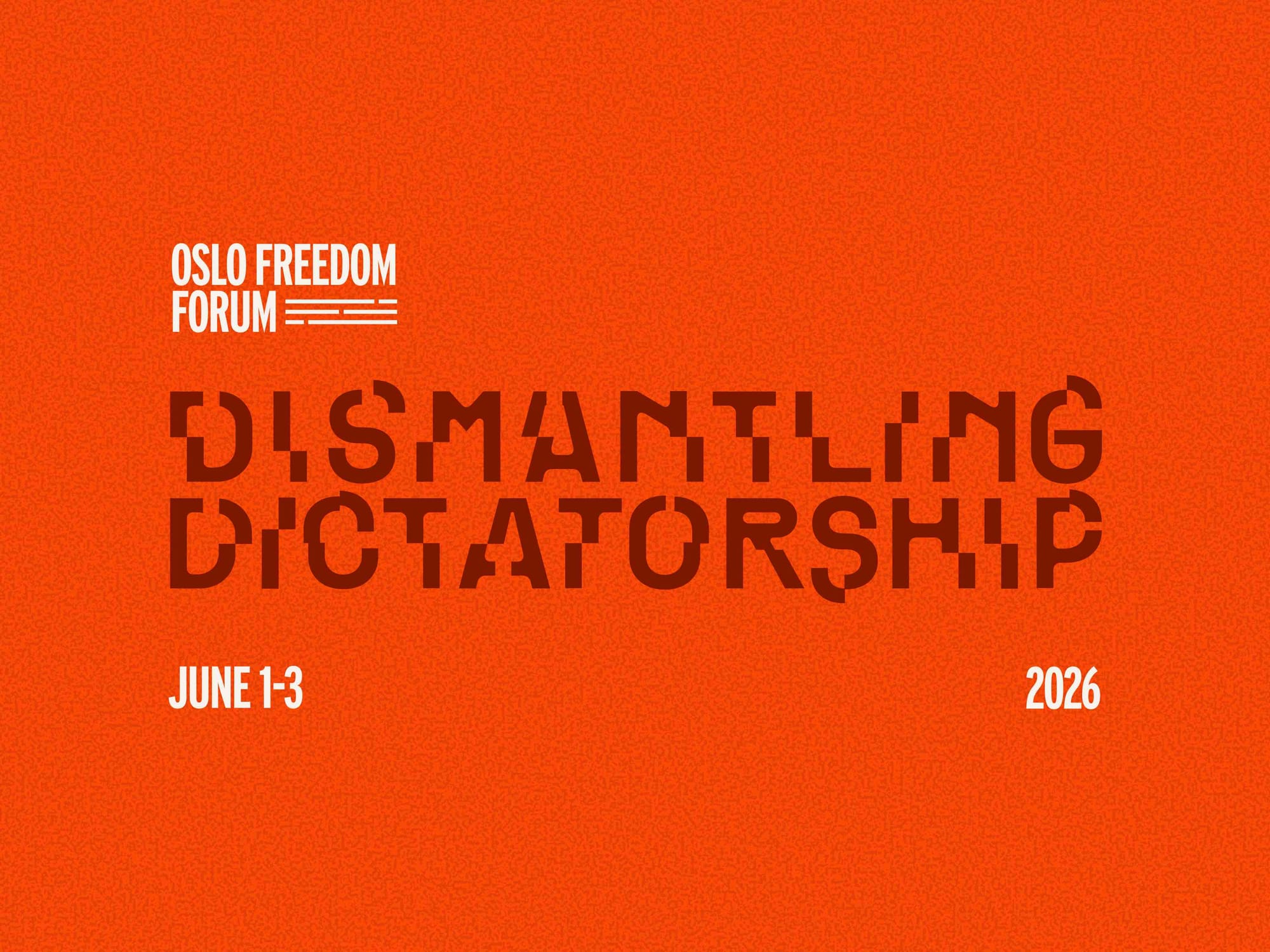
Dictatorships don’t collapse by accident. We dismantle them together.
From the files
Magnificent
What would it take to build AI that serves human beings? Daron Acemoglu on the hype and reality of a potentially transformative technology.

Pope Leo XIV’s Magnifica Humanitas—a 235-page document on “safeguarding the human person in the time of artificial intelligence”—may be the most significant Vatican statement on technology since Pope Francis’s environmentally focused 2015 encyclical, Laudato Si’. The Vatican is releasing the new letter at a moment when governments and companies around the world are increasingly anxious to figure out and negotiate what AI is properly for.
Leo’s argument: The risk isn’t the technology itself—it’s in a “culture of power” driving its development. Speed, scale, market dominance, geopolitical competition. The reduction of human beings to “data points, labor units, or instruments of control.” The Pope calls for AI that serves human dignity, protects workers, and answers to the common good rather than to shareholders or states.
What would it take to build AI that way?
Daron Acemoglu explores that question here at The Signal. The technology is malleable, Daron says—it doesn’t have a preordained path. So it’s a question of who and what is shaping the path. And currently, that’s the central business model driving the technology industry: hype, automation, surveillance, the harvesting of data for control. The vision of AI as autonomous machine intelligence, replacing human workers and creators, now dominates over a vision of AI that complements them. Still, Daron says, the potential is enormous. We’re just not realizing it—because the incentives governing the industry aren’t designed to.
From October 2023, Daron Acemoglu on the hype and reality of artificial intelligence—and the specific choices that will determine what the technology becomes …
Weather report
The heat is on
31.3183° N, 48.6706° E
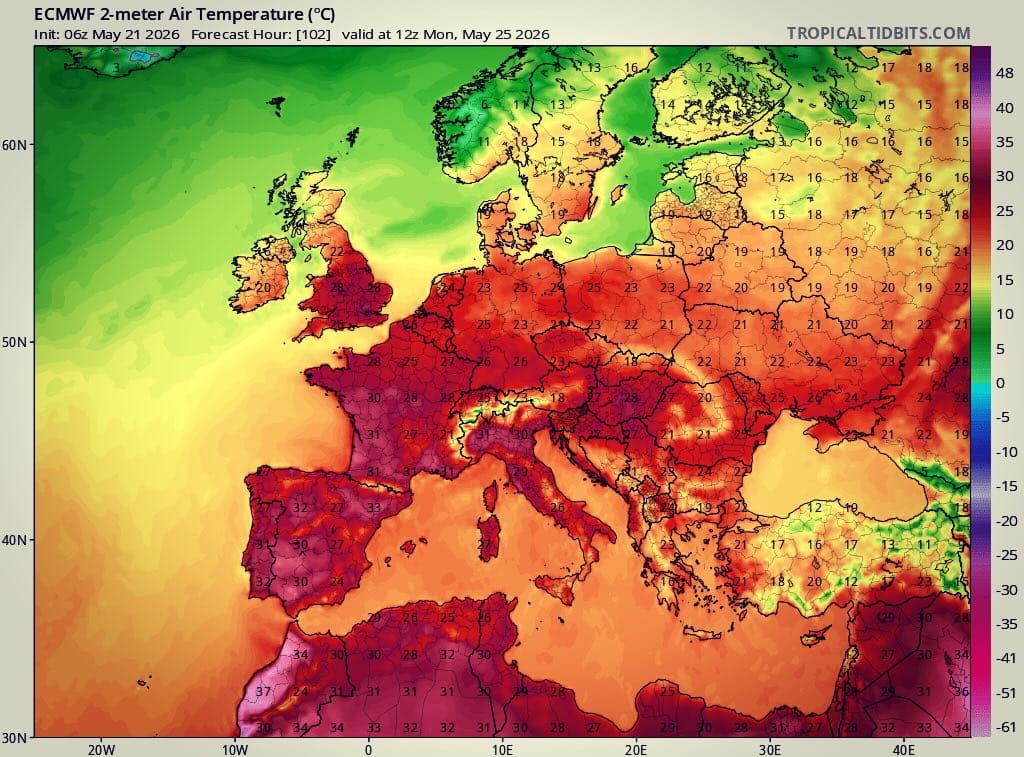
The last Monday in May is a public holiday in many countries, honoring the fallen from the last century’s two World Wars. It’s also the unofficial start of summer in the Northern Hemisphere. And temperatures will match.
Not least in Europe …
Your loyal guide to a changing world.
Membership with The Signal means exclusive access to premium benefits:
* In-depth feature interviews with our network of contributors
* The despatch, our weekly current-affairs and cultural-intelligence briefing
* Early access to new products, including print extras
It also means vital support for a new, independent venture in current affairs.
New music
‘Steel Mill’
Daniel Lanois is a Canadian musician and the producer of some of the most influential popular records of the last 40 years—So, for Peter Gabriel; The Joshua Tree and Achtung Baby, for U2; Le Noise, for Neil Young. Lanois’s new album, Belladonna Nocturne, is out June 19—a follow-up to 2005’s Belladonna.