No good options

Recently: Has Iran ended America’s dominance in economic warfare? Nicholas Mulder on why the Americans can still squeeze their allies but not their rivals. … & After Washington and Tehran apparently agreed a ceasefire, why did the U.S. … start bombing Iran again?
Today: Pakistan keeps targeting militants inside Afghanistan but killing civilians and can’t stop. … American armed forces are running earthquake relief in Venezuela, months after absconding with its president. … &c.
For members: What’s Pakistan getting from a war it can’t win? Anatol Lieven on how Afghanistan became a battleground again. … & … In Europe—already two heatwaves into the summer, and it's only June.
+ New music from Tiga …
Something must be done
The first bomb killed an old man and a child in their house in Mandokhail, a village in eastern Afghanistan, late on Sunday. Their neighbors ran in to dig out survivors, when a second bomb killed them. The local Taliban put the night’s death toll at 36—counting most of them as women and children—and the wounded at more than 150; the United Nations could confirm 28 dead. Pakistan tells it all differently: Minister of Information and Broadcasting Attaullah Tarar says the strikes hit militant hideouts, killing 29 paramilitaries from groups behind last weekend’s raid on a base in Karachi.
Both sides acknowledge the bombing but disagree about the effects. So what are the causes?
When Pakistan helped restore the Taliban to power in Kabul in 2021, it wanted one thing above all else in return: that they stop their namesake, the Pakistani Taliban—a separate group sheltering inside Afghanistan—from crossing back over the border and killing Pakistani soldiers or police. The Taliban, you may have inferred, haven’t done that. So Pakistan has resorted to bombing—but that’s not working; the militants keep coming; and Pakistan keeps losing soldiers. Which is an especially tough complication in a country run by the army: The generals can’t really keep burying their men and then doing nothing. So they’ve kept striking—sometimes hitting militant camps, sometimes hitting villages. But their accuracy doesn’t seem to be improving, and the UN keeps finding the dead in their homes.

Meanwhile
- Already overwhelmed. One infected traveler left Bunia, the capital of Ituri, reached Haut-Uélé, and died there—carrying the Democratic Republic of Congo’s Ebola into a fourth province. A virus with no vaccine and no cure now threatens the country’s entire northeast, home to some 15 million. The World Health Organization counts 360 dead of 1,274 infected since mid-May, and the treatment wards are already running at 138 percent of capacity.
- Locked out. More than 900 American troops are running the earthquake response in Venezuela, months after U.S. forces seized President Nicolás Maduro. The aid goes through Delcy Rodríguez—Maduro’s own deputy, now running the country, backed by Washington. But the opposition won the 2024 election: Its candidate, Edmundo González, took the vote after the regime had barred its leader, María Corina Machado, from running. Machado is now stuck in Panama, with both Caracas and Washington telling her to go no further toward home.
- Not built for this. South Korea’s parliament confirms Han Seong-sook, once head of the web giant Naver, as the country’s first woman premier in 20 years. … Israel’s cabinet votes to recognize the 1915 Armenian genocide, breaking with Turkey, pending a parliamentary vote. … Iran and the U.S. send envoys to Doha over the fraying Hormuz truce—then dispute whether they were meeting at all. … In Monaco, a bomb wounds a Ukrainian tycoon Kyiv had sanctioned over Russian ties; the suspect has fled to France. … & Across Europe, a record heatwave kills more than 1,300, most of them indoors.

Forget grocery store coffee—support small roasters with Trade
Trade connects you with some of the finest small-batch coffee roasters across America—the kind of local businesses you’d want to visit if they were nearby. These aren’t giant chains with mass-produced blends; these are passionate artisans crafting coffee that’s fresh, distinctive, and bursting with flavor.
Enjoy up to 30% off your first-month subscription.
From the files
The enemy at hand
What’s Pakistan getting from a war it can’t win? Anatol Lieven on how Afghanistan became a battleground again.
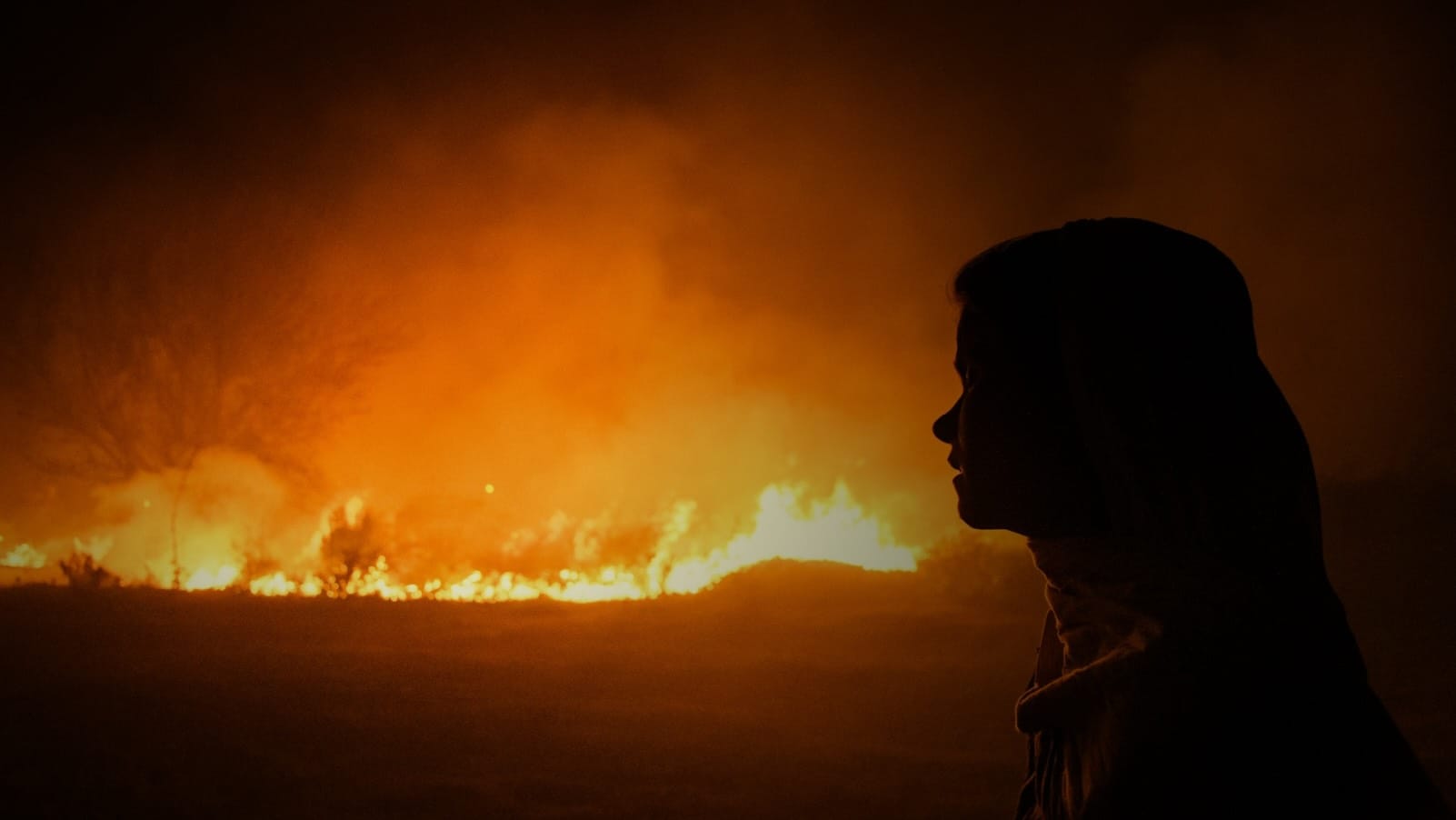
Pakistan is now bombing a country it helped build. For the better part of a year, its planes have crossed into Afghanistan, going after the militants sheltering there. Sunday’s strike is just the latest, if among the deadliest. Significantly, the border both sides are crossing is a British invention, drawn through the Pashtun region in a manner Afghanistan has never accepted, with two-thirds of Pashtuns living on the Pakistani side. In the 1980s, an American campaign to bleed the Soviets flooded the region with weapons. Through all of that, Pakistan bet on the Afghan Taliban, learning only once they were in charge that, as the expression goes, you can rent an Afghan soldier but never buy one.
So who are the Pakistani Taliban—and why is Pakistan fighting them inside Afghanistan?
Anatol Lieven explains the picture, and the grim math around it, here in The Signal. The Afghan Taliban beat the United States on a military budget of something like US$400-600 million a year, one percent of what the Americans spent—so, Anatol says, a few more strikes aren’t going to break them. Worse, the harder Pakistan presses, the more it feeds a force the whole region dreads: the Islamic State’s Khorasan branch, flush with money from the Gulf and reinforced by every Pakistani Taliban fighter who defects to it. So now Pakistan, which supported the Taliban against the Americans, is stuck with them—and the Pakistani Taliban with them—because if they go after the power sheltering the Pakistani Taliban, the prize won’t be peace; it’ll be having to reckon with a new power that dreams of striking the West—and the new conflict that would inevitably follow.
From April 2026, Lieven on a border no state accepts and a conflict Pakistan can’t win—or lose …
Weather report
A long summer in June
47.4128° N, 0.8000° E
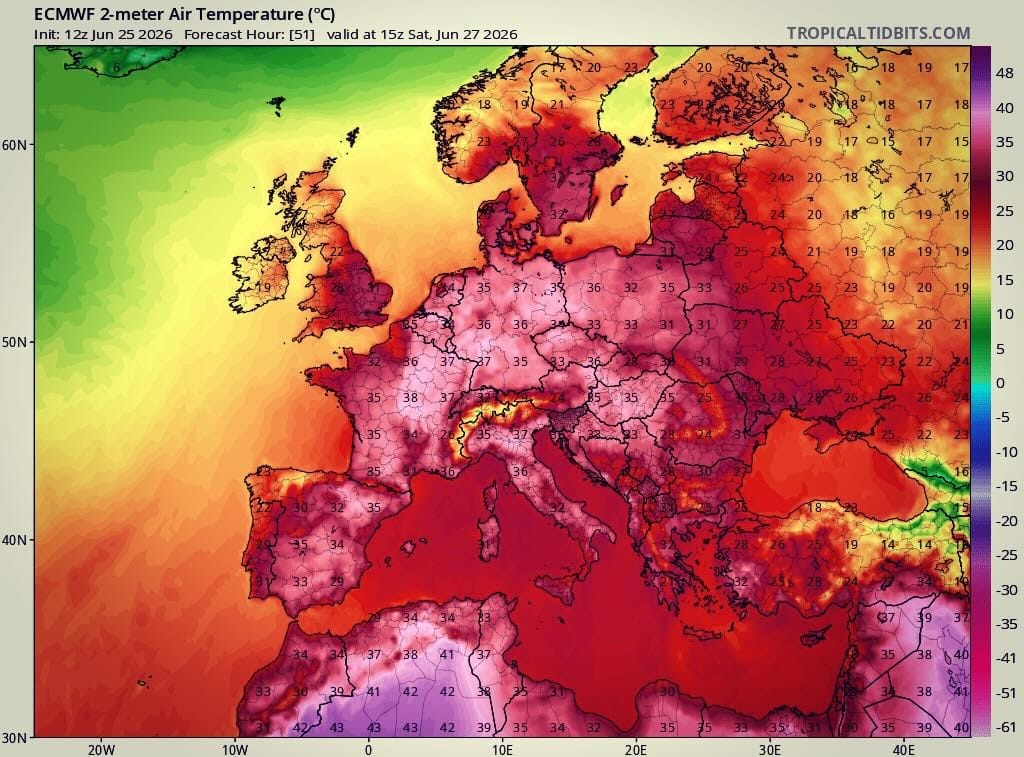
The second heatwave of the year has engulfed Europe. Hot, humid air from North Africa shattered records from England to Spain and Germany to Italy. By Wednesday, the French government said at least 40 people had drowned trying to cool off in rivers and streams …
Your loyal guide to a changing world.
Membership with The Signal means exclusive access to premium benefits:
* In-depth feature interviews with our network of contributors
* The despatch, our weekly current-affairs and cultural-intelligence briefing
* Early access to new products, including print extras
It also means vital support for a new, independent venture in current affairs.
New music
‘High Rollers’
Montreal’s Tiga is back with his first record in a decade, Hotlife. It rolls along slow, but the bass line is pitched high—with a Roland TB-303, turned all the way up.