At the neighbor’s pleasure
Recently: What’s Pakistan getting from a war it can’t win? Anatol Lieven on how Afghanistan became a battleground again.
Today: Canada and Mexico came for a deal built to last a generation—and left with the deal up in the air. … Taiwan’s president warns his newest officers that China is fishing among them for spies. … &c.
For members: Why is Turkey’s government moving so hard to kill off its opposition? Ezgi Başaran on the weakness behind a new show of strength. … & Why have the Qataris been betting so big on international mediation? Sansom Milton & Ghassan Elkahlout’s new book, Gulf to Global: The Rise of Qatar in Conflict Mediation.
+ New music from Mike Campbell …
Off autopilot
On a video call on Wednesday, the three governments hosting the current FIFA World Cup had to decide the fate of an agreement that governs almost all commerce across their shared borders. By its own terms, the United States–Mexico–Canada Agreement had reached a six-year checkpoint, where the parties could either extend it to 2042 or let it wind toward an end. Canada and Mexico wanted the extension. The U.S. trade representative, Jamieson Greer, said no: Washington won’t keep it “in its current form.” U.S. President Donald Trump signed this deal himself in his first term, to replace the old North American Free Trade Agreement, and once called it the best deal his country’s ever made. It won’t die now—it’ll run to 2036 regardless. So what’s changed?
A simple renewal would have kept the deal going as-was for another 16 years. This turns the next decade into a long renegotiation, putting the pact up for ongoing review until it expires. Greer says the point is to fix the agreement’s shortcomings and shrink the U.S. trade deficits. But Canada and Mexico have far more riding on it than Washington does. Nearly 90 percent of what Canada sells southward crosses the border tariff-free, and since the USMCA took effect, trade among the three countries has grown 37 percent, to more than US$1.9 trillion a year. Neither of those two can easily walk away. Mexico’s president, Claudia Sheinbaum, played the down the timing. Her negotiators will be back across the table from the Americans the week of July 20. Canada’s have no date yet.

Meanwhile
- When Tuesday came. South Africa reached the June 30 deadline for undocumented migrants to leave. The citizens’ groups behind it marched through a dozen cities; police arrested more than 900 people on Tuesday and sent soldiers into a Johannesburg district. The sweep took in both sides—the marchers and the migrants they were marching against. President Cyril Ramaphosa met the organizers and urged calm—while insisting the state, not the street, still sets the rules—but the protests have continued, and tens of thousands have already fled the country. … See “Out by Tuesday.”
- A soldier’s honor. At a military graduation outside Taipei on Tuesday, Taiwan’s president, Lai Ching-te, told the new officers to hold “a clear awareness of friend and foe” against China’s efforts to recruit inside the ranks. Taiwan has charged a growing number of soldiers, serving and former, with spying for Beijing. China claims the island and has never ruled out taking it by force.
- The cosmic shoreline. Russia hit Kyiv overnight with one of the war’s biggest missile-and-drone barrages, wrecking an apartment block downtown. … Iran will bury Ali Khamenei, the supreme leader Israel killed in February, halting its indirect talks with the U.S. … Europe’s top court upheld a €4.1 billion fine on Google for using its mobile operating system, Android, to force its search engine and browser onto every phone. … Pope Leo XIV excommunicated the breakaway Society of St. Pius X’s bishops, declaring the traditionalist group in schism. … And astronomers found a possibly habitable world 25 light-years off—a rocky planet twice the size of Earth, circling a small red star.

The world makes more sense in its own terms.
You travel when you can. You follow current events. And you know the most important developments play out across borders and cultures. So you know things always get lost in translation—intent, nuance, meaning.
Learning a language closes that gap better than anything.
Feature
No tanks required
Why is Turkey’s government moving so hard to kill off its opposition? Ezgi Başaran on the weakness behind a new show of strength.
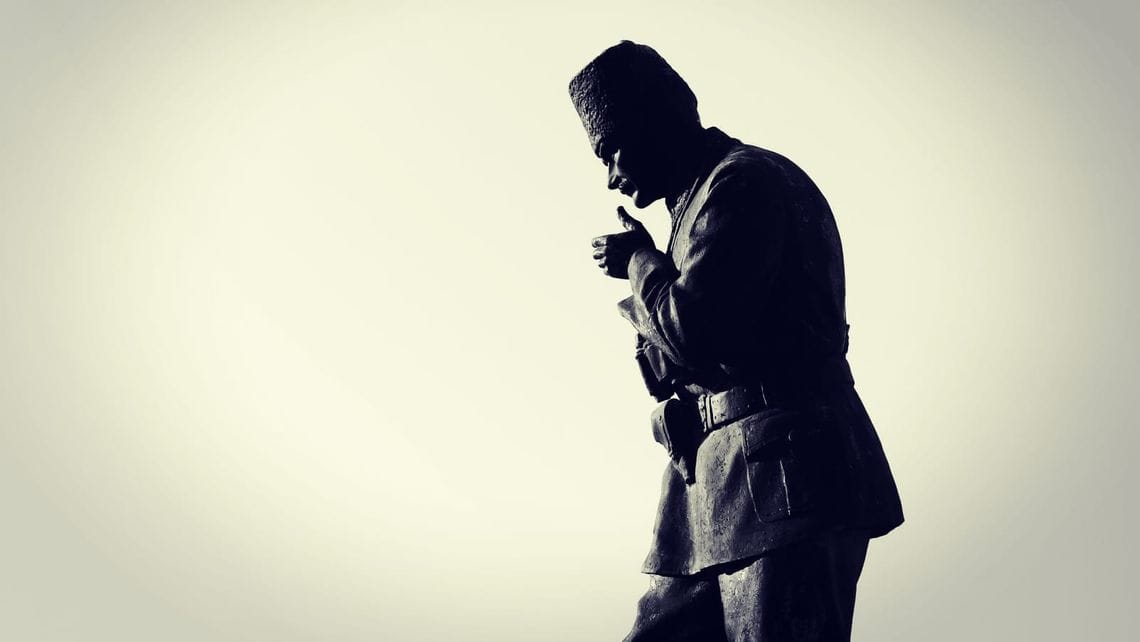
In March 2025, police arrested Istanbul’s mayor, Ekrem İmamoğlu, on corruption charges; prosecutors are seeking a prison sentence of up to 2,352 years.
This year, police arrested the opposition mayor of Uşak, in Turkey’s west, on bribery charges. The same month, they seized the mayor of Bursa, Mustafa Bozbey, along with 54 other suspects, also on corruption charges.
Now Ankara’s mayor, Mansur Yavaş, faces a probe into the misuse of public funds—in 2023, he allegedly used municipal cars to get to an election rally.
The main opposition’s leader has said the ruling AKP—the Justice and Development Party—is using these corruption cases as a pretext to “eliminate its rivals.”
Turkey’s President Recep Tayyip Erdoğan is tightening his grip. But he’s run Turkey for more than two decades—as prime minister from 2003, as president since 2014. So why now?
Ezgi Başaran is an associate member of the faculty at the University of Oxford and the author of The New Spirit of Islamism: Interactions between the AKP, Ennahda and the Muslim Brotherhood.
Başaran says Erdoğan is tightening his hold on Turkey because it had been slipping. He has been under growing pressure since the main opposition won a string of victories in the 2024 local elections. For the first time in his career, Başaran says, he found himself on the losing side.
The main opposition, moreover, kept gaining ground—enough that, left unchecked, it threatened his bid to stay in power, perhaps even past his current term. A show of strength, in other words, forced by mounting weakness.
But Erdoğan has operated cannily, Başaran says. If the indictments look crude, the courts have been pliant, because he has been sophisticated about bringing them to heel. He knows how to turn a looming defeat into a victory. The failed military coup of 2016, he said, was “a gift from God,” because it let him remake the state as he saw fit. Now, under growing pressure again, he is trying to work the same trick …
Books
The go-between
Why have the Qataris been betting so big on international mediation? Sansom Milton & Ghassan Elkahlout, Gulf to Global: The Rise of Qatar in Conflict Mediation.
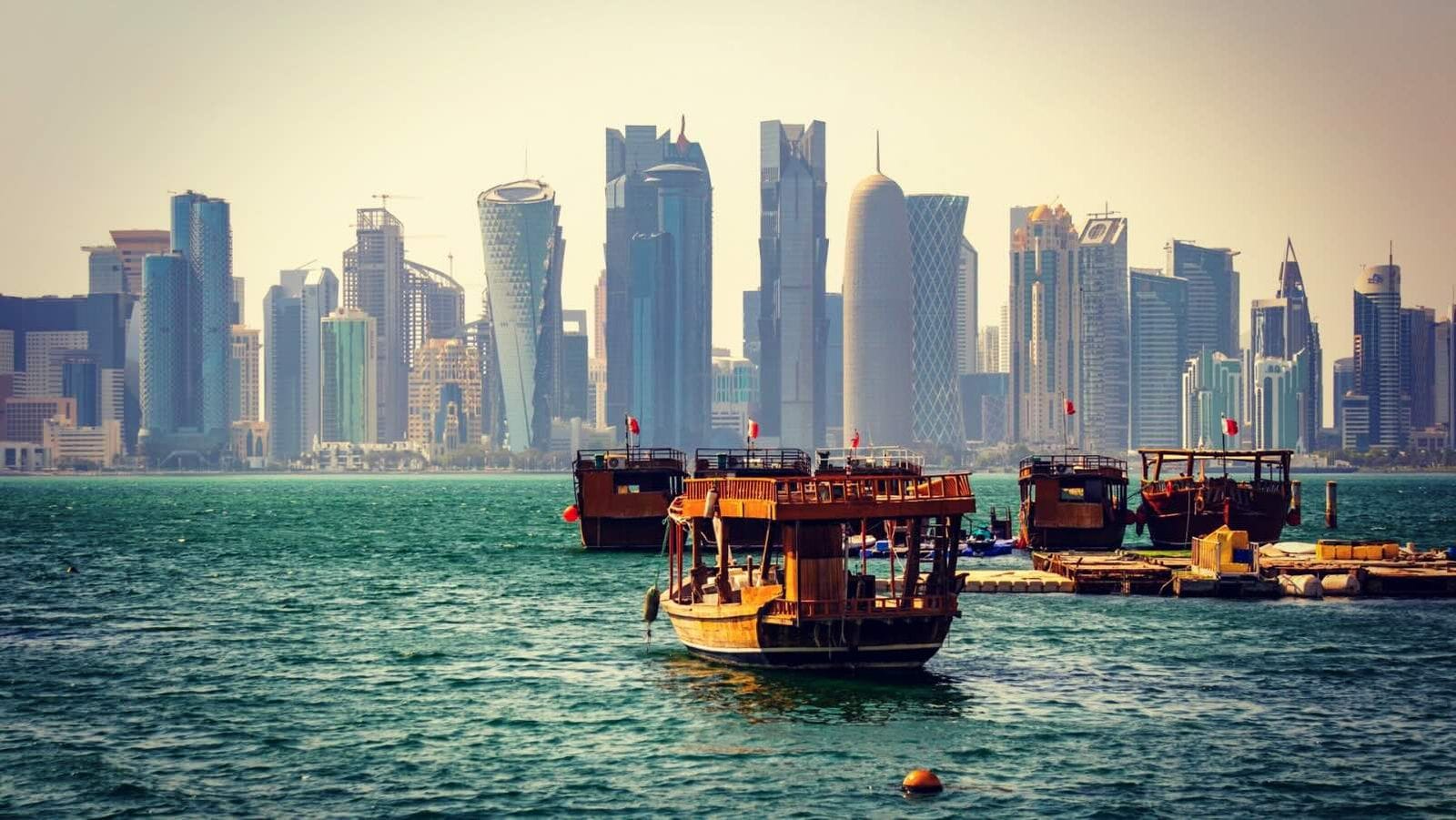
When U.S. President Donald Trump threatened to hit Iran “VERY HARD TONIGHT” back in June, and U.S. Secretary of Defense Pete Hegseth declared that if necessary, “we’ll negotiate with bombs,” few might have predicted that within days, Qatar would be at the center of a ceasefire framework. But as the bombs were falling, Qatari mediators were already in Tehran—and by June 17, the presidents of the U.S. and Iran had signed a memorandum of understanding establishing a 60-day window to negotiate a final deal, with Qatar and Pakistan as co-mediators.
Why Qatar?
Your loyal guide to a changing world.
Membership with The Signal means exclusive access to premium benefits:
* In-depth feature interviews with our network of contributors
* The despatch, our weekly current-affairs and cultural-intelligence briefing
* Early access to new products, including print extras
It also means vital support for a new, independent venture in current affairs.
New music
‘My Mama Told Me’
Mike Campbell was the lead guitarist and a co-writer for Tom Petty & the Heartbreakers—from 1976 to Petty’s death in 2017. Ever since, Campbell has been playing with other bands, including Fleetwood Mac. Here he is with his own band, the Dirty Knobs—a blues vamp from their fourth record, out just a few weeks ago.