No return address
Recently: Gulf royals have moved billions into global football. Now what?
Today: More than 1,000 Sudanese civilians are dead in five months, most nowhere near any combat. … A Russian strike on Kyiv’s 11th-century cathedral. … &c.
For members: What do drones do to a war? Robert Hamilton on the high-tech transformation of warfare—and the inevitability of a high-pressure deadlock.
+ New music from Speedy J …
Safe distance
Last week in El Obeid, a city in central Sudan, drones hit water plants, knocked out fuel depots, and killed nine people—one of them a Red Crescent volunteer. The same week, a drone killed at least eight in Um Baru, a town in the Darfur region, where looters then stripped the market and forced the closure of a medical clinic, and a strike wounded more civilians in Nyala, farther south. On Monday, the United Nations’ human-rights chief, Volker Türk, reported to the Human Rights Council that drones have killed more than 1,000 civilians in Sudan this year. While Sudan’s army and the rival paramilitary group, the Rapid Support Forces, have been in open war since 2023, it’s only recently become, in the UN’s terms, “drone-dominated.” The question is where the drones are coming from.
There are certainly suspects—and they’re not obscure. For years, investigators have traced the Rapid Support Forces’ drones to the United Arab Emirates, and the army’s to Iran and Turkey. Each denies it, and the drones move through front companies and obliging neighbors, so no one ever quite proves it. But two of the three are Western allies: the Emirates, a close Gulf partner of Washington; Turkey, a NATO member. So the powers that could stop the flow are friends with the ones behind it. And the drones keep coming. … (See “Advantage: defense,” below.)

Meanwhile
- The easy part first. The U.S. and Iran agreed on Sunday to stop the shooting for 60 days and reopen the Strait of Hormuz, brokered by Pakistan and initialled by email, with formal signatures due in Switzerland on Friday. Oil prices fell on the news. The signing is still days away.
- Fire at the Lavra. Russia hit Kyiv on Monday with its heaviest barrage in weeks—dozens of missiles, more than 600 drones, five dead in the capital. One set fire to the Dormition Cathedral at the 11th-century Kyiv Pechersk Lavra, among the holiest sites in Eastern Christianity; another burned the Dovzhenko film studio’s collection of 100,000 costumes. The Lavra had gone untouched since the Second World War—until January. This was the second strike in five months.
- A grave, 80 years down. Across Indonesia, students are protesting President Prabowo Subianto’s handling of a sinking economy. … In the Central African Republic, a UN-backed court opens the war-crimes trial of the country’s former president François Bozizé, in absentia. … Mali’s junta jails two journalists for saying it’s losing ground to insurgents. … In Nigeria, a judge orders the main opposition party deregistered before the 2027 election. … Off the Philippines, divers have found a Japanese WWII “hellship”— the underwater grave of more than 1,000 Allied prisoners of war.

Your reading list for a changing world
Browse The Signal’s bookshop—organized into collections that track key themes in our investigations of current affairs: what’s driving the information wars, why societies are fracturing, how power keeps reinventing itself. Contributors’ titles alongside books we've featured in our coverage.
Feature
Advantage: defense
What do drones do to a war? Robert Hamilton on the high-tech transformation of the modern battlefield—and the inevitability of a high-pressure deadlock.
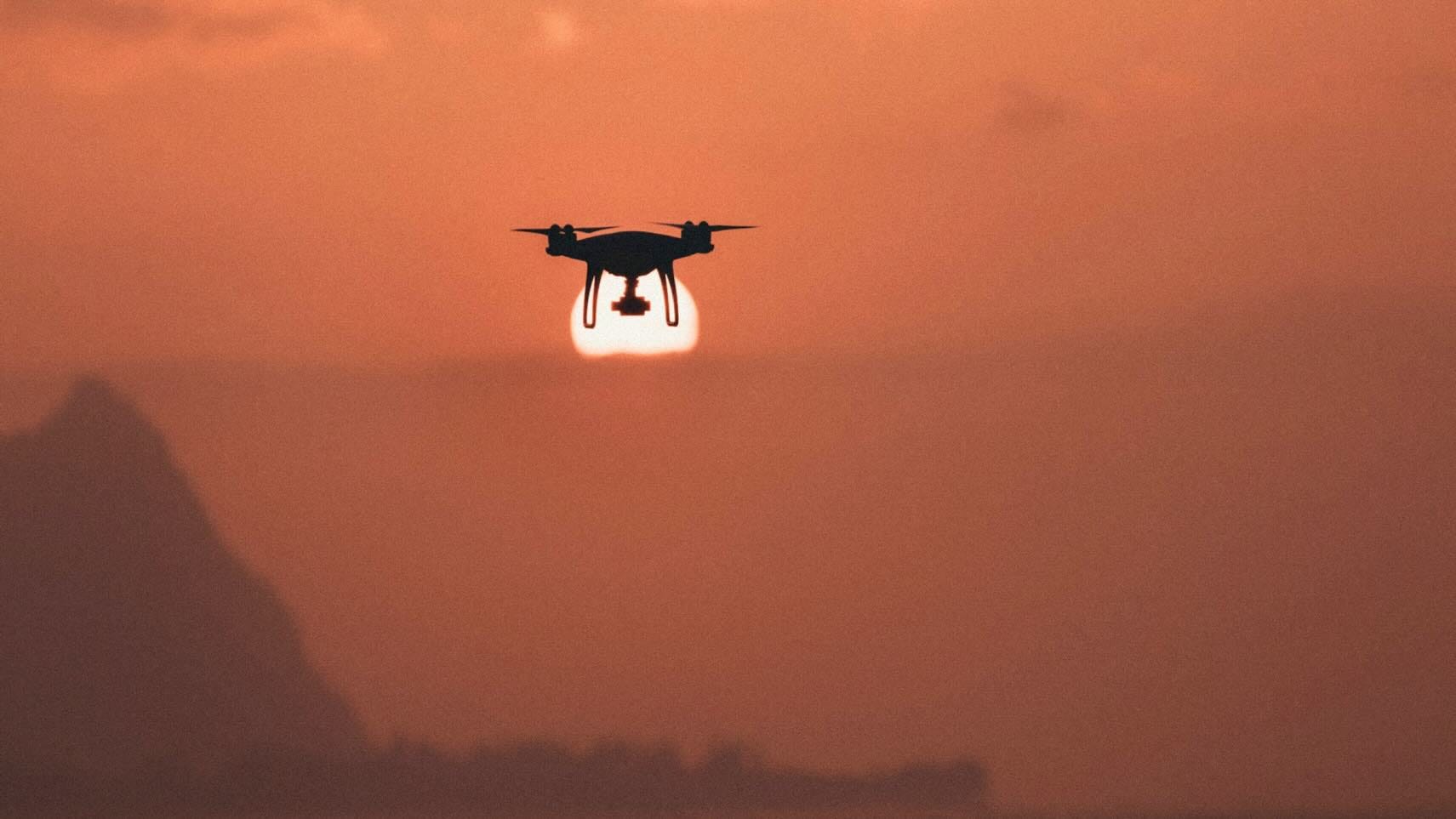
Drones have remade another war—this time, in Sudan.
What do they change?
The answer is unsettling: both less than we might think and everything. They don’t win wars; they make them impossible to win. Persistent surveillance plus precision strikes hands the advantage to whoever’s dug in, so offensives stall and the lines barely move. “If you can be seen,” Robert Hamilton says, here in The Signal, “you can be hit—and killed almost immediately.” Bob is describing Ukraine, but the hardware is cheap—and it’s traveling.
From June 2024, Hamilton on the new era of war—and why no weapon breaks the deadlock …
Your loyal guide to a changing world.
Membership with The Signal means exclusive access to premium benefits:
* In-depth feature interviews with our network of contributors
* The despatch, our weekly current-affairs and cultural-intelligence briefing
* Early access to new products, including print extras
It also means vital support for a new, independent venture in current affairs.
New music
‘Arp Δmp Chasm’
The Dutch producer and DJ Speedy J returns with his first new album in 20 years, Walkman. And yes, he’s trimmed it to fit on both sides of a C90 cassette. The star here is the organ stabs, run through distortion, honking away like a car alarm—building tension it never resolves.