‘So-called international law’
Recently: Why is the U.S. government going so easy on white-collar crime? John C. Coffee Jr. on how the White House is making corruption safe again. … & How has Russia, one of the world’s biggest producers of crude oil, wound up importing its fuel?
Today: In The Hague, three judges are suing the U.S. for sanctioning them over their own rulings. … At the mouth of the Gulf, a 20 percent toll on every passing ship lasts one day. … &c.
For members: More and more countries are banning kids from social media. Will it work? Sara Robin on the flaw in the plan—and what’s working instead. … & … What happens in the Pacific, stays in the Caribbean.
+ New music from John Haycock …
No diplomatic option
HSBC froze Kimberly Prost’s account in New York; Amazon, Google, and Expedia closed or restricted the rest. Solomy Bossa lost her credit union account. Reine Alapini-Gansou increased her personal security. The three are judges of the International Criminal Court—from Canada, Uganda, and Benin—and the U.S. put them on a sanctions list for the cases they’d decided: two for letting the court’s prosecutor investigate Afghanistan, one for the warrants against Israel’s prime minister. On June 24, the three sued the U.S. administration in a Manhattan federal court. On Monday, U.S. Secretary of State Marco Rubio vowed in a video and a Wall Street Journal op-ed to dismantle the court, and the State Department promised a “whole-of-government response to systematically disable” it.
How’s that supposed to happen?
The U.S. may want to dismantle the court systematically, but it can’t do it directly: The ICC has no power of its own; its 125 member states underwrite it and carry out its warrants. And because the U.S. never joined, it owes the court nothing—so there’s no budget to cut and no seat to vacate. So the only way at it, for the U.S., is through leverage over its members: travel bans on staff, then pressure on aid-dependent governments to disown the court’s “false authority,” to quit, to stop paying.
That has a chance of working, on account of divisions among the court’s member states. The warrant for Israel’s Prime Minister Benjamin Netanyahu split its European backers, many of whom have balked at enforcing the warrant. Any government that resents a ruling from the ICC has little recourse but to leave. And now Rubio is using leverage to edge the doubters on. As Yuan Yi Zhu says here in The Signal, the underlying backlash has been developing for years: The further these courts reach, the more members have been turning against them, and a full exodus could take international law down with the court. … See “Contempt of court.”

Meanwhile
- Left off the daily report. Congo’s national public health institute has added two provinces, Haut-Uélé and Tshopo, to the epidemic zone—cases it had kept out of its daily reports for weeks. Tshopo’s capital, Kisangani, is one of the country’s biggest cities. The institute counted 1,926 confirmed cases and 702 deaths on Sunday. A senior World Health Organization official said last week that the real total may run two to four times higher, because four of every five new cases have no known link to an existing patient.
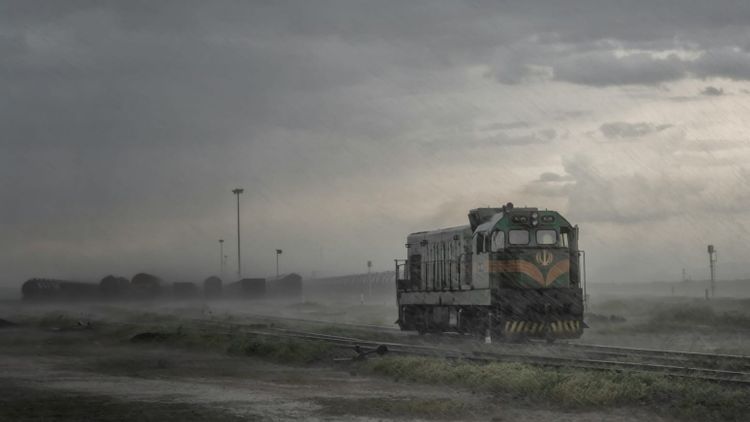
- Guardian of the strait. On Monday, U.S. President Donald Trump put a price on American protection in Hormuz: 20 percent of all cargo passing through. By Tuesday, after discussions with regional governments, he’d swapped the fee for unspecified “Trade and Investment Deals.” American forces began the blockade of Iranian ports in the afternoon. Oil, Trump said, is “flowing like never before”; the Joint Maritime Information Center, which tracks Gulf shipping, counted 12 transits the day before, against a prewar daily average of 138. See “The trains to Mashhad.”
- Nothing grand, just a room. Russia bars the anti-war candidate Boris Nadezhdin from September’s election and charges him with displaying “extremist symbols” over a photo of the late dissident Alexei Navalny. … Guinea-Bissau’s coup leaders return the former prime minister Domingos Simões Pereira to prison, months before a December vote. … Having abolished term limits, El Salvador’s ruling party nominates President Nayib Bukele for a third term. … Ukraine and nine European states agree in Paris to build Europe’s missile shield around a Ukrainian interceptor, not the American Patriot. … & Archaeologists say they’ve discovered where bishops first adopted the Nicene Creed, the Christian Church’s foundational statement of common belief, under the ruins of a basilica at İznik in Turkey.
Every Sunday, Translator’s Dispatch brings you English summaries of some of the best journalism from beyond the English-speaking world—to help you read the whole world differently.
From the files
Off the hook
More and more countries are banning kids from social media. Will it work? Sara Robin on the flaw in the plan—and what’s working instead.

Since December, Australia has blocked anyone under 16 from Instagram, TikTok, and the rest, deactivating more than 310,000 accounts in the first months. Britain has since passed a version that goes further, barring under-16s from livestreaming and messaging strangers too. Brazil’s took effect in March. Bulgaria, the Philippines, and others are drafting their own. A year ago, this was all largely public-policy debates. Some of it seemed far-fetched. Today, it’s the law on three continents, with legislators in more countries drafting bills.
So do these bans work?
Sara Robin, who directed and produced the recent documentary Your Attention Please, doubts they get to the real problem. A ban treats the symptom, Sara says here in The Signal: It shields children without touching what hooks them—a business model designed to keep them looking at screens as long as possible. The real change, Sara says, is happening without the force of law. Schools that go phone-free are seeing better grades—and fewer fights. Cafes and comedy clubs are collecting phones at the door. And it turns out you can break digital addiction fast: Two weeks, according to one study, and the boredom you’d been avoiding becomes room to think.
From May, Sara Robin on what bans can’t fix—and how people around the world are figuring out how to put down their phones …
Weather report
Warm sea there, dry land here
18.466333° N, -66.105721° W
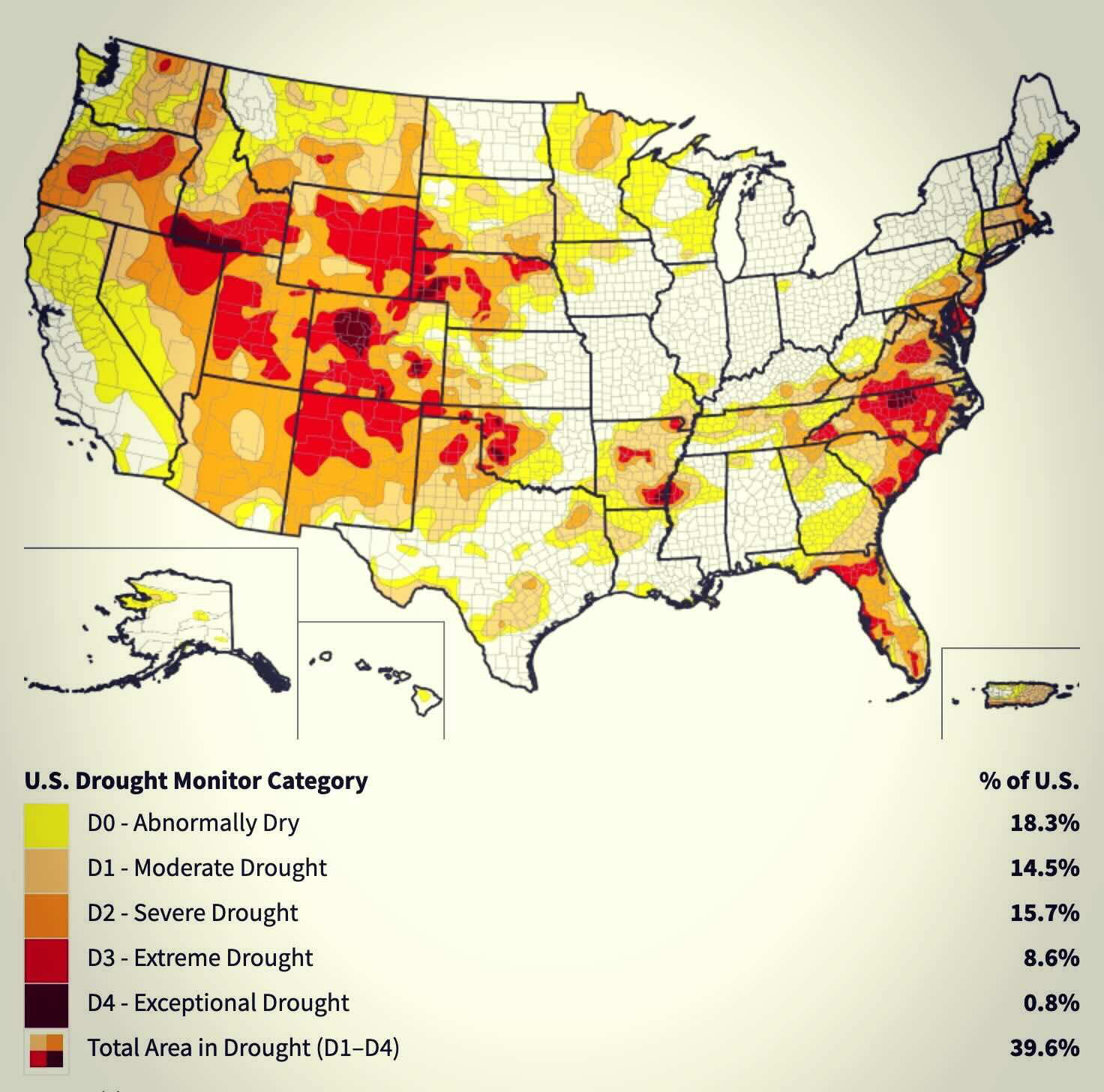
El Niño—the periodic warming of the tropical Pacific that shifts weather patterns worldwide—is here. The U.S. Climate Prediction Center has an advisory in effect, and expects these warm conditions to strengthen through year's end and very likely last into early 2027. And it’s already in the Caribbean—in Puerto Rico …
Your loyal guide to a changing world.
Membership with The Signal means exclusive access to premium benefits:
* In-depth feature interviews with our network of contributors
* The despatch, our weekly current-affairs and cultural-intelligence briefing
* Early access to new products, including print extras
It also means vital support for a new, independent venture in current affairs.
New music
‘Flow State Part 1’
Off to Manchester in the U.K. to hear John Haycock, an accomplished kora player who runs his harp through a chain of electronic effects to build lush, layered music. Here’s a track from his new record, What Remains—where Haycock draws on West African folk and modern electronic music, with dub and hip-hop in the mix.