A mailbox in Virginia
Recently: Why do temperatures keep rising—even after they cool off? Rachel Cleetus on rising temperatures, billions in damages, and the climate’s uncertain future.
Today: Off the Galápagos, survivors say drones burned their vessels before American-sounding men put hoods over their heads. … In Lebanon, lawmakers end the death penalty—a first in the Arab world. … &c.
For members: Why is the White House calling its political opponents “national security” threats? Andrew Preston on the 86-year history of a curious rationale.
+ New music from FLO …
Unlisted
For three days in January, the crew of the Fiorella, an Ecuadoran fishing boat off the Galápagos, were telling their families that aircraft and a drone kept passing overhead. On January 20, the boat sent its position for the last time. Two of the 10 men aboard had gone out in a skiff to fish—and knew something was wrong when they saw smoke where the Fiorella had been. The other eight are still missing. In March, two more Ecuadoran boats burned nearby, and their crews describe small drones dropping munitions. The Pentagon denies any part. On Thursday, though, The Washington Post reported that a covert CIA program was behind all three. But U.S. forces have been sinking boats in these same waters since September, killing at least 221 and announcing every one. So why hide these ones?
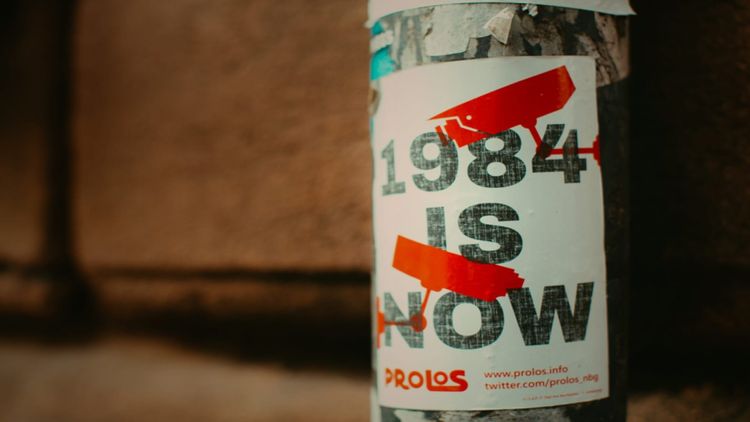
A single plane, it seems, flew out of El Salvador toward all three boats in the days before each was hit, registered to a company whose address is a mailbox in a Virginia UPS store. The strikes the American military has announced have killed everyone aboard, but all 36 men on the two March boats lived. Armed men speaking English, they say, pulled them out of the water, hooded them, and handed them to El Salvador’s navy. Within weeks, they were back in Ecuador’s port of Manta, describing the drones to local reporters. Neither country has charged any of them with anything. And the Salvadoran sailors who came for one of those crews said “the Americans” had asked them, two days before the attack, to collect a group of shipwrecked men.

Meanwhile
- Truth and reconciliation. Hungary’s parliament elected András Baka president on Tuesday, 140 votes to six. In 2011, Baka ran the Supreme Court, and he criticized the government’s plans for the judiciary. So Viktor Orbán, then prime minister, renamed the court—which abolished Baka’s job three years before his term ended. He took Hungary to the European Court of Human Rights and won. Taking the oath, he said one party had captured the state—and now that was over, “we cannot build the new Hungary on revenge.”
- Commuted. Lebanon’s parliament voted on Tuesday to abolish the death penalty, the first Arab country to do so; every bloc but Hezbollah’s backed it. The country had stopped executions effectively years ago—there’d been none since 2004, despite its courts having continued to hand down death sentences formally. Those sentences now become life imprisonment at hard labor, though as several legislators have pointed out, the law doesn’t yet spell out entirely what that means—and it’s still awaiting the president’s signature.
- ‘A sensitive geopolitical situation.’ India’s home minister avoids parliament for three weeks as the opposition asks whether he ordered police to fire on students. … South Africa’s Constitutional Court stops parliament investigating the U.S. dollars stolen from President Cyril Ramaphosa’s game farm. … U.S. immigration agents plan to spend $20 million on gloves that shock a person through the palm. … Five years after the Taliban retook Kabul, it still keeps 2.4 million girls out of secondary school. … & The Eurovision song contest will now bar any country in an armed conflict from hosting.

AI will eliminate millions of jobs in the next five years. Yours doesn’t have to be one of them.
Here’s how to future-proof your career: Join the Superhuman AI newsletter, read by 1M+ professionals throughout leading tech companies and across sectors. Learn critical AI skills in just three minutes a day—and become the AI expert on your team.
Feature
‘The world is the sphere of influence’
Why is the White House calling its political opponents “national security” threats? Andrew Preston on the 86-year history of a curious rationale.

On July 16, U.S. Secretary of State Marco Rubio convened 66 governments in Washington to confront what the State Department calls the “resurgence of political terrorism.” The threat comes from the “radical left,” Rubio said—small groups that variously call themselves “anti-capitalist or anti-imperialist or communist or anarchist or Marxist,” though their “fundamental character is always the same.” He called them “enemies of civilization.”
U.S. Treasury Secretary Scott Bessent told the meeting that a “unified front between international Marxism and the radical Islamic movement” was moving money through the American financial system, and that the Treasury would turn on it the same tools it has used against terrorists abroad. “The threat is transnational,” he said. “Our response must be no less so.” Stephen Miller, the White House deputy chief of staff for policy and homeland security adviser, called left-wing violence a “fatal cancer to civilization.”
The U.S. government, Miller said, is now “formally recognizing left-wing violence as a form of political terrorism that is a direct threat to our national security.” He was pointing to National Security Presidential Memorandum 7, which U.S. President Donald Trump signed in September 2025, directing federal agencies to investigate the funders and organizers behind “domestic terrorism and organized political violence.” The common threads the memorandum names include “anti-Americanism, anti-capitalism, and anti-Christianity,” and “extremism on migration, race, and gender.”
Since when is any of this national security?
Andrew Preston is a professor of diplomacy and statecraft at the University of Virginia and the author of Total Defense: The New Deal and the Invention of National Security. Preston says there’s nothing new in the White House’s invocation of national security against its political opponents. Trump may be taking it further than his predecessors did, and neither Congress nor the courts have pushed back hard. By the standards of American history, none of that is a departure.
What is new is that the American idea of national security—which was never only about defending U.S. territory—has gone abroad. Britain, China, Canada, and Sweden have all built national-security councils or laws of their own. The vagueness of the phrase, Preston says, is the point: It covers everything between war and peace. And the rest of the world is taking the idea up just as Americans are losing their faith in it …
Your loyal guide to a changing world.
Membership with The Signal means exclusive access to premium benefits:
* In-depth feature interviews with our network of contributors
* The despatch, our weekly current-affairs and cultural-intelligence briefing
* Early access to new products, including print extras
It also means vital support for a new, independent venture in current affairs.
New music
‘Small Doses’
Jorja Douglas, Stella Quaresma, and Renée Downer—the London trio FLO—released their second album, Therapy at the Club, on August 7. The conceit is the club as a place to work things out, and the track titles keep the joke going: “Side Effects” opens; this track, “Small Doses,” follows; “Sober” and “Remedied” come later. Here, they sing: “Nothing this good comes without a warning.”