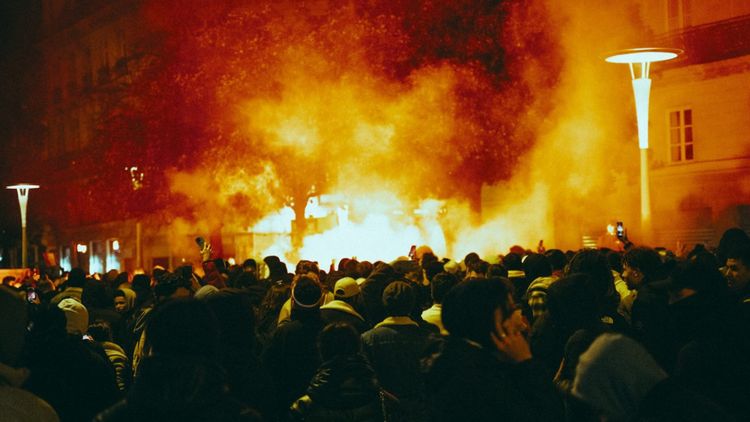
Their man in Tehran

Recently: How have governments become some of the biggest investors in the global economy? Adam Dixon on a new era of state capitalism.
Today: The hardliner Washington and Jerusalem wanted in Tehran. … A strike group off Havana. &c.
For members: Why have Americans lost faith in higher education? Julia Adams and Sarath Sanga on what’s gone wrong—and what universities can do about it. … & What’s wrong with the United Kingdom’s economy? Jonathan Schneer’s new book, Nine Days in May: The General Strike of 1926.
+ New music from Hekt x Smerz …
A regime-change gambit
When the U.S. and Israel began bombing Iran on February 28, the plan went beyond destroying nuclear sites. After killing Supreme Leader Ali Khamenei, Israel intended to install former president Mahmoud Ahmadinejad in Tehran, The New York Times reported on Wednesday. Ahmadinejad had apparently agreed in advance. A first-day Israeli airstrike hit the Revolutionary Guards holding him under house arrest, with the intention of breaking him out. He was wounded, however; he apparently abandoned the plan; and his whereabouts since are unknown.
Israel and the United States have presented the war as a counter-proliferation strike on Iran’s nuclear program. The Ahmadinejad plan means they also intended full regime change from the outset. U.S. President Donald Trump had recently removed Venezuela’s President Nicolás Maduro by force and installed a cooperative replacement; according to the NYT’s reporting, Trump saw Iran as a second application of the same template. The choice of Ahmadinejad seems notable—a Holocaust denier whose contested 2009 re-election triggered Iran’s Green Movement protests. And yet the Americans and the Israelis seem to have calculated that enough Iranians, in or out of state power, would somehow accept his return.

Meanwhile
- Choose your own opponent. A Turkish appeals court controlled by the government installed Kemal Kilicdaroglu on Thursday as the chairman of the main opposition, the Republican People’s Party (CHP). This is a man who formally lost to President Recep Tayyip Erdogan in 2023, after which the CHP voted Kilicdaroglu out. Now, the court annulled that vote, removing his successor, Ozgur Ozel. The CHP’s de facto political leader, Istanbul’s former mayor Ekrem Imamoglu, has been in prison on corruption charges since March 2025.
- Anniversary wishes. On Wednesday, the Trump administration spent Cuba’s Independence Day moving against the regime in Havana on several fronts at once. The USS Nimitz strike group entered the Caribbean. The U.S. Justice Department indicted the former Cuban leader Raúl Castro for the 1996 downing of two Cuban-American exile planes. U.S. Secretary of State Marco Rubio offered Havana US$100 million in food and medicine—on the condition that the Catholic Church, not the government, distributes it.
- Europa, reconsidered. Bolivia and Colombia expel each other’s ambassadors after Colombian President Gustavo Petro called Bolivia’s unrest a “popular insurrection.” … The military junta in Burma retakes two strategic border towns from ethnic militias, consolidating its gains in the country’s civil war. … Russia loses more Ukrainian territory than it took last month, a first in nearly two years. … The U.S. test-launches an unarmed intercontinental ballistic missile from California. … Researchers who in 2014 reported water plumes shooting up through the ice on Jupiter’s moon Europa now say they got it wrong—that the signal was a measurement error, not water from the ocean underneath its ice surface.
Dictatorships don’t collapse by accident. We dismantle them together.
Feature
Mission drift
Why have Americans lost faith in higher education? Julia Adams and Sarath Sanga on what’s gone wrong—and what universities can do about it.

Last October, the White House issued the Compact for Academic Excellence in Higher Education and invited nine select American universities to sign on in exchange for access to federal funding.
The Compact would have capped international student enrollment, screened applicants for “anti-American values,” and eliminated institutional units that “purposefully punish, belittle, and even spark violence against conservative ideas.”
The American Association of Colleges and Universities called the Compact less an invitation than a threat to academic freedom. None of the nine signed.
What it means to spark violence against ideas may not be entirely clear. But one thing is: The Trump administration is following in a strong current of public opinion that’s become intensely skeptical of U.S. colleges and universities. About 70 percent of Americans now think higher education is heading in the wrong direction.
Why?
Julia Adams is a professor of sociology at Yale University; Sarath Sanga is a professor of law at Yale; and the two worked on the team that wrote the university’s 2026 Report of the Committee on Trust in Higher Education. Adams and Sanga say a whole bundle of grievances has accumulated here: that universities have failed to protect free speech; that they’ve grown intellectually intolerant; that admissions decisions are opaque; that the student experience has steadily eroded—it goes on; and underneath all of it, that tuition keeps climbing. Together, these have brought American trust in American universities to an historic low.
As Adams and Sanga see it, each of those failings has its remedy, and universities will need to work through them—yet there’s a deeper task: to recover a sense of what universities are for in the first place—not maximizing revenue, not placing graduates in high-paying jobs, but the formation of the student. And that’s not a mission universities need to invent; it’s one they’ve been on for the better part of a thousand years …
Books
Stagnation
What’s wrong with the United Kingdom’s economy? Jonathan Schneer’s Nine Days in May: The General Strike of 1926.
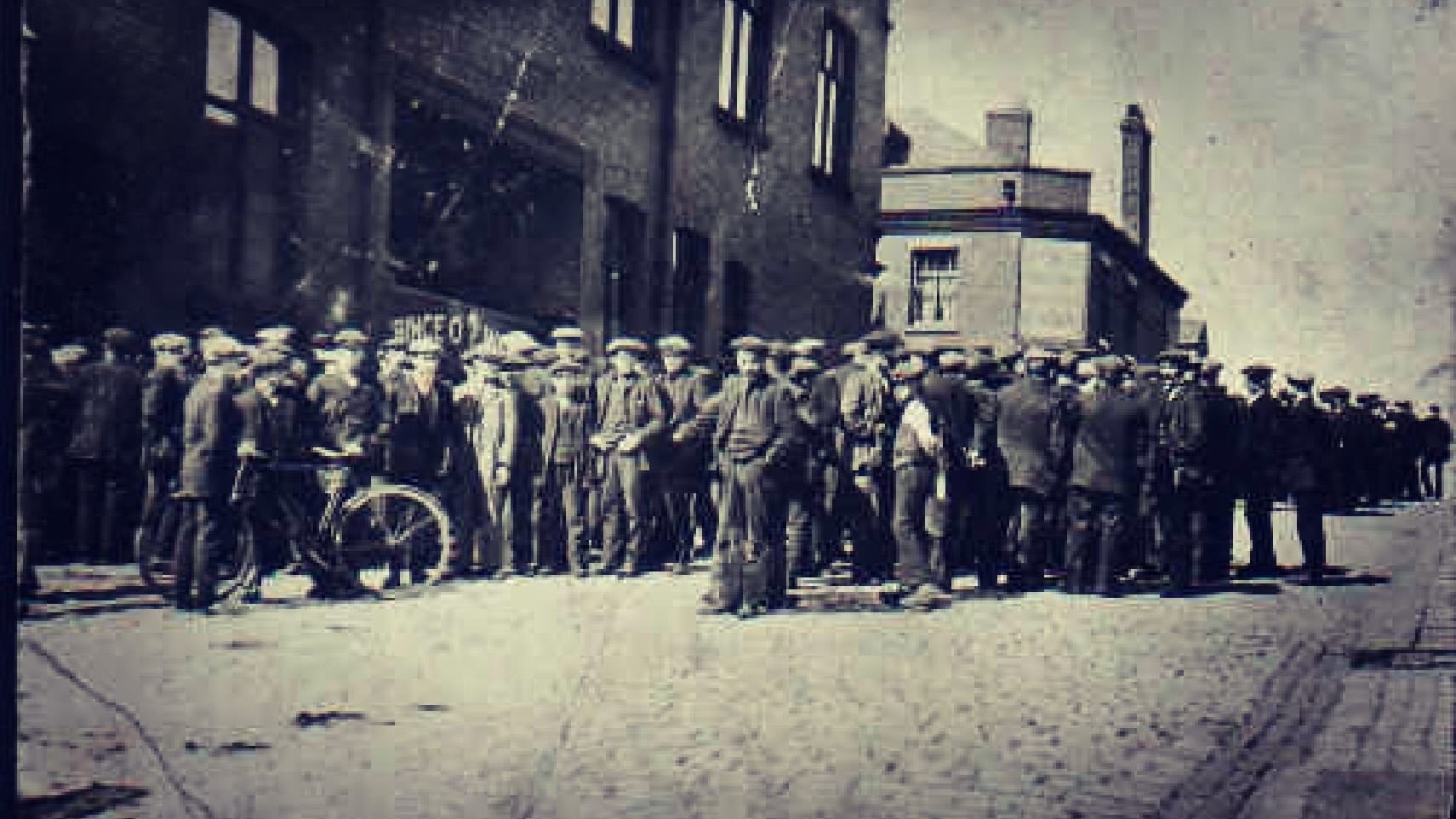
British workers haven’t seen real wages rise since the financial crisis—a stagnation the country hadn’t known for a century. Productivity gains, meanwhile, have stayed sluggish. Many countries have seen this twin slowdown in wages and productivity, but Britain’s has been unusually severe.
Why?
Your loyal guide to a changing world.
Membership with The Signal means exclusive access to premium benefits:
* In-depth feature interviews with our network of contributors
* The despatch, our weekly current-affairs and cultural-intelligence briefing
* Early access to new products, including print extras
It also means vital support for a new, independent venture in current affairs.
New music
‘Forever’
Hekt is a Copenhagen-based DJ and producer recording for the Scottish record label Numbers. On this single from his new album, vocals are courtesy of Smerz, the Norwegian duo behind last year’s notable Big City Life. Club music for the cool kids.