Three kings, one call
Recently: Why have the world’s shipping lanes become war zones? Arnaud Orain on the return of the armed merchant fleet. … & What does China really want from the United States?
Today: The American president says the Gulf monarchs asked him to cool it with new attacks on Iran. … Beijing receives its second guest of honor in a week. &c.
For members: How have governments become some of the biggest investors in the global economy? Adam Dixon on a new era of state capitalism. … & The hard passage facing the ships rerouting around southern Africa.
+ New music from Overmono …
An hour from the order
U.S. President Donald Trump says he was an hour from ordering a major strike on Iran on Monday when he stood down. The attack was scheduled for Tuesday; the Pentagon had been told to prepare a full assault. Over the weekend, Trump warned on his Truth Social platform that “the Clock is Ticking.” And yet. The leaders of the three most powerful states in the Persian Gulf— the United Arab Emirates, Qatar, and Saudi Arabia—then asked him to wait. Two or three days, they said, because a deal was close. Trump agreed, and said so publicly, naming all three as having influenced his decision. The American president has certainly set deadlines for Tehran and let them pass before. So this time might have been nothing different. Was it?
It’d be the obvious reading—if Trump let another deadline pass on the basis of some excuse framed as diplomacy. But he didn’t do that here. He explicitly credited three Gulf dictatorships by name for stopping a U.S. war decision—and let that stand as the explanation. That’s unusual for him, if not unique.
Iranian forces and their allies have been hitting the Gulf states with drones since the war began in late February—even, U.A.E. and Kuwaiti authorities have reported, since April’s ceasefire. So their interest in calling off an escalation is straightforward. What isn’t is the order of operations behind the decision: whether the Gulf request gave Trump cover for a pause he already wanted, or whether he changed his mind for his own reasons. Both possibilities fit the available evidence. It’s just notable that this time, one of those possibilities is an explicit account from the president himself that his decision was a matter of deference to foreign leaders.

Meanwhile
- Just one more document. In January, Trump sued the Internal Revenue Service over the leak of his tax returns. On Monday, the U.S. Justice Department announced a settlement: Trump would drop the suit; the government would create a US$1.8 billion fund to compensate people Trump says were wronged by federal investigations. On Tuesday, the department posted a one-page addendum to its website—signed by Acting Attorney General Todd Blanche, once Trump's personal lawyer—barring the IRS from any future tax claims or audits against Trump, his family, or his businesses. … See “‘I’d be a fool to say no’.”
- Back-to-back in Beijing. Russia’s President Vladimir Putin arrived in the Chinese capital on Tuesday for a two-day summit with President Xi Jinping, days after Trump wrapped his own visit. The trip marks the 25th anniversary of a friendship treaty between Russia and China, with a long-stalled Russian gas pipeline to China on the agenda. The relationship appears to have grown lopsided since Russia’s 2022 invasion of Ukraine: China now buys Russian oil at a discount, and Moscow depends heavily on its wealthier neighbor. … See “Boundary issues.”
- Mapping an underwater medieval city. Ukrainian drones struck the Moscow area on Sunday in the deadliest attack on the region of the war. … An American doctor was evacuated to Germany for treatment after contracting Ebola in Congo. … NextEra Energy moves to acquire Dominion Energy, a deal that would create the largest U.S. electricity producer. … The U.S. suspends an 86-year-old joint defense board with Canada, citing a Davos speech by Prime Minister Mark Carney. … Divers are surveying a submerged medieval city beneath Kyrgyzstan’s Lake Issyk-Kul.

Wary of fast fashion?
Shop Congo Clothing Company and
make a difference—in style.
Feature
The state’s return
How have governments become some of the biggest investors in the global economy? Adam Dixon on a new era of state capitalism.
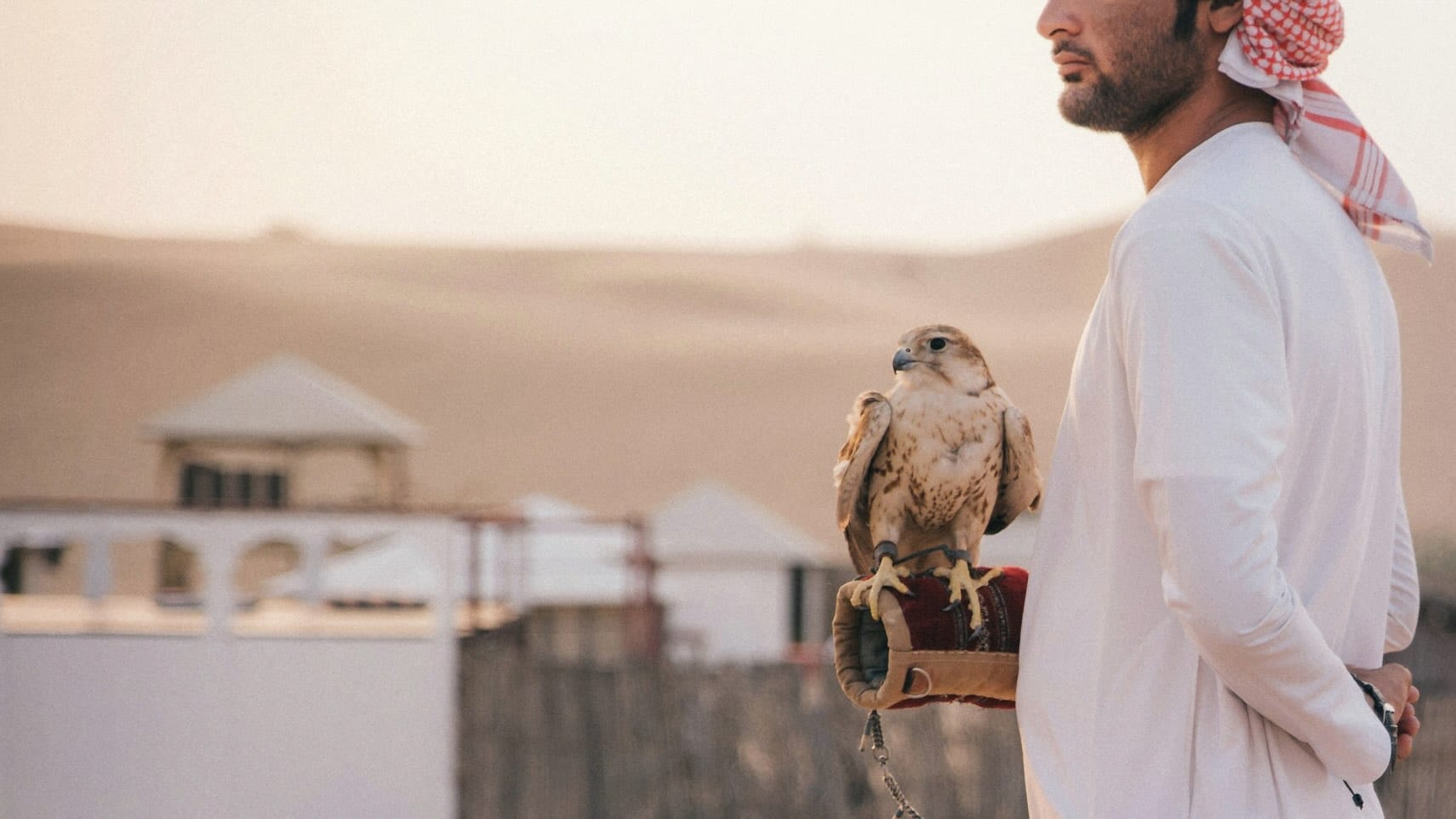
In 2021, the Saudi Public Investment Fund—a state portfolio worth roughly US$1 trillion—bought a controlling stake in the storied English football club Newcastle United. The PIF is also behind Saudi Arabia’s five “Giga Projects”—the vast state-led development schemes the kingdom intends to remake its economy around by 2030: Neom, Roshn, Red Sea Global, Qiddiya, and Diriyah.
Even countries without immense oil wealth are now building sovereign-wealth funds of their own. There are more than a hundred. Morocco has launched two. Per a recent Financial Times tally, Turkey has $360 billion in assets under management, Vietnam $16 billion, and the United Arab Emirates is sitting on a cool $2.68 trillion.
America is following suit. Last year, U.S. President Donald Trump signed an executive order directing the federal government to establish a sovereign-wealth fund of its own.
Around the world, governments have become direct investors in the economy. Why?
Adam Dixon is the director of Panmure House at Heriot-Watt University in Edinburgh and the coauthor of The Spectre of State Capitalism. Dixon says states have moved into the economy through a widening range of financial and corporate instruments—sovereign-wealth funds, strategic investment funds, national development banks, and more—largely in response to a sequence of shocks: the Global Financial Crisis, the Covid-19 pandemic, and the rising wave of Chinese exports putting national industries under pressure.
And they’re not just investing more—they’re investing differently. Today’s state-owned enterprises have significant private backing and boardrooms staffed by people from the private sector. Strategic-investment funds operate much like venture-capital funds: boosting national industry, yes, but chasing returns too. Alongside all this comes the state’s more aggressive use of economic coercion—sanctions, tariffs, export controls.
But there’s a risk, Dixon says: When every state rushes to support its own industries, the cumulative effect could leave everyone poorer …
Weather report
The long way round
34.3568° S, 18.4740° E
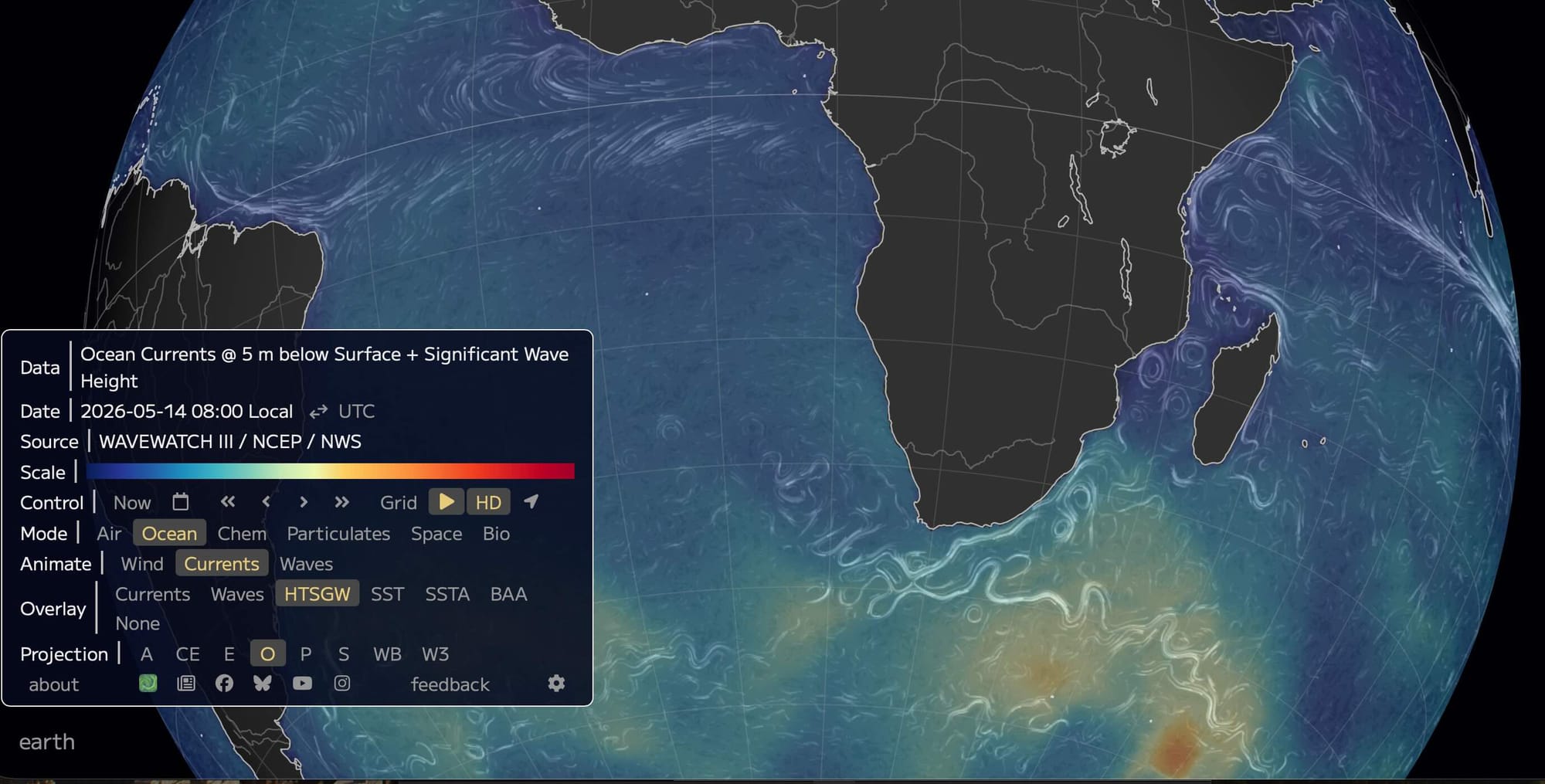
The Cape of Good Hope is historically a risky route, and you can see its clashing waves and currents on the visualizer Earth Nullschool. Coming down the east coast of Africa—on the right of the image—is one of the fastest, strongest western boundary currents in the world, the Agulhas Current, carrying warm, salty water toward the South Pole. On the left, the Benguela Current brings cold, nutrient-rich water north …
Your loyal guide to a changing world.
Membership with The Signal means exclusive access to premium benefits:
* In-depth feature interviews with our network of contributors
* The despatch, our weekly current-affairs and cultural-intelligence briefing
* Early access to new products, including print extras
It also means vital support for a new, independent venture in current affairs.
New music
‘Lockup’
Tom and Ed Russell, the brothers behind Overmono, have spent a few years as the thinking person’s dance act—textured, a little melancholy. But now “Lockup,” the first single from a new album due in August, drops the melancholy. The tempo’s faster, the samples chopped tight and looped hard. Feels made for a crowd—also in August.